

Home
Class 9
MATHS
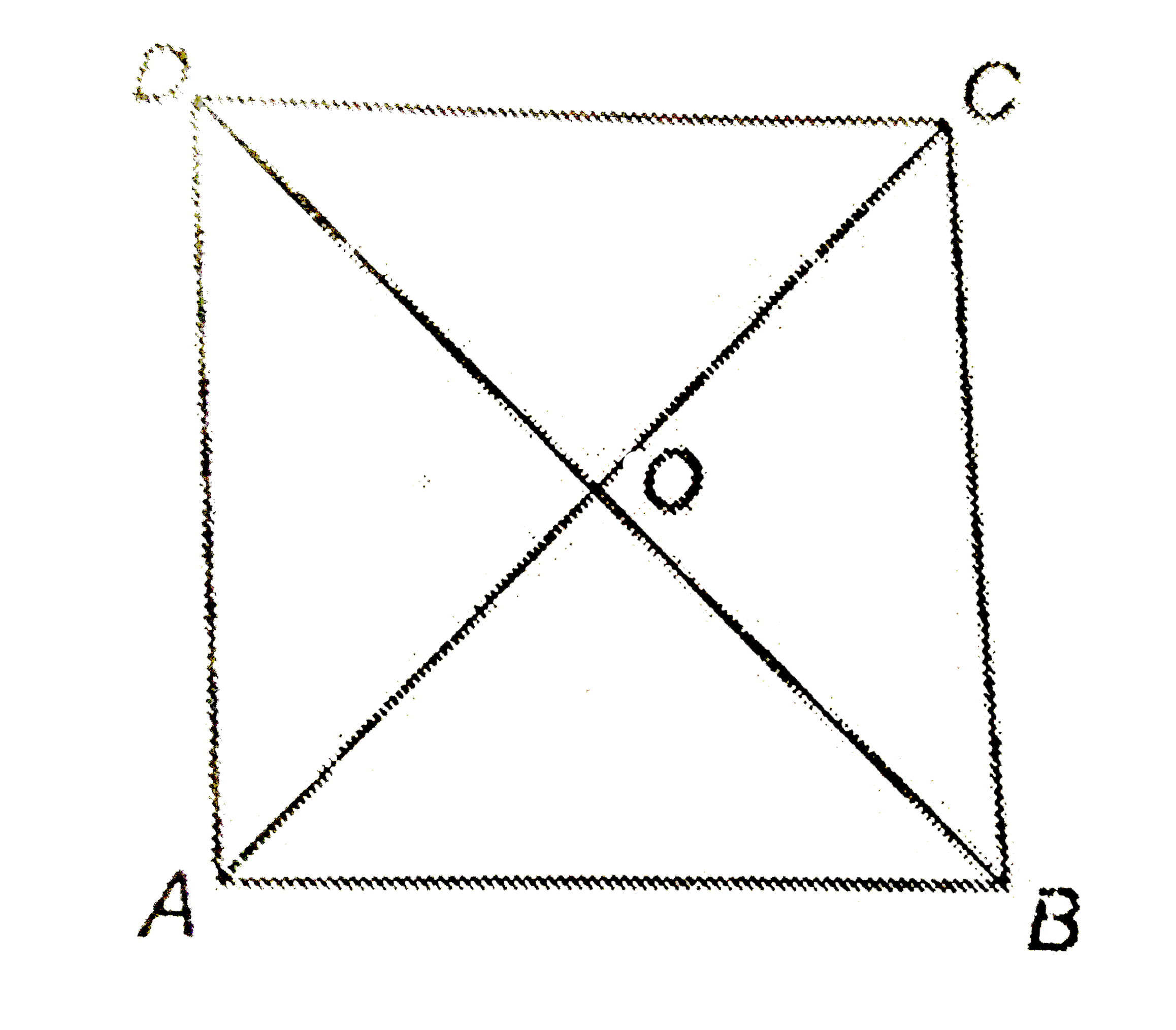
In the adjoining figure, the diagonals A...

In the adjoining figure, the diagonals AC and BD of a quadrilateral ABCD intersect point O. Prove that :
`AB+BC+CD+DA lt 2(AC+BD)`

Promotional Banner

Topper's Solved these Questions

  • TRIANGLES

    NAGEEN PRAKASHAN ENGLISH|Exercise Revision Exercise (short Answer Type Question)|10 Videos
  • SURFACE AREA AND VOLUME

    NAGEEN PRAKASHAN ENGLISH|Exercise Revision Exercise (long Answer Questions)|10 Videos

Similar Questions

Explore conceptually related problems

In the adjoining figure, ABCD is a quadrilateral. Its diagonals AC and BD intersect at point 'O'. Prove that : (a) AB+BC+CD+DA lt 2(AC+BD) (b) AB+BC+CD+DA gt (AC+BD)

The given figure shows a quadrilateral ABCD. Prove that : AB+BC+CD+DA gt AC+BD

If the diagonal BD of a quadrillateral ABCD bisects both angleB and angleD . Prove that (AB)/(BC)= (AD)/(CD) .

In the adjoining figure, ABCD is a quadrilateral in which AD ||BC . AC and BD intersect each other at point 'O'. Prove that: area of Delta COD = " area of " Delta ABO

In the following figure AC = 10 & BD = 14 , then area of quadrilateral ABCD-

In the given figure, the diagonals AC and BD of a rectangle ABCD intersect each other at point O. If OA=2x+6 and OD=3x+3, find the value of x.

In theadjoining figure, angleDAB=angleABC and AD = BC prove that BD = AC .

In the given figure, the diagonals AC and BD intersects at point O. If OB=OD and AB////DC , prove that : (i) "Area" (DeltaDOC)= "Area" (DeltaAOB) . (ii) "Area" (DeltaDCB)= "Area" (DeltaACB) . (iii) ABCD is a parallelogram.

ABCD is quadrilateral. Is AB+BC+CD+DA < 2(AC+BD) ?

P, Q , R and S are respectively the mid-points of the sides AB, BC, CD and DA of a quadrilateral ABCD in which AC = BD. Prove that PQRS is a rhombus.