Home
Class 12
CHEMISTRY
Cyclohexene on ozonolysis followed by re...

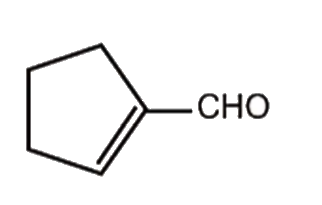
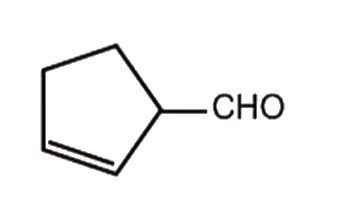
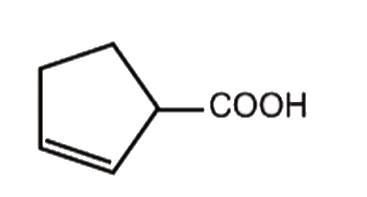
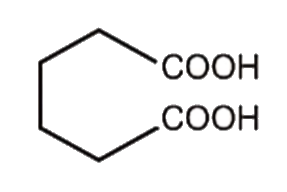
Cyclohexene on ozonolysis followed by reaction with zinc dust and water gives compound E. Compound E on further treatment with aqueous KOH yields compound F. Compound F is

A

B

C

D

Text Solution

AI Generated Solution

The correct Answer is:

To solve the problem, we will follow the steps outlined in the video transcript to determine the compounds E and F. ### Step-by-Step Solution: 1. **Ozonolysis of Cyclohexene**: - Cyclohexene (C6H10) undergoes ozonolysis, which involves the reaction with ozone (O3) to form an ozonide intermediate. - The ozonide then rearranges and breaks down in the presence of zinc dust and water to yield two carbonyl compounds. **Hint**: Remember that ozonolysis cleaves double bonds and forms carbonyl groups. 2. **Formation of Compound E**: - The ozonolysis of cyclohexene results in the formation of two molecules of aldehyde or ketone. In this case, it forms 2 molecules of cyclohexanone (C6H10O) or a similar structure. - Compound E is likely to be a diketone due to the cleavage of the double bond in cyclohexene. The structure of compound E can be represented as: \[ \text{Compound E: } \text{O=C-C-C-C-C=O} \] - This structure has six carbons and two carbonyl (C=O) groups. **Hint**: Look for the number of carbons and the presence of carbonyl groups to identify compound E. 3. **Reaction of Compound E with Aqueous KOH**: - When compound E is treated with aqueous KOH, it undergoes aldol condensation. The base (KOH) abstracts an alpha hydrogen from one of the carbonyl groups, leading to the formation of an enolate ion. - The enolate ion then attacks the carbonyl carbon of the other carbonyl group, leading to the formation of a β-hydroxy ketone. **Hint**: Recall that aldol condensation involves the formation of a β-hydroxy compound before dehydration. 4. **Dehydration to Form Compound F**: - The β-hydroxy ketone formed undergoes dehydration (loss of water) to form an α,β-unsaturated carbonyl compound. - The final compound F will have a double bond between the α and β carbons. **Hint**: Look for the final product to have a double bond and ensure it maintains the correct number of carbons. 5. **Identify Compound F**: - The final structure of compound F will be an α,β-unsaturated carbonyl compound. The structure can be represented as: \[ \text{Compound F: } \text{C=C-C(=O)-C-C} \] - This structure is consistent with the aldol condensation product and subsequent dehydration. **Hint**: Ensure the final product has the correct functional groups and carbon skeleton. ### Conclusion: Based on the steps above, compound F is an α,β-unsaturated carbonyl compound derived from the aldol condensation of the diketone formed from the ozonolysis of cyclohexene. ### Final Answer: Compound F is an α,β-unsaturated carbonyl compound.
Promotional Banner

Similar Questions

Explore conceptually related problems

The compound E is

Compound (E)is:

Compound (E)is:

Compound ( E) is :

Compound (E ) is:

The compound (E) is:

The compound (E) is:

The compound (E ) is:

The compound (E ) is:

A hydrocarbon (X) of the formula C_6H_12 does not react with bromine water but reacts with bromine in presence of light, forming compound (Y).Compound (Y) on treatment with Alc. KOH gives compound (Z) which on ozonolysis gives (T) reduces Tollens reagent which gives compound (W) after acidification . (W) gives iodoform test and after acidification produce compound (U) which when heated with P_2O_5 forms a cyclic anhydride (V). Compound V is
