Home
Class 12
CHEMISTRY
In which of the following pairs A is mor...

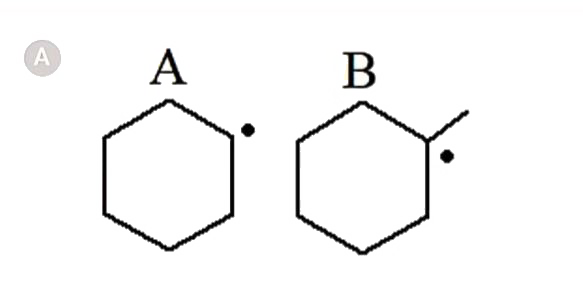
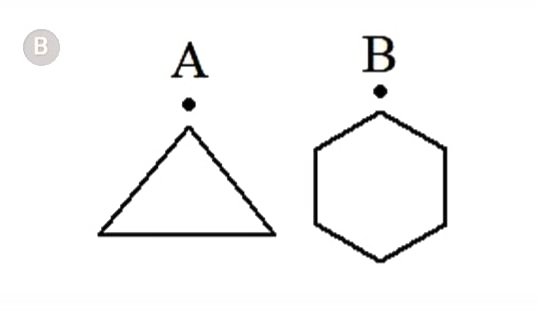
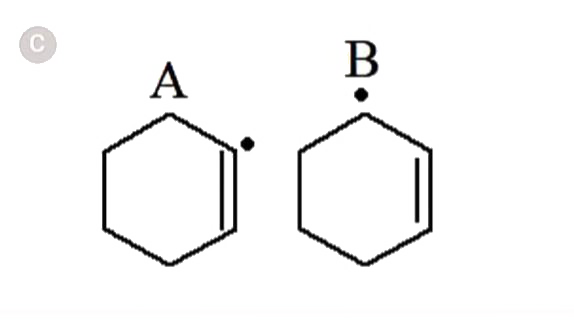
In which of the following pairs A is more stable than B?

A

B

C

D

`{:(A,B),(Ph_(3)C^(.),(CH_3)_(3)C^(.)):}`

Text Solution

AI Generated Solution

The correct Answer is:

To determine which of the given pairs has A being more stable than B, we need to analyze the stability of the free radicals in each pair based on their structure and the principles of radical stability. ### Step-by-Step Solution: 1. **Identify the Free Radicals:** - We have four pairs of radicals to analyze. For each pair, we need to identify whether they are primary, secondary, tertiary, or other types of radicals. 2. **Evaluate Each Pair:** - **Pair 1:** - A: Secondary radical (attached to 2 carbon atoms) - B: Tertiary radical (attached to 3 carbon atoms) - **Stability:** B is more stable than A (Tertiary > Secondary). - **Pair 2:** - A: Cyclopropyl radical (small ring, high angle strain) - B: Cyclohexyl radical (larger ring, lower angle strain) - **Stability:** B is more stable than A (Cyclohexyl > Cyclopropyl). - **Pair 3:** - A: Vinyl radical (less stable due to sp2 hybridization) - B: Allyl radical (more stable due to resonance) - **Stability:** B is more stable than A (Allyl > Vinyl). - **Pair 4:** - A: Tertiary alkyl radical (attached to three carbon atoms) - B: Phenyl radical (delocalized over phenyl rings) - **Stability:** A is more stable than B (due to resonance stabilization in the phenyl radical). 3. **Conclusion:** - The only pair where A is more stable than B is the last pair (D: CH3-CH(CH3)-CH3 radical vs. Ph-CH2 radical). ### Final Answer: - The pair where A is more stable than B is **D**.
Promotional Banner

Similar Questions

Explore conceptually related problems

Which of the following ions is more stable ?

Which of the following alkene is more stable than

In which of the following second ion is more stable than the first:

Which of the following carbocation is more stable and why?

In each of the following pairs, which is more covalent and why? AgCl and KCl
