Home
Class 12
CHEMISTRY
Poverset(PCl(5),0^(@)C)(rarr)Qunderset(-...

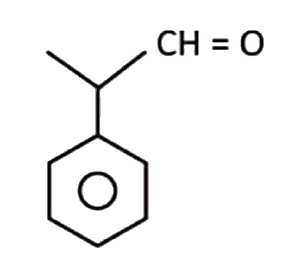
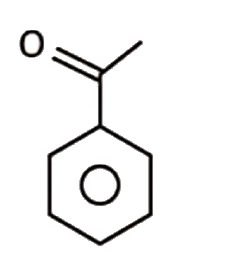
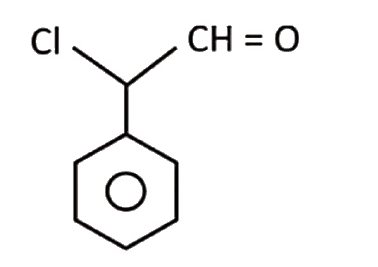
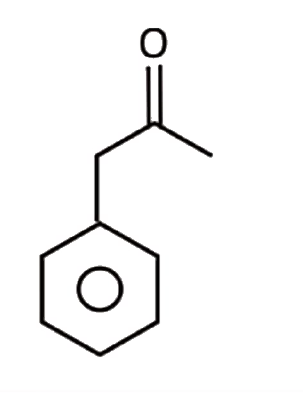
`Poverset(PCl_(5),0^(@)C)(rarr)Qunderset(-2HCl (ii)H^(+))overset((i)NaNH_(2)("excess"))(rarr)Roverset(NaNH_(2))(rarr)Soverset(I-CH_(3))(rarr)T-` P is

A

B

C

D

Text Solution

AI Generated Solution

The correct Answer is:

To solve the question, we need to identify the compound P based on the series of reactions described. Let's break down the steps involved in the reactions and determine what P could be. ### Step-by-Step Solution: 1. **Identify the Reaction with PCl5:** - When P is treated with PCl5 at 0°C, it forms Q. PCl5 is known to convert carbonyl compounds into corresponding chlorinated products. - The product Q is likely a xaminal dichloride, which suggests that P could be a carbonyl compound (like an aldehyde or ketone). 2. **Formation of Q:** - The reaction of a carbonyl compound with PCl5 typically results in the formation of a compound with two chlorine atoms attached to the carbon that was originally part of the carbonyl group. - For example, if P is acetone (CH3COCH3), the reaction with PCl5 would yield a dichloride. 3. **Reaction of Q with NaNH2:** - When Q is treated with excess sodium amide (NaNH2), it removes two HCl molecules. This indicates that Q must have at least two chlorine atoms and enough hydrogen atoms to allow for the formation of an alkyne. - The product after this reaction would be an alkyne (let’s denote it as R). 4. **Formation of R:** - The alkyne R is formed by the elimination of HCl from Q. This means that Q must have had two chlorines and at least two hydrogen atoms adjacent to the carbon atoms involved in the triple bond formation. 5. **Reaction of R with NaNH2 Again:** - R is then treated with NaNH2 again, which suggests that R has acidic hydrogens that can be removed to form a sodium salt (denote this as S). 6. **Formation of S:** - The sodium salt S is formed from R by the removal of acidic hydrogen atoms. 7. **Final Reaction with Methyl Iodide (I-CH3):** - Finally, S is treated with methyl iodide (CH3I), which leads to the substitution of the sodium ion with a methyl group, resulting in the final product T. 8. **Identifying P:** - After analyzing the reactions, we can conclude that P must be a carbonyl compound that can undergo these transformations. The most suitable candidate based on the reactions is likely to be a ketone or aldehyde that can yield the required products through these steps. ### Conclusion: After evaluating the options and the reactions, we find that the most plausible structure for P is a carbonyl compound that can lead to the formation of a xaminal dichloride, followed by the necessary transformations to yield the final product T.
Promotional Banner

Similar Questions

Explore conceptually related problems

C_(2)H_(5)OHoverset(PCl_(5))rarr(A)overset(KCN)rarr(B)overset(H_(3)O^(+))rarr(C)overset(NH_(3))rarr(D)overset("heat")rarr(E) Identify the products

The correct set of the products obtained in the following reactions RCNoverset("reduction")rarr(A),RCNunderset((ii)H_(2)O)overset((i)CH_(3)MgBr)rarr(B), RNCoverset("hydrolysis")rarr(C),RNH_(2)overset(HNO_(2))rarr(D) The answer is :

Ph-underset(underset(Cl)(|))(CH)-CH_(2)-Cl underset(underset(("iii") H^(+))(("ii")NaNH_(2)))overset(("i")Alc.kOH)(rarr) A overset("Cold alk." KMnO_(4))(rarr)B underset("warm")overset("NaOH")(rarr)C The product 'C' eill be

Write structures of compounds A,B and C in each of the following reactions: (i) C_(6)H_(5) Br overset("Mg/dry ether")rarr A underset((b)H_(3)O^(+))overset((a) CO_(2)(g))rarr B overset(PCl_(5))rarr C (ii) CH_(3)CN underset((b) H_(3)O^(+))overset((a) SnCl_(2)//HCl)rarr A overset("dil."NaOH)rarr B overset(Delta)rarr C

A overset(Cl_(2))(rarr) B overset("AgCN")(rarr) C overset([H])(rarr) (CH_(3))_(2) NH Reactant [ A ] is :

CH_3-overset(O)overset(||)(C )-OH overset(NH_3)(rarr)(P)overset(Al_2O_3)(rarr)(Q)overset(Br_2//KOH)(rarr)(R ) . R is

overset((i) NaNH_(2), NH_(3)(ii)CH_(3)-Br)rarr (A) overset((H_(2)" Lindlar'scatalyst"))rarr B

Complete the following reaction sequence : CH_(3)-overset(O)overset(||)C-CH_(3)overset((i)CH_(3)MgBr)underset((ii)H_(2)O)rarr(A)overset("Na metal")underset("ether")rarr(B)overset(CH_(3)-Br)rarr(C)
