Home
Class 12
CHEMISTRY
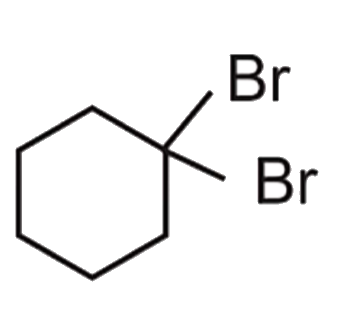
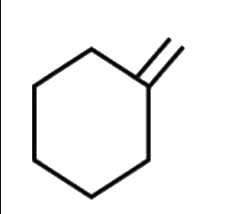
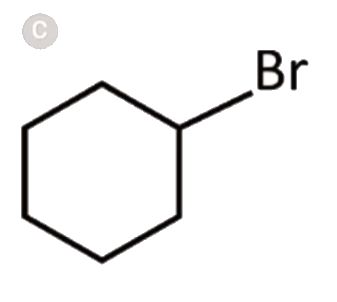
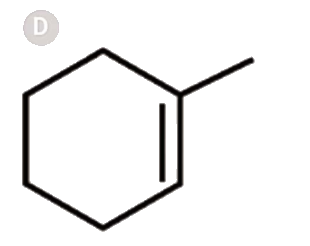
Which reaction produce 1-methylcyclohexe...

Which reaction produce 1-methylcyclohexene

A


`overset((i) aq.KOH)underset((ii) CH_3MgBr,"ether",(iii)H^(+),H_2O)to`

B


`overset((i)HBr) underset((ii)"alcoholic " KOH.Delta)to`

C


`overset((i)Mg,"ether")underset((ii)CH_2O,(iii)H^(+),H_2O)to`

D


`overset((i)HI)underset((ii)aq. NaOH)to`

Text Solution

AI Generated Solution

The correct Answer is:

To determine which reaction produces 1-methylcyclohexene, we need to analyze the provided options step by step. ### Step-by-Step Solution: 1. **Understanding the Product**: - The target product is 1-methylcyclohexene. This means we have a cyclohexene ring with a methyl group attached to the first carbon of the double bond. 2. **Analyzing the First Option**: - The first option involves a dibromocyclohexane reacting with aqueous KOH followed by a Grignard reagent (CH3MgBr). - The aqueous KOH will replace the bromine atoms with hydroxyl groups, leading to a diol. - The diol will then undergo dehydration to form a ketone-like structure, which is not the desired product. Thus, the first option does not yield 1-methylcyclohexene. 3. **Analyzing the Second Option**: - The second option starts with a cyclohexyl bromide reacting with HBr. - This reaction will form a carbocation. The more stable carbocation will be formed at the tertiary position due to the presence of a methyl group. - The bromide ion will then attack the carbocation, leading to the formation of a bromo compound. - When treated with alcoholic KOH, the base will abstract a hydrogen atom, resulting in the formation of 1-methylcyclohexene. This option successfully yields the desired product. 4. **Analyzing the Third Option**: - The third option involves a Grignard reagent reacting with a compound to form an alcohol. - The product from this reaction will not lead to the formation of 1-methylcyclohexene but rather an alcohol, which is not the target product. 5. **Analyzing the Fourth Option**: - The fourth option also involves a carbocation formation but leads to a different product when treated with aqueous NaOH. - The product formed here is an alcohol, not 1-methylcyclohexene. ### Conclusion: After analyzing all options, we find that the **second option** is the correct reaction that produces **1-methylcyclohexene**.
Promotional Banner

Similar Questions

Explore conceptually related problems

Select the major product obtained from the addition of HBr to 1-methylcyclohexene.

Which of the following is the best reagent to convert 1-Methylcyclohexene into 2-methylcyclohexanol ?

Using anhydrous AlCl_(3) as catalyst, which one of the following reactions produces ethylbenzene (PhEt) ?

Which of the following reaction produces hydrogen ?

Which of the following compounds is (S) - 4 - chloro - 1- methylcyclohexene ?

Which reagent will produce salicyldehyde on reaction with phenol?

Which of the following reaction does not produce ethyne ?
