Home
Class 12
CHEMISTRY
CH(3)-underset(CH3)underset(|)overset(CH...

`CH_(3)-underset(CH_3)underset(|)overset(CH_3)overset(|)(C )-underset(Br)underset(|)(C )H-CH_(3) underset(Delta)overset("El mechanism")(rarr) (A)`
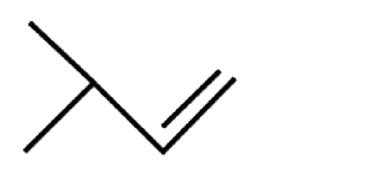
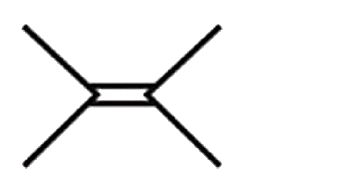
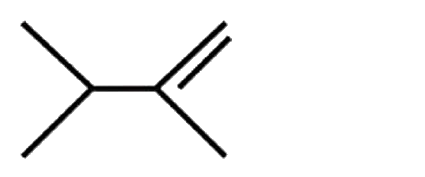
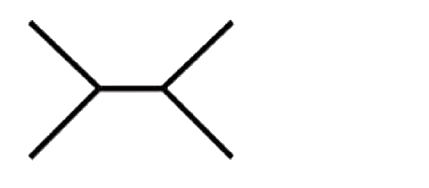
Major product (A) is

A

B

C

D

Text Solution

AI Generated Solution

The correct Answer is:

To solve the problem of determining the major product (A) formed from the given reactant through an E1 mechanism, we will follow these steps: ### Step 1: Identify the Reactant Structure The reactant is a brominated alkane with the structure: ``` CH3 | CH3 - C - Br | CH | CH3 ``` This molecule has a bromine (Br) atom attached to a secondary carbon. ### Step 2: Understand the E1 Mechanism The E1 mechanism involves two main steps: 1. Formation of a carbocation. 2. Elimination of a beta hydrogen to form a double bond. ### Step 3: Step 1 - Formation of Carbocation In the first step, the bromine (Br) leaves, resulting in the formation of a carbocation. The structure after bromine leaves will be: ``` CH3 | CH3 - C^+ | CH | CH3 ``` Here, we have a secondary carbocation. ### Step 4: Step 2 - Rearrangement of Carbocation Since the secondary carbocation can rearrange to form a more stable tertiary carbocation, a methyl group from the adjacent carbon will shift to the carbocation carbon. The structure after rearrangement will be: ``` CH3 | CH3 - C^+ | CH3 ``` This is now a tertiary carbocation. ### Step 5: Elimination of Beta Hydrogen Next, we need to remove a beta hydrogen to form the double bond. The beta hydrogens are the ones attached to the carbons adjacent to the carbocation. In this case, the beta hydrogens are on the carbons adjacent to the carbocation. According to Zaitsev's rule (or Saytzeff's rule), the more substituted alkene will be the major product. Removing one of the beta hydrogens will lead to the formation of a double bond between the carbocation carbon and the adjacent carbon. ### Step 6: Determine the Major Product The major product will be a fully substituted alkene. The final product will have the following structure: ``` CH3 | CH3 - C = C | CH3 ``` This represents a tetra-substituted alkene. ### Final Answer The major product (A) formed from the given reactant through the E1 mechanism is a tetra-substituted alkene. ---
Promotional Banner

Similar Questions

Explore conceptually related problems

CH_(3)-underset(CH_(3))underset(|)overset(CH_(3))overset(|)C-CH=CH-CH_(3)overset(H-Cl)(to) ?

2CH_(3)-underset(CH_(3))underset(|)overset(CH_(3))overset(|)(C)-CHO+NaOHrarr The product is

What is the major product alkene formed in the following elimination? CH_3CH_2CH_2 underset(CH_3)underset(|)overset(CH_3)overset(|)(N^+)-underset(CH_3)underset(|)overset(CH_3)overset(|)(C )-CH_3overset(Delta)(rarr)

The conversation : CH_(3)-underset(OH)underset(|)overset(CH_(3))overset(|)(C)-underset(OH)underset(|)overset(CH_(3))overset(|)(C)-CH_(3)underset(H_(2)SO_(4))overset("dil")rarrCH_(3)-underset(CH_(3))underset(|)overset(CH_(3))overset(|)(C)-underset(O)underset(||)(C)-CH_(3) is called :

CH_(3)-Br+NaO-underset(CH_(3))underset(|)overset(CH_(3))overset(|)C-CH_(3)to ? The product is

CH_(3)-underset(CH_(3))underset(|)overset(CH_(3))overset(|)C-O-CH_(2)-CH_(3)underset(HI)overset("Cold and conc.")rarr ? The product is
