Home
Class 12
CHEMISTRY
Which of the following is optical active...

Which of the following is optical active subtance ?

A

B

C

D

Both (A) and ( B)

Text Solution

AI Generated Solution

The correct Answer is:

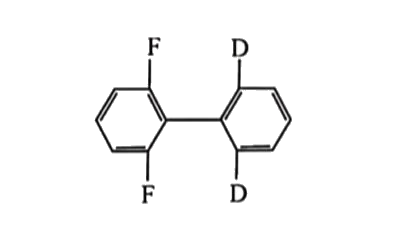
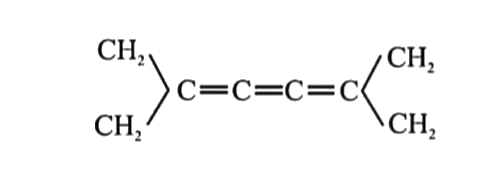
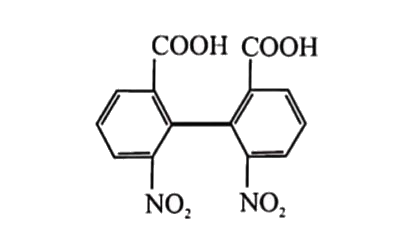
To determine which of the given substances is optically active, we need to analyze each compound based on their structural characteristics and the presence of chiral centers or restricted rotation. ### Step-by-Step Solution: 1. **Understanding Optical Activity**: - Optical activity refers to the ability of a substance to rotate plane-polarized light. A compound is optically active if it lacks an internal plane of symmetry and has a chiral center or if it has restricted rotation due to steric hindrance. 2. **Analyzing the First Substance (Biphenyl)**: - Biphenyl can be optically active if there is restricted rotation around the single bond connecting the two phenyl rings. - If large groups are present at the ortho positions, they hinder rotation, making the compound optically inactive. - In this case, if small groups (like deuterium and fluorine) are present at the ortho positions, rotation is possible, making this biphenyl optically active. 3. **Analyzing the Second Substance (Allene)**: - The structure of allene is CH3-C=C-CH3, which has three double bonds. - A rule of thumb is that if the number of double bonds is odd, the compound is typically optically inactive. - Since allene has three double bonds (an odd number), it is optically inactive. 4. **Conclusion**: - From the analysis, the first biphenyl compound with small groups at the ortho position is optically active, while the allene is optically inactive. - Therefore, the optically active substance among the given options is the first biphenyl compound. ### Final Answer: The optically active substance is the biphenyl compound with small groups at the ortho position. ---
Promotional Banner

Similar Questions

Explore conceptually related problems

Which of the following is optically active

Which of the following is optically active?

Which of the following be optically active ?

Which of the following is optically inactive ?

Which of the following is not optically active?

Which of the following is not optically active?

Which of the following is/are optically active?

Which of the following shows optical activity?
