Home
Class 12
CHEMISTRY
Which of the following is not true for S...

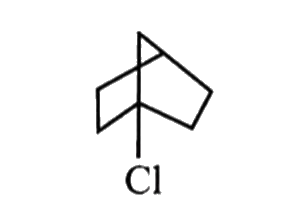
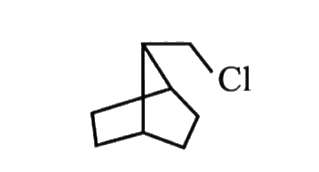
Which of the following is not true for `S_(N^(1))` reaction ?

A

Ethyl chloride

B

Isopropyl chloride

C

D

Text Solution

AI Generated Solution

The correct Answer is:

To determine which statement is not true for an \( S_N^1 \) reaction, we need to analyze the characteristics and requirements of \( S_N^1 \) reactions. ### Step-by-Step Solution: 1. **Understanding \( S_N^1 \) Reaction**: - \( S_N^1 \) stands for unimolecular nucleophilic substitution. The term "unimolecular" indicates that the rate-determining step involves only one molecule, which is the substrate undergoing substitution. 2. **Mechanism of \( S_N^1 \)**: - The \( S_N^1 \) reaction occurs in two steps: - **Step 1**: Formation of a carbocation intermediate after the leaving group departs (e.g., Cl⁻). - **Step 2**: Nucleophilic attack on the carbocation by a nucleophile. 3. **Carbocation Stability**: - The stability of the carbocation formed is crucial for the \( S_N^1 \) reaction to proceed. The order of stability is: - Tertiary carbocation > Secondary carbocation > Primary carbocation > Methyl carbocation. - Therefore, substrates that can form stable carbocations are more likely to undergo \( S_N^1 \) reactions. 4. **Analyzing Given Compounds**: - **Ethyl Chloride (CH₃CH₂Cl)**: Forms a primary carbocation, which is less stable. Thus, it is not favorable for \( S_N^1 \). - **Isopropyl Chloride (CH₃CHClCH₃)**: Forms a secondary carbocation, which is stable and can undergo \( S_N^1 \). - **Bridged Compound**: The carbocation formed at the bridgehead position is unstable and will not form, making this compound unreactive for \( S_N^1 \). - **Another Compound with Cl**: If it forms a primary carbocation that is stable, it can undergo \( S_N^1 \). 5. **Conclusion**: - The statement that is not true for \( S_N^1 \) reactions is related to the compound that cannot form a stable carbocation. In this case, the bridged compound is the one that will not undergo \( S_N^1 \) due to the instability of the carbocation formed. ### Final Answer: The option that states the bridged compound will undergo \( S_N^1 \) reaction is **not true**.
Promotional Banner

Similar Questions

Explore conceptually related problems

Which of the following is true for n in N ?

Which of the following will not undergo S_N^1 reaction with OH^-

Which of the following solvent is suitable for S_(N)1 reaction ?

Which of the following statement regarding S_(N)1 reaction shown by alkyl halide is incorrect?

Which of the following is an S_(N^(2)) reaction:-

Which of the following is always true for a reaction
