Home
Class 12
PHYSICS
In a photoelectric experiment the relati...

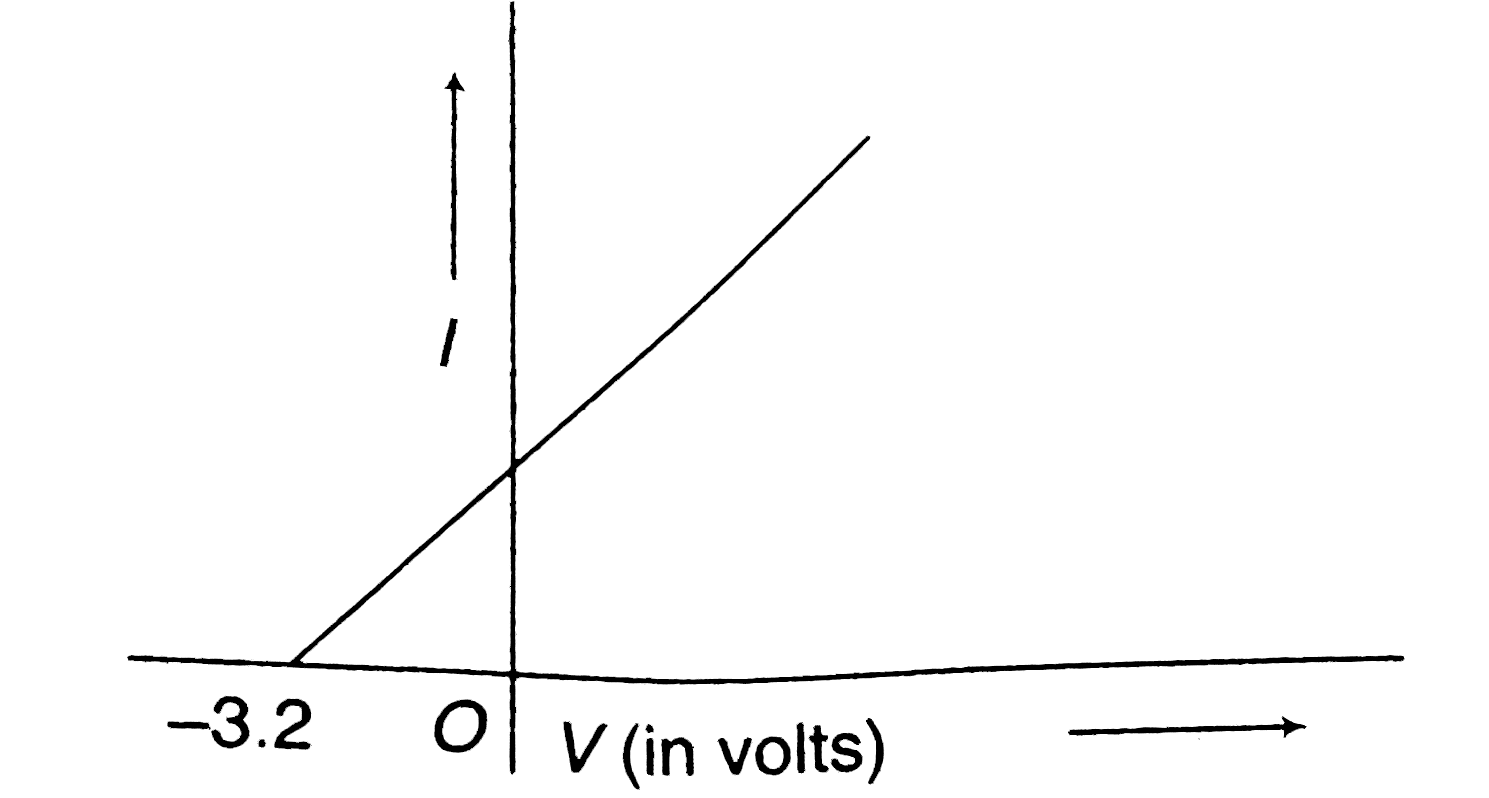
In a photoelectric experiment the relation between applied potential difference between cathode and anode V and the photoelectric current cathode and anode V and the photoelectric current l and was found to be shown in graph below. If planck's constant `h=6.6xx10^(-34)`Js, the frequency of incident radiation would be nearly (in `s^(-1)`)

A

`0.436 xx 10^(18) Hz`

B

`0.436 xx 10^(17) Hz`

C

`0.775 xx 10^(16) Hz`

D

`0.775 xx 10^(15) Hz`

Text Solution

Verified by Experts

The correct Answer is:

C
Promotional Banner

Similar Questions

Explore conceptually related problems

In photoelectric effect , the curve between photoelectric current and anode potential V (for different frequencies ) is shown in figure , then

In photoelectric effect experiment potential difference between plates increases keeping incident light on cathode plate remains unchanged which of the following is correct about saturation current :

Find the energy difference between n=4 and n=3 levels of hydrogen and calculate the frequency of the radiaiton emitted when an electron transits between these levels. (Plank's constant h=6.626 xx 10^(-34)Js) .

In a photoelectric effect experiment, the graph of stopping potential V versus reciprocal of wavelength obtained is shown in the figure. As the intensity of incident radiation is increased :

A photoelectric cell is connected to a source of variable potential difference, connected across it and the photoelectric current resulting (muA) is plotted against the applied potential difference (V). The graph in the broken line represents one for a given frequency and intensity of the incident radiation . If the frequency is increased and the intensity is reduced, which of the following graphs of unbroken line represents the new situation?

In a photoelectric experiment, the graph of frequency v of incident light (in Hz) and stopping potential V (in V) is as shown in the figure. Planck's constant is (e is the elementary charge)

In photoelectric effect the slope of straight line graph between stopping potential (V_(s)) and frequency of incident light (v) gives

The de - Broglie wavelength of a ball of mass 120 g moving at a speed of "20 m s"^(-1) is (Planck's constant h=6.6xx10^(-34)Js )

The curves (a) , (b) , ( c ) and (d) show the variation between the applied potential difference (V) and the photoelectric current (i) , at two different intensities of light (I_(1) gt I_(2)) . In which figure is the correct variation shown ?

In a photoelectric effect experiment, stopping potential changes by 30 volt if we change frequency of the radiation. Then the magnitude of change in the frequency is : (h=6xx10^(-34) J-s)
