Home
Class 12
PHYSICS
Which one of the following sperical lens...

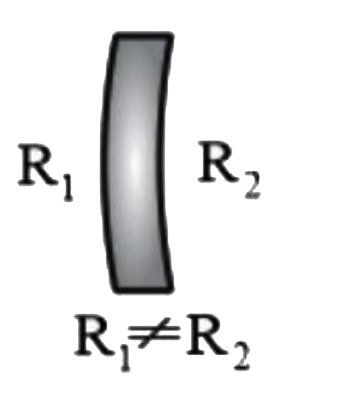
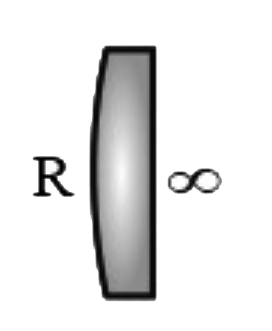
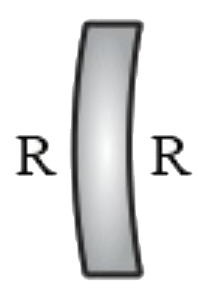
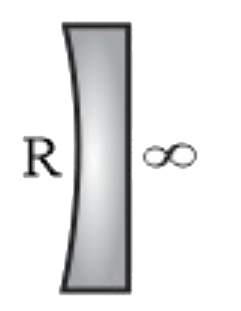
Which one of the following sperical lenses does not exhibit dispersion? The radii of curvature of the surfaces of the lenses are as given in the diagrams.
`R_(1)!=R_(2)`

A

B

C

D

Text Solution

Verified by Experts

The correct Answer is:

C
Promotional Banner

Similar Questions

Explore conceptually related problems

Which one of the following complexes does not exhibit chirality?

Which one of the following does not exhibit the phenomenon of mutarotation ?

Find the focal length of the lens shown in Fig . The radii of curvature of both the surfaces are equal to R.

If R_(1)andR_(2) are the radii of curvature of the spherical surfaces of a thin lens and R_(1)gtR_(2) , then this lens can

Three diagrams are given each has equal radial of curvature of the curved surfaces. All the lenses have refractive index mu=1.5 . The ratio of focal lengths of P,Q,R is

The effective focal length of the lens combination shown in figure is -60 cm. The radius of curvature of the curved surfaces of the plano-convex lenses are 12 cm each and refractive index of the material of the lens is 1.5. The refractive index of the liquid is

A thin plano-convex lens fits exactly into a thin plano-concave lens. Their plane surfaces are parallel to each other. The lenses are made of different material of refractive indices mu_(1) and mu_(2) and R is the radius of curvature of the curved surfaces of the lenses, if rays are incident parallel to principal axis on lens of refractive index.

A plano-convex lens fits exactly into a plano-concave lens. Their plane surfaces are parallel to each other. If the lenses are made of different material of refractive indices mu_(1) and mu_(2) and R is the radius of curvature of the curved surface of the lenses, then focal length of the combination is

Two thin symmetrical lenses of different nature and of different material have equal radii of curvature R = 15 cm . The lenses are put close together and immersed in water (mu_(w) = (4)/(3)) . The focal length of the system in water is 30 cm. The difference between refractive indices of the two lenses is

A plano convex lens fits exactly into a plano concave lens. Their plane surfaces are parallel to each other. If the lenses are made of different materials refractive indices mu_(1) and mu_(2) and R is the radius curvature of the curved surface of the lenses, the focal length of the combination is
