Home
Class 12
PHYSICS
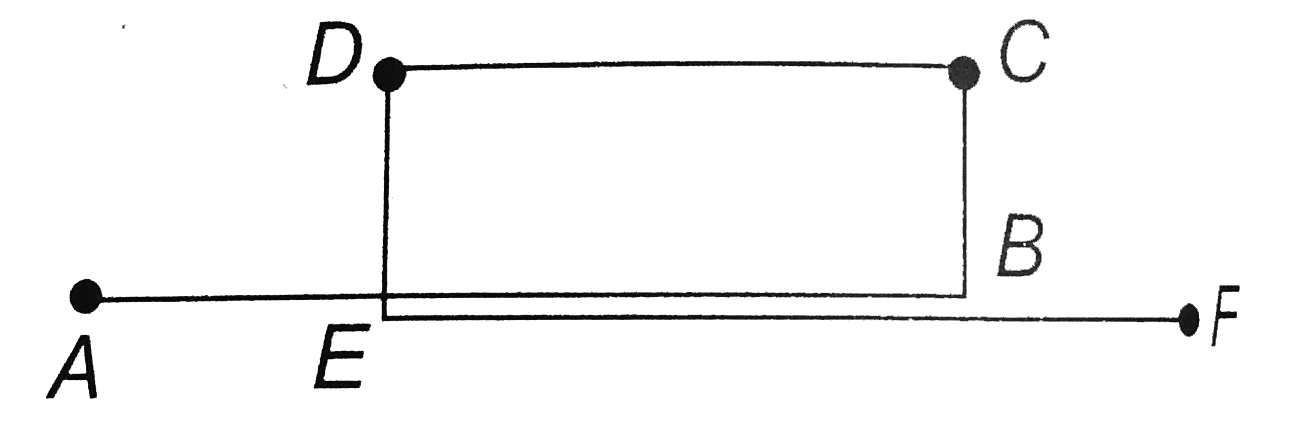
In the shown planar frame made of thin u...

In the shown planar frame made of thin uniform rods, the length of section `AB` and `EF` is `l_(1)` and its thermal linear coefficient of expansion is `alpha_(1)`. The length of section `CD` is `l_(2)` and its thermal linear coefficient of expansion is `alpha_(2)`.`CB and DE` are of same length having thermal linear coefficient of expansion `alpha_(2)`. point `A, B, E and F` reside on same line, that is, sections `AB and EF` overlap. then the ratio of `(l_(1))/(l_(2)` for which the distance between end `A` and end `F` remains the same at all temperatures, is

Text Solution

Verified by Experts

The correct Answer is:

2
Promotional Banner

Similar Questions

Explore conceptually related problems

Unit of coefficient of linear expansion

Define the coefficient of linear expansion.

Two rods having length l_(1) and l_(2) , made of materials with the linear coefficient of expansion alpha_(1) and alpha_(2) were welded together. The equivalent coefficients of linear expansion for the obtained rod:-

Can we related the thermal coefficient of linear expansion, alpha , to the thermal coefficient of volume expansion?

Relate the thermal coefficient of linear expansion, alpha , the the thermal coefficient of area expansion beta .

If the length of a body is measured in centimeters instead of meters, the coefficient of linear expansion

Two different wires having lengths L_(1) and L_(2) and respective temperature coefficient of linear expansion alpha_(1) and alpha_(2) are joined end - to - end . Then the effective temperature coefficient of linear expansion is :

A liquid with coefficient of volume expansion gamma is filled in a container of a material having coefficient of linear expansion alpha . If the liquid overflows on heating, then

A liquid with coefficient of volume expansion gamma is filled in a container of a material having coefficient of linear expansion alpha . If the liquid overflows on heating, then

Coefficient of areal expansion of a solid is 2xx10^(-5).^(@)C^(-1) . Calculate its coefficient of linear expansion.
