Home
Class 12
CHEMISTRY
Phenol on treatment with CO(2) in the pr...

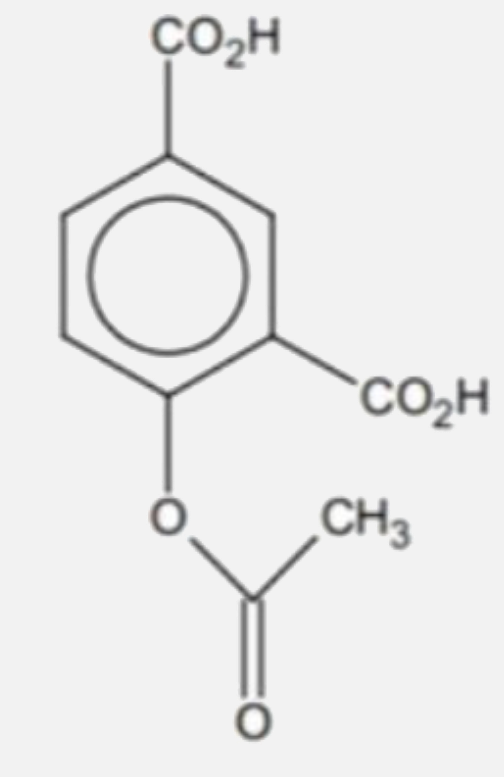
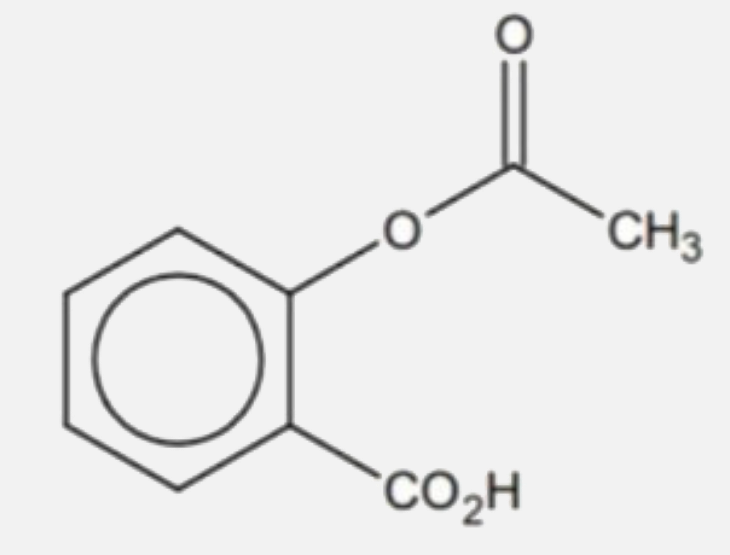
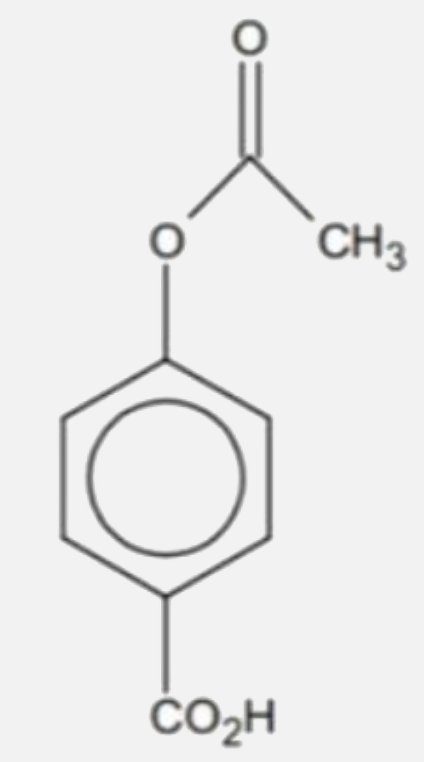
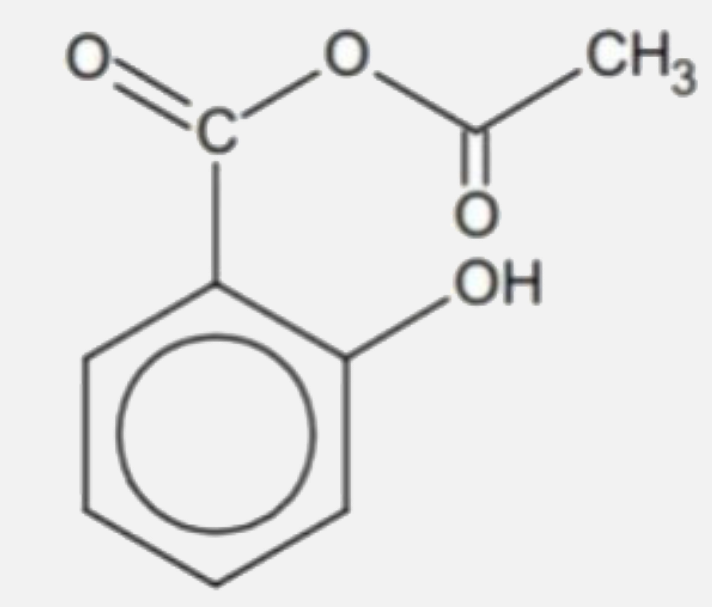
Phenol on treatment with `CO_(2)` in the presence of `NaOH` followed by acidification produces compound X as the major product. X on treatment with `(CH_(3)CO)_(2)O` in the presence of catalytic amount of `H_(2)SO_(4)` produces

A

B

C

D

Text Solution

AI Generated Solution

The correct Answer is:

To solve the problem step by step, we will analyze the reactions involved when phenol is treated with CO₂ in the presence of NaOH, followed by acidification, and then the reaction of the resulting compound with acetic anhydride in the presence of H₂SO₄. ### Step 1: Reaction of Phenol with CO₂ and NaOH 1. **Phenol (C₆H₅OH)** reacts with **NaOH** to form the phenoxide ion (C₆H₅O⁻). 2. The phenoxide ion then reacts with **CO₂** in a reaction known as the Kolbe's reaction. The negative charge on the oxygen attacks the carbon of CO₂, leading to the formation of a carboxylate ion. 3. The intermediate formed is then protonated upon acidification to yield **salicylic acid (C₇H₆O₃)**, which has both a hydroxyl group (-OH) and a carboxylic acid group (-COOH) on the aromatic ring. ### Step 2: Structure of Compound X - The major product **X** formed from the reaction of phenol with CO₂ and NaOH, followed by acidification, is **salicylic acid**. ### Step 3: Reaction of Salicylic Acid with Acetic Anhydride 1. **Salicylic acid (C₇H₆O₃)** is treated with **acetic anhydride (C₄H₆O₃)** in the presence of a catalytic amount of **H₂SO₄**. 2. The hydroxyl group (-OH) of salicylic acid attacks the carbonyl carbon of acetic anhydride, leading to the formation of an ester. 3. This reaction results in the formation of **acetylsalicylic acid (C₉H₈O₄)**, commonly known as **aspirin**, where the -OH group of salicylic acid is converted into an -OCOCH₃ (acetyl) group. ### Final Product - The final product obtained from the reaction of salicylic acid with acetic anhydride is **acetylsalicylic acid (aspirin)**. ### Summary of the Steps 1. Phenol reacts with NaOH and CO₂ to form salicylic acid (X). 2. Salicylic acid reacts with acetic anhydride to form acetylsalicylic acid (aspirin).
Promotional Banner

Similar Questions

Explore conceptually related problems

When propyne is treated with aqueous H_2SO_4 in the presence of HgSO_4 , the major product is:

Name the main products in the following reactions: 2-Butene reacts with O_(3) in presence of Zn-dust and H_(2)O

Treatment of benzene with CO/HCl in the presence of anhydrous "AlCl"_(3)//"CuCl" followed by reaction with Ac_(2)"O"//"NaOAc" gives compound X as the major product. Compound X upon reaction with Br_(2)//Na_(2)CO_(3) , followed by heating at 473 K with moist KOH furnishes Y as the major product. Reaction of X with H_(2)//Pd-C , followed by H_(3)PO_(4) treatment gives Z as the major product. The compound Y is

Treatment of benzene with CO/HCl in the presence of anhydrous "AlCl"_(3)//"CuCl" followed by reaction with Ac_(2)"O"//"NaOAc" gives compound X as the major product. Compound X upon reaction with Br_(2)//Na_(2)CO_(3) , followed by heating at 473 K with moist KOH furnishes Y as the major product. Reaction of X with H_(2)//Pd-C , followed by H_(3)PO_(4) treatment gives Z as the major product. The compound Z is

The treatment of CH_(3)CH_(2)COOH with chlorine in the presence of phosphorus gives:

Which of the following carboxylic acid ismost reluctant to form ester with a given alcohol in the presence of a catalytic amount of concentrated H_(2)SO_(4) ?
