Home
Class 12
PHYSICS
If a stone is to hit at a point which is...

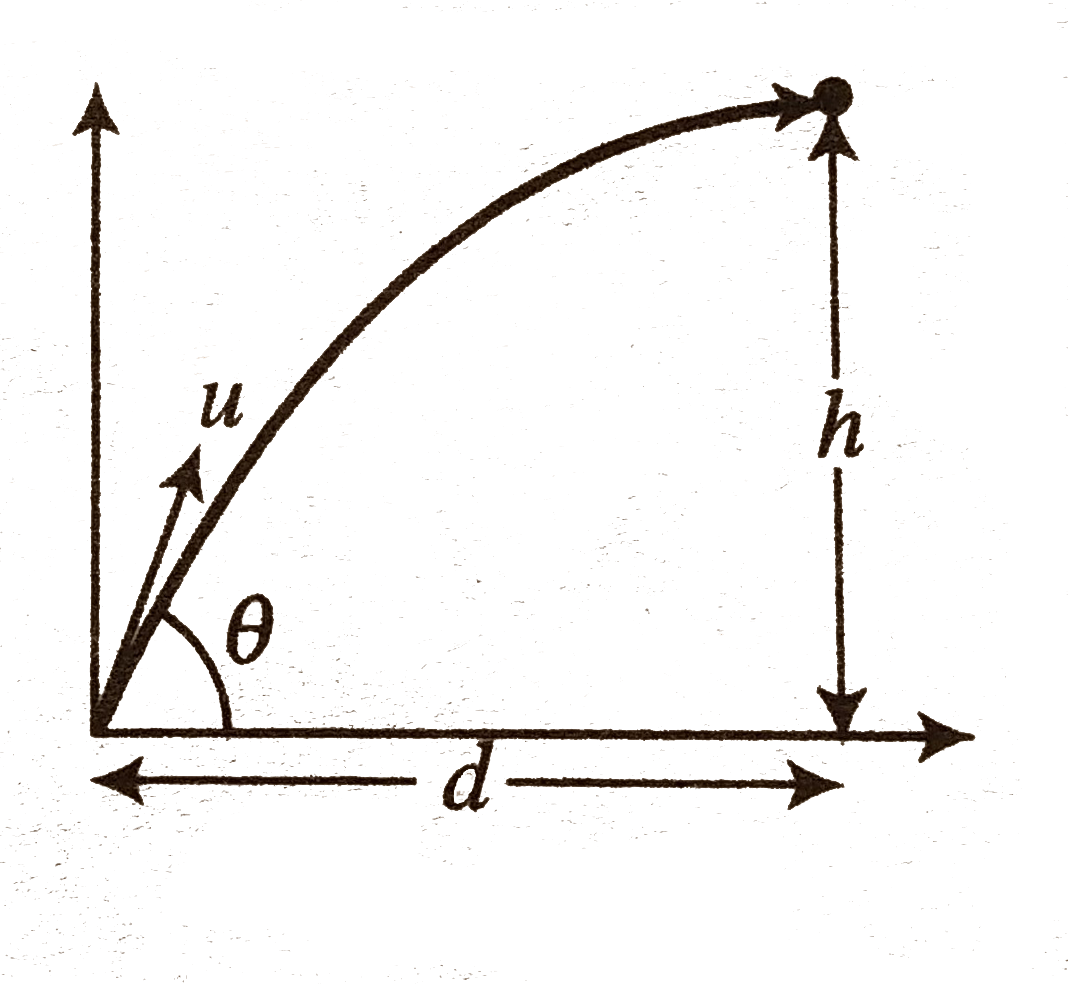
If a stone is to hit at a point which is at a distance `d` away and at a height `h` (Fig. 5.200) above the point from where the stone starts, then what is the value of initial speed `u` if the stone is launched at an angle `theta` ?
.

A

`(g)/(cos theat)sqrt((d)/(2(d tan theta-h)))`

B

`(d)/(cos theta)sqrt((g)/(2(d tan theta-h)))`

C

`sqrt((gd^(2))/(h cos^(2)theta))`

D

`sqrt((gd^(2))/((d-h)))`

Text Solution

Verified by Experts

The correct Answer is:

B
Promotional Banner

Similar Questions

Explore conceptually related problems

If a stone is to hit at a point which is at a horizontal distance 100 m away and at a hight 50 m above the point from where the stone starts, then what is the value of initial speed u if the stone is launched at an angle 45^(@) ?

A stone is thrown with a speed of 10 ms^(-1) at an angle of projection 60^(@) . Find its height above the point of projection when it is at a horizontal distance of 3m from the thrower ? (Take g = 10 ms^(-2) )

A stone is thrown with a speed of 10 ms^(-1) at an angle of projection 60^(@) . Find its height above the point of projection when it is at a horizontal distance of 3m from the thrower ? (Take g = 10 ms^(-2) )

A stone is thrown horizontally with the velocity u = 15m/s from a tower of height H = 25 m. Find (i) the time during which the stone is in motion , (ii) the distance from the tower base to the point where the stone will touch the ground (iii) the velocity v with which it will touch the ground (iv) the angle theta the trajectory of the stone makes with the horizontal at the point stone touches the ground (Air resistance is to be neglected). (g=10ms^(-2)) .

A man standing on the edge of a cliff throws a stone straight up with initial speed (u) and then throws another stone straight down with same initial speed and from the same position. Find the ratio of the speeds. The stones would have attained when they hit ground at the base of the cliff.

A student whirls a stone in a horizontal circle of radius 3 m and at height 8 m above level ground. The string breaks, at lowest point and the stone flies off horizontally and strikes the ground after travelling a horizontal distance of 20 m. What is the magnitude of the centripetal acceleration of the stone while breaking off.

A stone of mass m is tied to an elastic string of negligble mass and spring constant k. The unstretched length of the string is L and has negligible mass. The other end of the string is fixed to a nail at a point p. Initially the stone is at the same level as the point P. The stone is dropped vertically from point P. (a) Find the distance y from the top when the mass comes to rest for an instant, for the first time. (b) What is the maximum velocity attained by the stone in this drop? (c) What shall be the nature of the motion after the stone has reached its lowest point?

A stone is thrown horizontally with a velocity 2sqrtgh from the top of a tower of height h. It strikes the ground level through the foot of tower at a distance x from it. What is the value of x?

A stone is dropped into water from a bridge 44.1 m above the water. Another stone is thrown vertically downward 1 s later. Both strike the water simultaneously. What was the initial speed of the second stone?

A boy whirls a stone of small mass in a horizontal circle of radius 1.5m and at height 2.9m above level ground. The string breacks and the stone flies off horizontally and strikes the ground after travelling a horizontal distance of 10m . What is the magnitude of the centripetal acceleration of the stone while in circular motion ?
