Home
Class 12
PHYSICS
Two identical positive charges are place...

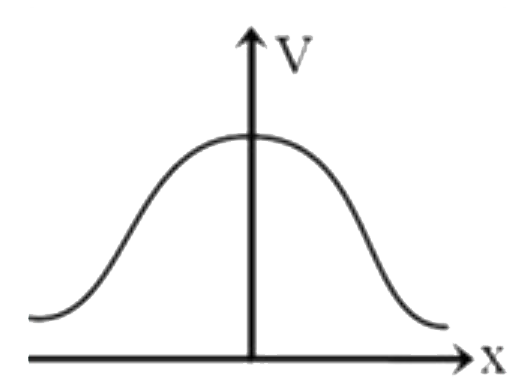
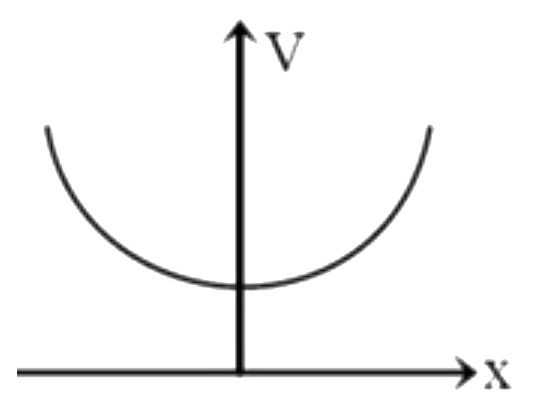
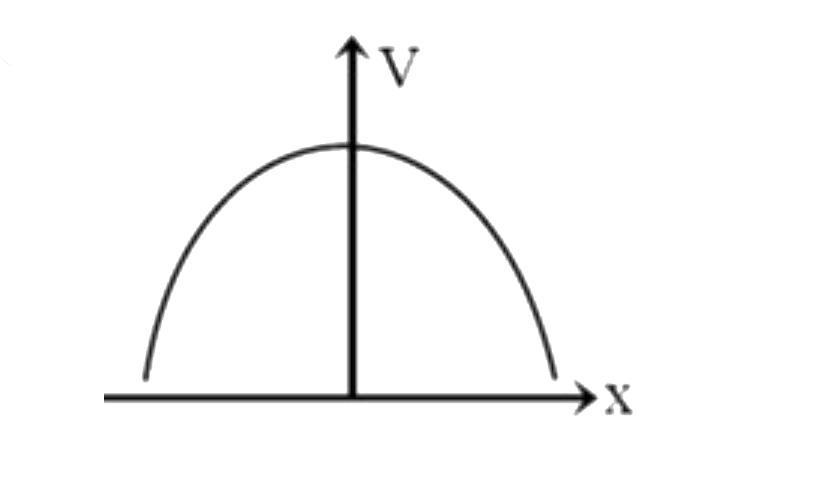
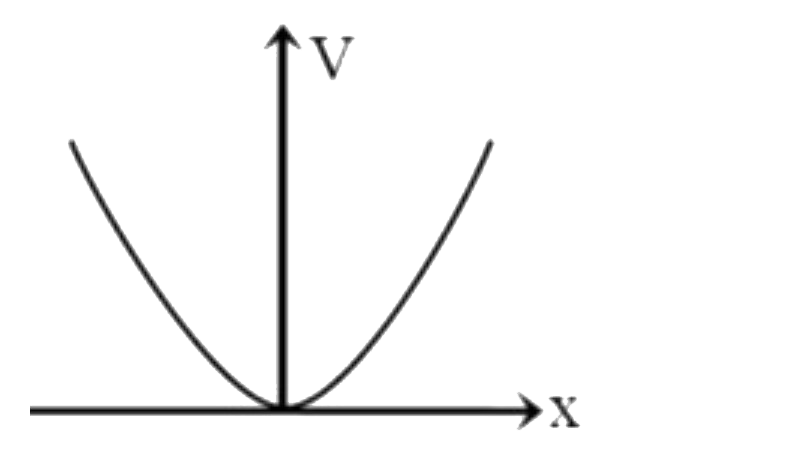
Two identical positive charges are placed at `x=-a` and `x=a`. The correct variation of potential V along the x-axis is given by

A

B

C

D

Text Solution

Verified by Experts

The correct Answer is:

A
Promotional Banner

Similar Questions

Explore conceptually related problems

Two identical point charges are placed at A and B. The potential difference V_0-V_C is ( k= 1/4π epsilon_0 )

Two point charge +-q are placed on the axis at x= -a and x= +a , as shown in fig. (i) Plot the variation of E along the x-axis. (ii) Plot the variation of E along the y-axis.

Two point charges (Q each are placed at (0,y) and (0-y) A point charge q of the same polarity can move along the x-axis. Then

Two identical positive charges are fixed on the y-axis, at equal distances from the origin O. A particle with a negative charges starts on the x-axis at a large distance from O. moves along the x-axis passes through O, and moves far away from O on the other side. Its acceleration a is taken as positive along its direction of motion. Plot acceleration a of the particle against its x-coordinate.

Four identical charges are placed at the four vertices of a square lying in YZ plane. A fifth charge is moved along X axis. The variation of potential energy (U) along X axis is correctly represented by

Two identical infinite positive line changes are places into the lines x = +-a in the x=y plane. A positive point charge placed at origin is restricted to move along x-axis its equilibrium is

Two equal point charges are fixed at x=-a and x=+a on the x-axis. Another point charge Q is placed at the origin. The change in the electrical potential energy of Q, when it is displaced by a small distance x along the x-axis, is approximately proportional to

Three charges are placed along x- axis at x = -a , x=0 and x=a as shown . Calculate the potential energy of the system.

A particle free to move along x-axis is acted upon by a force F=-ax+bx^(2) whrte a and b are positive constants. , the correct variation of potential energy function U(x) is best represented by.

Two identical spherical balls, each of mass m, are placed as shown in figure. Plot the variation of g(gravitation intensity) along the x-axis due to both the masses.
