Home
Class 12
CHEMISTRY
NGP (neighouring group of participation)...

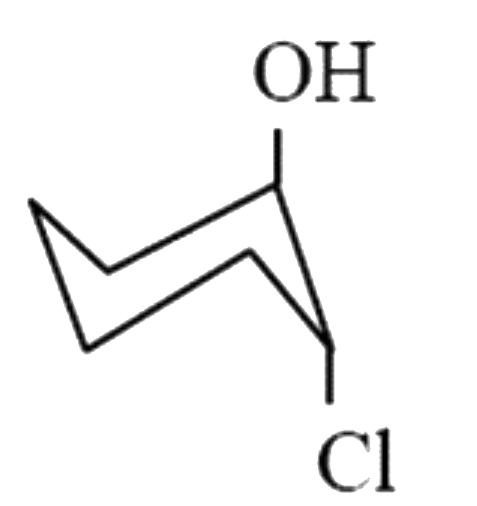
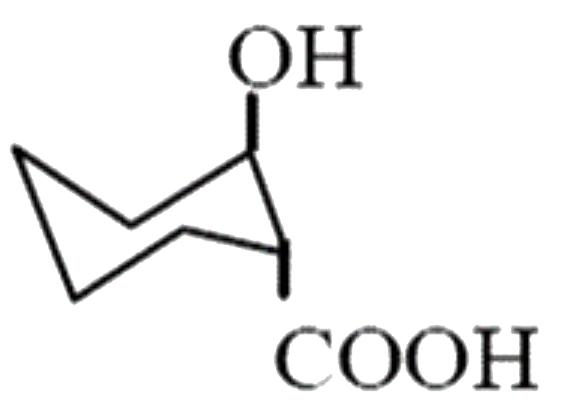
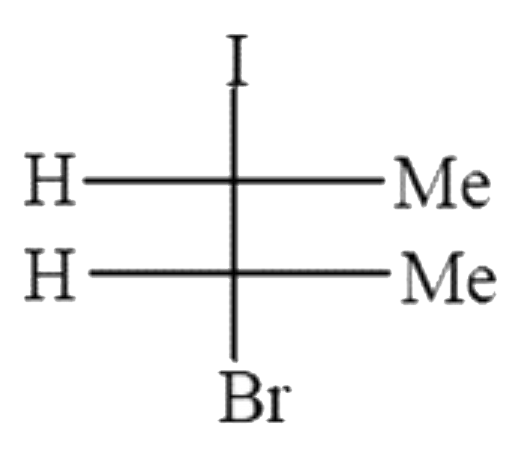
NGP (neighouring group of participation) assistance for `S_(N)2` reaction will not be seen in -

A

B

`CH_3-S-CH_2-CH_2-Cl`

C

D

Text Solution

AI Generated Solution

The correct Answer is:

To determine which reaction will not exhibit neighboring group participation (NGP) assistance in an \( S_N2 \) reaction, we need to analyze the conditions required for NGP to occur. ### Step-by-Step Solution: 1. **Understanding NGP**: Neighboring group participation (NGP) occurs when a nucleophile from a neighboring group attacks the electrophile (the carbon attached to the leaving group) during an \( S_N2 \) reaction. For this to happen, two conditions must be satisfied: - There must be a good leaving group (e.g., Cl, Br, I, H2O, etc.). - There must be a neighboring atom or group with a lone pair of electrons that can act as a nucleophile. 2. **Analyzing the Options**: - **Option A**: Contains a good leaving group (Cl) and a neighboring group with a lone pair (e.g., an alcohol or amine). This can participate in NGP. - **Option B**: Also has a good leaving group (Cl) and a neighboring sulfur atom with a lone pair. This can also participate in NGP. - **Option C**: Lacks a good leaving group. The presence of an OH group does not suffice as it is not a good leaving group. Therefore, it cannot participate in NGP. - **Option D**: Contains two leaving groups (I and Br). Iodine is a good leaving group and can leave, while bromine can act as a nucleophile. This can also participate in NGP. 3. **Conclusion**: Since option C does not have a good leaving group, it will not show NGP assistance for the \( S_N2 \) reaction. ### Final Answer: The reaction that will not show NGP assistance for the \( S_N2 \) reaction is **Option C**.
Promotional Banner

Similar Questions

Explore conceptually related problems

S_(N^1) reaction is fastest in

In the following S_(N)2 reaction

Through S_(N)2 reaction we cannot convert

In an S_(N)1 reaction on chiral centres, there is

In an S_(N)1 reaction on chiral centres, there is

Most reactive halide towards S_(N^(1)) reactions is

Which one is most reactive towards S_(N)1 reactions ?
