Home
Class 12
CHEMISTRY
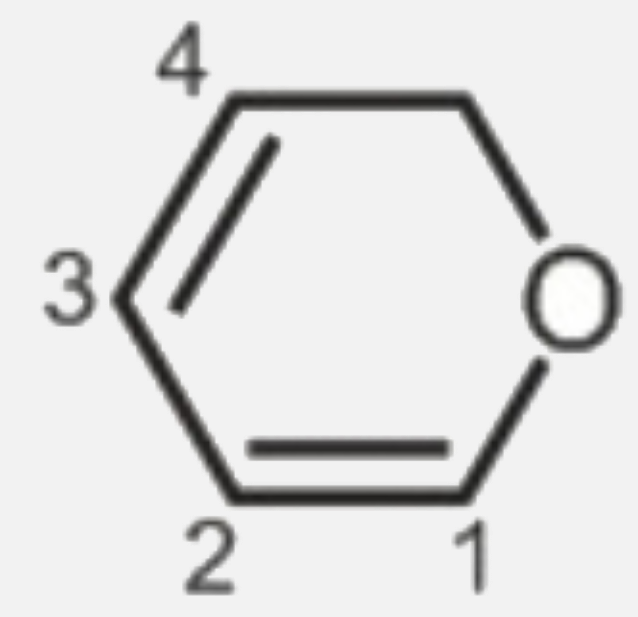
In this molecules, pi- electron - densit...


In this molecules, `pi-` electron - density is more on

A

C1 and C3

B

C2 and C4

C

C2 and C3

D

C1 and C4

Text Solution

Verified by Experts

The correct Answer is:

B
Promotional Banner

Similar Questions

Explore conceptually related problems

Aquaporin density is more on

In which of the following molecules pi -electron density in ring is minimum :

The resonance effect is defined as 'the polarity produced in the molecule by the interaction of two pi -bonds or between a pi -bond and lone pair of electrons present on an adjacentatom.' The effect is transmitted through the chain. In positive resonance effect, the transfer of electrons is away from an atom or substituent group attached to the conjugated system. This electron displacement makes certain positions in the molecule of high electron densities. In negative resonance effect, the transfer of electrons is towards the atom or substituent group attached to the conjugated system. Which of the following shows +M effect ?

The resonance effect is defined as 'the polarity produced in the molecule by the interaction of two pi -bonds or between a pi -bond and lone pair of electrons present on an adjacentatom.' The effect is transmitted through the chain. In positive resonance effect, the transfer of electrons is away from an atom or substituent group attached to the conjugated system. This electron displacement makes certain positions in the molecule of high electron densities. In negative resonance effect, the transfer of electrons is towards the atom or substituent group attached to the conjugated system. Which of the following intermediates is pyramidal in shape ?

The resonance effect is defined as 'the polarity produced in the molecule by the interaction of two pi -bonds or between a pi -bond and lone pair of electrons present on an adjacentatom.' The effect is transmitted through the chain. In positive resonance effect, the transfer of electrons is away from an atom or substituent group attached to the conjugated system. This electron displacement makes certain positions in the molecule of high electron densities. In negative resonance effect, the transfer of electrons is towards the atom or substituent group attached to the conjugated system. Which of the following does not show resonance effect ?

The resonance effect is defined as 'the polarity produced in the molecule by the interaction of two pi -bonds or between a pi -bond and lone pair of electrons present on an adjacentatom.' The effect is transmitted through the chain. In positive resonance effect, the transfer of electrons is away from an atom or substituent group attached to the conjugated system. This electron displacement makes certain positions in the molecule of high electron densities. In negative resonance effect, the transfer of electrons is towards the atom or substituent group attached to the conjugated system. Which of the following carboxylate ions is the most stable ?

The resonance effect is defined as 'the polarity produced in the molecule by the interaction of two pi -bonds or between a pi -bond and lone pair of electrons present on an adjacentatom.' The effect is transmitted through the chain. In positive resonance effect, the transfer of electrons is away from an atom or substituent group attached to the conjugated system. This electron displacement makes certain positions in the molecule of high electron densities. In negative resonance effect, the transfer of electrons is towards the atom or substituent group attached to the conjugated system. What is the IUPAC name for :

The resonance effect is defined as 'the polarity produced in the molecule by the interaction of two pi -bonds or between a pi -bond and lone pair of electrons present on an adjacent atom.' The effect is transmitted through the chain. In positive resonance effect, the transfer of electrons is away from an atom or substituent group attached to the conjugated system. This electron displacement makes certain positions in the molecule of high electron densities. In negative resonance effect, the transfer of electrons is towards the atom or substituent group attached to the conjugated system. Which of the following free radicals is the most stable ?
