Home
Class 12
CHEMISTRY
Which chloroderivative of benzene among ...

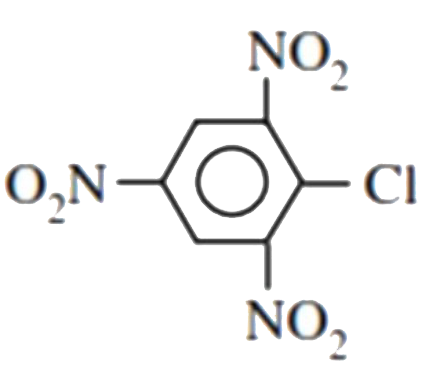
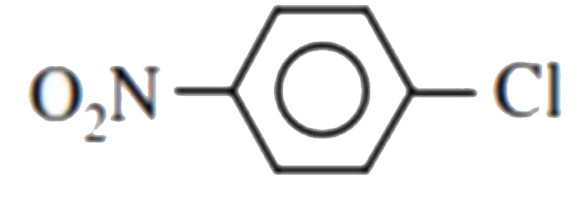
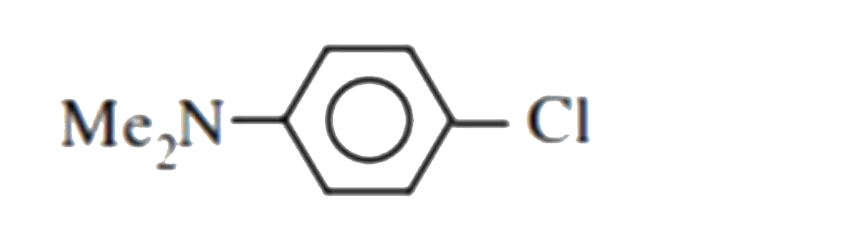
Which chloroderivative of benzene among the following would undergo hydrolysis most readily with aqueous sodium hydroxide to furnish the corresponding hydroxyderivative ?

A

B

C

D

`C_6H_5Cl`

Text Solution

AI Generated Solution

The correct Answer is:

To determine which chloroderivative of benzene would undergo hydrolysis most readily with aqueous sodium hydroxide to furnish the corresponding hydroxy derivative, we need to analyze the effects of substituents on the benzene ring. ### Step-by-Step Solution: 1. **Identify the Substituents**: We need to look at the chloroderivatives of benzene provided in the options. The presence of different substituents such as nitro groups (NO2) and amino groups (NH2) can significantly influence the reactivity of the chlorobenzene derivatives. 2. **Understand Nucleophilic Substitution**: Benzene typically does not undergo nucleophilic substitution easily due to its stable aromatic system. However, the presence of electron-withdrawing groups (EWGs) can make the benzene ring more electrophilic, facilitating nucleophilic substitution reactions. 3. **Evaluate Electron-Withdrawing Groups**: Among the substituents, nitro groups (NO2) are strong electron-withdrawing groups. The more nitro groups attached to the benzene ring, the more electron-deficient the ring becomes. This increased electron deficiency enhances the ring's susceptibility to nucleophilic attack. 4. **Analyze the Options**: - **Option 1**: 2,4,6-Trinitrochlorobenzene (three NO2 groups) - This compound is highly electron-deficient and would readily undergo hydrolysis with aqueous NaOH. - **Option 2**: Mononitrochlorobenzene (one NO2 group) - This is less reactive than option 1. - **Option 3**: Aminochlorobenzene (NH2 group) - The amino group is an electron-donating group, making the ring less reactive towards nucleophilic substitution. - **Option 4**: Chlorobenzene (no strong EWG) - This is the least reactive as it lacks any significant electron-withdrawing groups. 5. **Conclusion**: Based on the analysis, 2,4,6-Trinitrochlorobenzene (Option 1) would undergo hydrolysis most readily with aqueous sodium hydroxide to furnish the corresponding hydroxy derivative, due to the presence of three strong electron-withdrawing nitro groups. ### Final Answer: **Option 1: 2,4,6-Trinitrochlorobenzene**
Promotional Banner

Similar Questions

Explore conceptually related problems

Which chloroderivative of nitrobenzene among the following would undergo hydrolysis most readily with aqueous NaOH?

Which of the following compound undergo hydrolysis most easily :

Which of the following undergoes Hydrolysis most easily:

Which of the following do not undergo hydrolysis?

Which of the following do not undergo hydrolysis?

Which of the following salt undergoes hydrolysis?

Which of the following salts undergoes hydrolysis ?

Among the following which salt do not undergo hydrolysis?
