Home
Class 12
CHEMISTRY
Which one of the following compounds und...

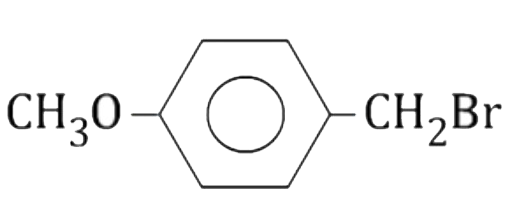
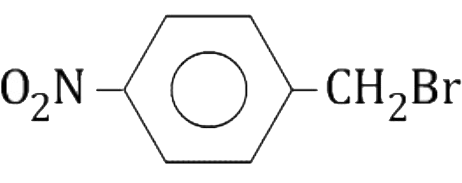
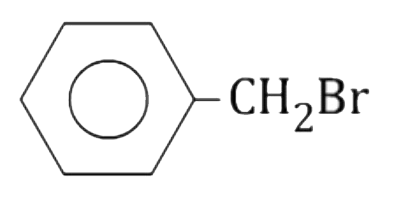
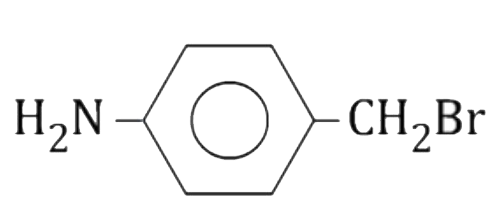
Which one of the following compounds undergoes predominantly `S_N^2` reaction with aqueous NaOH in a polar aprotic solvent ?

A

B

C

D

Text Solution

AI Generated Solution

The correct Answer is:

To determine which compound undergoes predominantly an \( S_N^2 \) reaction with aqueous NaOH in a polar aprotic solvent, we need to analyze the substituents attached to the carbon atom that is undergoing the nucleophilic substitution. Here’s the step-by-step solution: ### Step 1: Understand the \( S_N^2 \) Mechanism The \( S_N^2 \) (bimolecular nucleophilic substitution) mechanism involves a single concerted step where the nucleophile attacks the electrophile, leading to the displacement of a leaving group. The reaction rate is dependent on both the nucleophile and the substrate. ### Step 2: Identify the Factors Influencing \( S_N^2 \) The reactivity in \( S_N^2 \) reactions is influenced by: - The nature of the leaving group (better leaving groups facilitate \( S_N^2 \)). - Steric hindrance (less sterically hindered substrates react faster). - The electronic effects of substituents (electron-withdrawing groups enhance reactivity, while electron-donating groups decrease it). ### Step 3: Analyze the Given Compounds Let’s consider the compounds that might be provided in the question (though not specified here, we will assume common examples): 1. Compound A: \( CH_2Br \) with a methoxy group (\( -OCH_3 \)) 2. Compound B: \( CH_2Br \) with a nitro group (\( -NO_2 \)) 3. Compound C: \( CH_2Br \) with an amino group (\( -NH_2 \)) 4. Compound D: \( CH_2Br \) with no substituents. ### Step 4: Evaluate Each Compound - **Compound A (Methoxy group)**: The methoxy group is an electron-donating group (+M effect), which decreases the reactivity towards \( S_N^2 \). - **Compound B (Nitro group)**: The nitro group is a strong electron-withdrawing group (-M and -I effects), which increases the reactivity towards \( S_N^2 \). - **Compound C (Amino group)**: The amino group is also an electron-donating group (+M effect), which decreases the reactivity towards \( S_N^2 \). - **Compound D (No substituents)**: This compound would have moderate reactivity, but without any strong electron-withdrawing groups. ### Step 5: Conclusion Among the analyzed compounds, the one with the nitro group (Compound B) will undergo predominantly \( S_N^2 \) reaction due to the strong electron-withdrawing effect of the nitro group, enhancing the electrophilicity of the carbon attached to the leaving group. ### Final Answer The compound that undergoes predominantly \( S_N^2 \) reaction with aqueous NaOH in a polar aprotic solvent is the one with the nitro group (\( -NO_2 \)). ---
Promotional Banner

Similar Questions

Explore conceptually related problems

Which one of following compounds undergoes EI reaction most readily?

Which one of the following compounds readily reacts will NaOH ?

Which of the following compound (s) is/are non-polar?

Which of the following compound (s) is/are non-polar?

Which of the following compounds undergo E2 reaction with maximum rate?

Which of the following compounds will not undergo Friedel Craft's reaction with benzene ?

Among the following, the compound that undergoes the fastest S_N1 reaction is:

Which of the following halide undergoes in hydrolysis via S_(N^(1)) reaction?
