Home
Class 12
CHEMISTRY
Which one of the following is the correc...

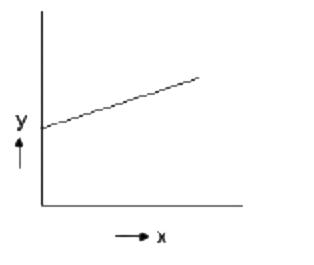
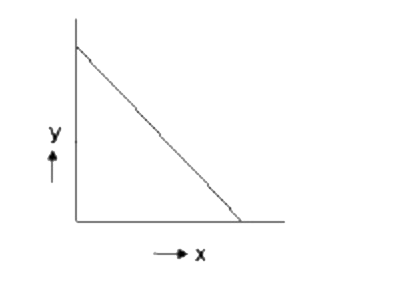
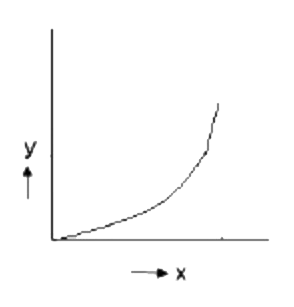
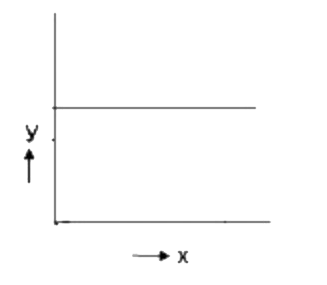
Which one of the following is the correct plot of `^^_m("in s cm"^2mol^(-1)) and sqrtc("in" ((mol)/L)^(1/2))` for KCl solution ? `(y=^^_m,x=sqrtc)`

A

B

C

D

Text Solution

AI Generated Solution

The correct Answer is:

To solve the question regarding the correct plot of molar conductance (λm) versus the square root of concentration (√C) for KCl solution, we will follow these steps: ### Step 1: Understand the relationship The relationship between molar conductance (λm) and concentration (C) for strong electrolytes can be described by the Debye-Hückel-Onsager equation: \[ \lambda_m = \lambda_m^0 - b \sqrt{C} \] where: - \( \lambda_m \) is the molar conductance at a given concentration, - \( \lambda_m^0 \) is the molar conductance at infinite dilution, - \( b \) is a constant (Debye constant), - \( C \) is the concentration. ### Step 2: Rearranging the equation From the equation, we can identify that: - The y-axis will represent \( \lambda_m \), - The x-axis will represent \( \sqrt{C} \). This can be rewritten in the form of a linear equation: \[ y = mx + c \] where: - \( y = \lambda_m \), - \( m = -b \) (the slope, which is negative), - \( x = \sqrt{C} \), - \( c = \lambda_m^0 \) (the y-intercept). ### Step 3: Analyze the plot characteristics Given that the slope (m) is negative, the plot will show a downward trend as we move along the x-axis (increasing \( \sqrt{C} \)). The y-intercept will be positive, indicating that at zero concentration, the molar conductance approaches \( \lambda_m^0 \). ### Step 4: Evaluate the options Now, we need to evaluate the provided options based on the characteristics of the plot: 1. **Option 1**: Slope is not negative (incorrect). 2. **Option 2**: Slope is negative and there is a y-intercept (correct). 3. **Option 3**: Slope is not negative (incorrect). 4. **Option 4**: Slope is not negative (incorrect). ### Conclusion The correct plot for the relationship between molar conductance and the square root of concentration for KCl solution is represented by **Option 2**, which shows a negative slope and a positive y-intercept. ---
Promotional Banner

Similar Questions

Explore conceptually related problems

Which one of the following graphs between molar conductivity (A_(m)) versus sqrtC is correct?

Which of the following curve gives the variation of Lambda_(m) "with" sqrtC " for " CH_(3)COOH ?

A molal solution is one that contains 1 mol of a solute in

The resistance of 0.5M solution of an electrolyte in a cell was found to be 50 Omega . If the electrodes in the cell are 2.2 cm apart and have an area of 4.4 cm^(2) then the molar conductivity (in S m^(2) mol^(-1)) of the solution is

If X is specific resistance of the electrolytic solution and Y is the molarity of the solution then molar conductivity of solution is (in Scm^2mol^(-1) ) given by:

The concentrations of N_(2)O_(5) decomposing in first order kinetics after 800 s is 1.45 mol L^(-1) and after 1600 s is 0.88 mol L^(-1) . Calculate the rate constant.

Molar conductance of 1M solution of weak acid HA is 20 ohm^(-1) cm^(2) mol^(-1) . Find % dissocation of HA: (^^_(m)^(o)(H^(+)) =350 S cm^(2) mol^(-1)),(^^_(m)^(o)(A^(-)) =50 S cm^(2) mol^(-1))

(a) Define the following terms : (i) Limiting molar conductivity, (ii) Fuel cell (b) Resistance of a conductivity cell filled with 0.1 molL^(-1)KCl solution is 100 Ohm. If the resistance of the same cell when filled with 0.2 mol L^(-1)KCl solution is 520 Ohm , calculate the conductivity and molar conductivity of 0.2 mol L^(-1) KCl solution. The conductivity of 0.1 mol L^(-1) KCl solution is 1.29xx10^(-1) Scm^(-1) .

For the reaction, 2A + B to products, when the concentrations of A and B both were doubled, the rate of the reaction increased from 0.3 mol L^(-1)s^(-1) to 2.4 mol L^(-1)s^(-1). When the concentration of A alone is doubled, the rate increased from 0.3 mol L^(-1)s^(-1) to 0.6 mol L^(-1)s^(-1) . Which one of the following statements is correct ?

Explain , giving reason , which of the following sets of quantum number are not possible {:(a,n= 0 ,l = 0, m_(1) = 0, m_(s) = +1//2),(b,n= 1 ,l = 0, m_(1) = 0, m_(s) = -1//2),(c,n= 1 ,l = 1, m_(1) = 0, m_(s) = +1//2),(d,n= 2 ,l = 1, m_(1) = 0, m_(s) = -1//2),(e,n= 3 ,l = 3, m_(1) = -3, m_(s) = +1//2),(f,n= 3 ,l = 1, m_(1) = 0, m_(s) = +1//2):}
