Home
Class 12
CHEMISTRY
Which of the following is most reactive ...

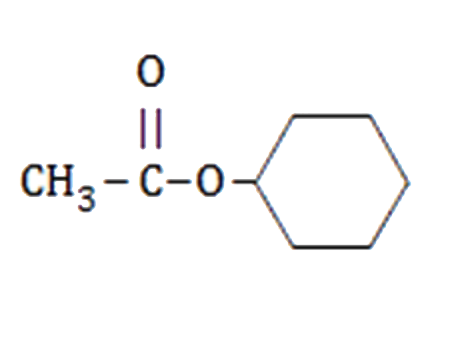
Which of the following is most reactive for hydrolysis ?

A

`CH_3-overset(O)overset(||)C-O-CH_3`

B

`CH_3-overset(O)overset(||)C-O-underset(CH_3)underset(|)(CH)-CH_3`

C

`CH_3-overset(O)overset(||)C-O-underset(CH_3)underset(|)overset(CH_3)overset(|)(C)-CH_3`

D

Text Solution

AI Generated Solution

The correct Answer is:

To determine which compound is most reactive for hydrolysis, we need to analyze the effect of substituents on the carbonyl group (C=O) in the given compounds. Here’s a step-by-step solution: ### Step 1: Understand Hydrolysis and Nucleophilic Attack Hydrolysis involves the reaction of a compound with water, where water decomposes into H⁺ and OH⁻ ions. The OH⁻ ion acts as a nucleophile, attacking the electron-deficient carbon atom of the carbonyl group (C=O). **Hint:** Remember that nucleophiles attack electron-deficient centers. ### Step 2: Identify Electron-Withdrawing and Electron-Donating Groups Electron-withdrawing groups (EWGs) increase the electron deficiency of the carbonyl carbon, making it more susceptible to nucleophilic attack. Conversely, electron-donating groups (EDGs) decrease the electron deficiency, making the carbon less reactive. **Hint:** Look for groups that can either pull electrons away (EWGs) or push electrons towards the carbonyl carbon (EDGs). ### Step 3: Analyze the Given Compounds Assuming the compounds have various substituents, we need to evaluate their effects: - **Electron-Withdrawing Groups (EWGs):** These include groups like -NO₂, -CN, -COOH, etc., which increase reactivity. - **Electron-Donating Groups (EDGs):** These include groups like -OCH₃, -CH₃, etc., which decrease reactivity. **Hint:** Identify the substituents on the carbonyl carbon in each compound. ### Step 4: Determine the Compound with the Least Electron-Donation The compound that has the least electron-donating capacity (or the most electron-withdrawing groups) will be the most reactive towards hydrolysis. **Hint:** Compare the number and strength of electron-donating and electron-withdrawing groups in each compound. ### Step 5: Conclusion After analyzing the substituents on the carbonyl group, the compound with the highest electron deficiency at the carbonyl carbon will be the most reactive for hydrolysis. If we assume that one of the compounds has a strong electron-withdrawing group while others have weaker or no such groups, that compound will be the most reactive. **Final Answer:** The compound with the least electron-donating groups or the most electron-withdrawing groups is the most reactive for hydrolysis.
Promotional Banner

Similar Questions

Explore conceptually related problems

Which of the following is most reactive for electrophilic substitution reaction

Which of the following is the most reactive isomer ?

Which of the following is the most reactive metal?

Which of the following is most reactive towards aqueous NaOH?

Which among the following is the most reactive?

Which of the following is the most reactive towards electrophilic substitution?

Which of the following is the most reactive towards ring nitration ?

Which one of the following is most reactive towards water?
