Home
Class 12
CHEMISTRY
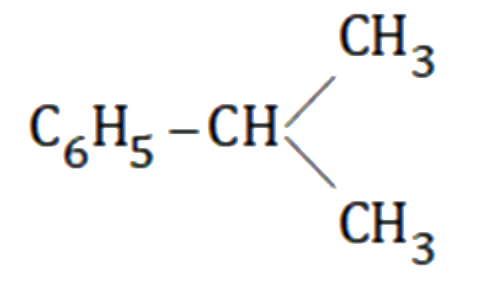
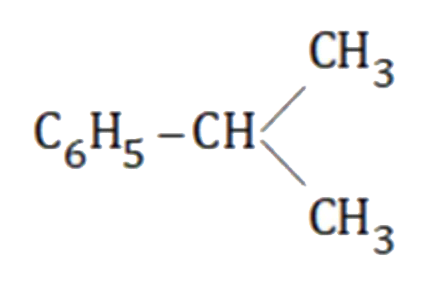
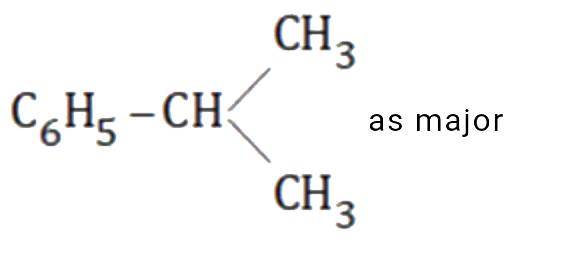
The products of the reaction will be C...

The products of the reaction will be
`C_6H_6+CH_3-CH_2-CH_2-Broverset("Anhy.AlBr"_3)rarr`

A

`C_6H_5-CH_2-CH_2-CH_3`

B

C

as major product and `C_6H_5-CH_2-CH_2-CH_3` as minor product.

D

1 : 1 mixture of `C_6H_5-CH_2-CH_2-CH_3` and

Text Solution

AI Generated Solution

The correct Answer is:

To solve the given problem, we will analyze the reaction between benzene and n-propyl bromide in the presence of anhydrous aluminum bromide (AlBr₃). This reaction is a Friedel-Crafts alkylation, which involves the formation of a carbocation that can react with benzene. ### Step-by-Step Solution: 1. **Identify the Reactants**: - The reactants are benzene (C₆H₆) and n-propyl bromide (C₃H₇Br). 2. **Understand the Role of Aluminum Bromide**: - Anhydrous aluminum bromide (AlBr₃) acts as a Lewis acid and helps in generating a more reactive species from n-propyl bromide. 3. **Formation of Carbocation**: - When n-propyl bromide reacts with AlBr₃, it forms a carbocation. The reaction can be represented as: \[ \text{C}_3\text{H}_7\text{Br} + \text{AlBr}_3 \rightarrow \text{C}_3\text{H}_7^+ + \text{AlBr}_4^- \] - The n-propyl carbocation (C₃H₇⁺) is a primary carbocation. 4. **Carbocation Rearrangement**: - Primary carbocations can rearrange to form more stable secondary carbocations. In this case, the n-propyl carbocation can undergo a hydride shift to become a more stable isopropyl carbocation: \[ \text{C}_3\text{H}_7^+ \rightarrow \text{C}_3\text{H}_7^+ \text{ (isopropyl)} \] 5. **Electrophilic Attack on Benzene**: - The more stable isopropyl carbocation can then react with benzene. The electrophilic aromatic substitution occurs, leading to the formation of isopropylbenzene (also known as cumene): \[ \text{C}_6\text{H}_6 + \text{C}_3\text{H}_7^+ \rightarrow \text{C}_6\text{H}_5\text{C}(CH_3)_2 \] 6. **Minor Product Formation**: - Although the major product is isopropylbenzene, some n-propylbenzene will also be formed from the original n-propyl carbocation without rearrangement: \[ \text{C}_6\text{H}_6 + \text{C}_3\text{H}_7^+ \rightarrow \text{C}_6\text{H}_5\text{C}_3\text{H}_7 \] 7. **Final Products**: - The final products of the reaction are: - Major Product: Isopropylbenzene (C₆H₅C(CH₃)₂) - Minor Product: n-Propylbenzene (C₆H₅C₃H₇) ### Conclusion: The products of the reaction are isopropylbenzene (major product) and n-propylbenzene (minor product).
Promotional Banner

Similar Questions

Explore conceptually related problems

What will be product in the following reaction CH_(3)-CH_(2)-CH_(2)-CH_(3)overset(KMnO_(4))rarr ?

Write structures of the products of the following reactions: (i) CH_(3)-CH=CH_(2)overset(H_(2)O //H^(+))rarr (ii) (iii) CH_(3)-CH_(2)-underset(CH_(3))underset("| ")("C ")H-CHO overset(NaBH_(4))rarr

In the given reaction CH_3-CH_2-CH_2-O-CH_2-CH_3 overset("Conc.Hl)rarr(X)+(Y)

For the reaction C_(6)H_(6)+(CH_(3))_(2)CHCH_(2)Cl overset("Anhy".AlCl_(3))rarr The final product is

CH_(3)CH_(2)-O-CH_(3)overset("anhy"HI)rarr ? Product is

The major product of the following reaction is : (CH_3)_2C=CH-CH_2-CH_3overset((i)B_2H_6,"ether"(ii)H_2O_2, "NaOH")to

The end product of the following reaction CH_(3)MgBr+CH_(2)=CH-CHOoverset(H_(3)O^(+))rarr is :

Product of the given reaction CH_3CH_2-CH=CH_3overset(SiO_2)rarr will be

C_(6)H_(5)CHO+CH_(3)CH_(2)CHOoverset("dil.NaOH")rarr

The product of the reaction CHO+(C_6H_5-CHCO)_2Ooverset(C_6H_5-CH_2COONa//Delta)rarr(X) will be