Home
Class 12
CHEMISTRY
(A)(C(4)H(8)O)overset(H(3)O^(o+))rarr(B)...

`(A)(C_(4)H_(8)O)overset(H_(3)O^(o+))rarr(B)overset(CrO_(3))underset("acetic acid")rarr(C )overset(CH_(2)N_(2))underset(Delta)rarr(D)`
The compound 'D' is

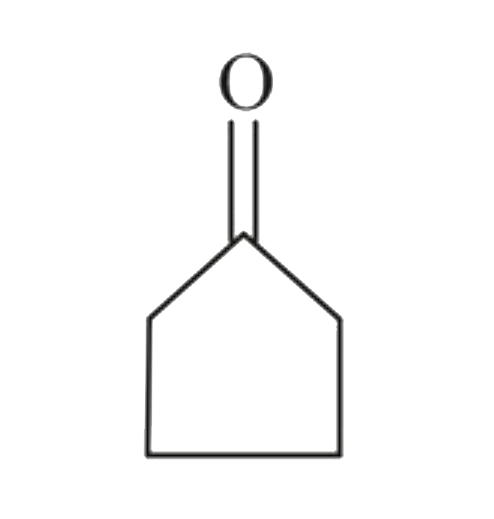
A

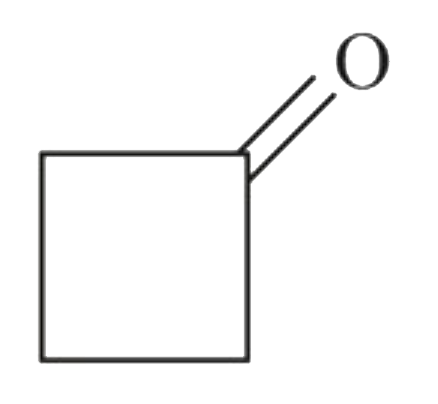
B

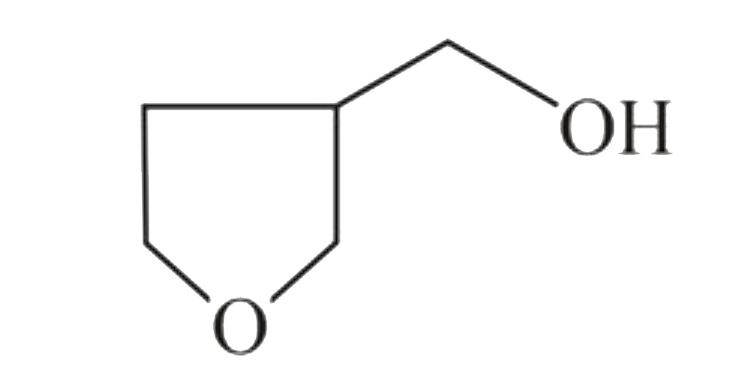
C

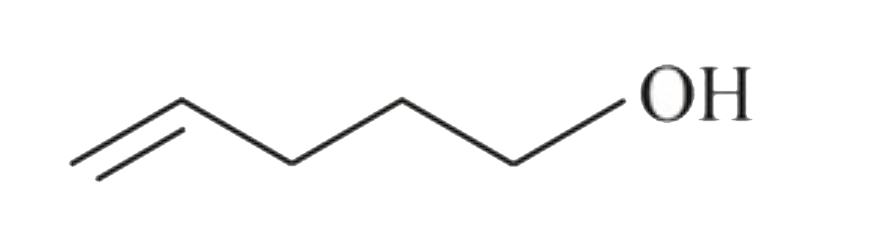
D

Text Solution

AI Generated Solution

The correct Answer is:

To solve the problem step by step, we need to analyze the transformations of the compound A (C₄H₈O) to find out what compound D is. ### Step 1: Identify Compound A The molecular formula C₄H₈O suggests that compound A could be a simple alcohol or an ether. A common structure that fits this formula is CH₂=CH-CH₂-CH₂OH (butanol) or CH₃-CH₂-CH₂-CHO (butanal). However, for this problem, we will consider it as a primary alcohol, specifically 1-butanol (C₄H₈O). ### Step 2: Reaction of A with Acid When 1-butanol (A) is treated with an acid (H₃O⁺), it can undergo a rearrangement or ring expansion. In this case, it can form cyclobutanol (B) through a ring formation reaction. **B = Cyclobutanol** ### Step 3: Oxidation of B with CrO₃ and Acetic Acid Cyclobutanol (B) is then oxidized using chromium trioxide (CrO₃) in acetic acid. This oxidation process typically converts alcohols to ketones or aldehydes. In this case, cyclobutanol is oxidized to cyclobutanone (C). **C = Cyclobutanone** ### Step 4: Reaction of C with Diazomethane Cyclobutanone (C) is then treated with diazomethane (CH₂N₂) under heating conditions. Diazomethane is known to react with carbonyl compounds to form methyl esters. In this case, it will insert a CH₂ group into the cyclobutanone structure, resulting in the formation of cyclopentanone (D). **D = Cyclopentanone** ### Conclusion The compound D is cyclopentanone. ### Summary of Steps: 1. Identify A as 1-butanol (C₄H₈O). 2. Convert A to B (cyclobutanol) using acid. 3. Oxidize B to C (cyclobutanone) using CrO₃ and acetic acid. 4. React C with diazomethane to form D (cyclopentanone).
Promotional Banner

Similar Questions

Explore conceptually related problems

SiCl_(4)overset(H_(2)O)rarr(A)overset("Heat")rarr (B) overset(Na_(2)CO_(3))underset("Heat")rarr(C ) , The compound (C ) is

C_(6)H_(10) overset(NBS)rarr (X) overset(Mg ether)rarr (Y) overset(CH_(3)CN)underset(H_(3)O^+)rarr (Z) The compound (Z) is

complete the following reactions: a. overset (C_(6)H_(6) + MeCOCI) underset (Benzene (A)) overset (AICI_(3)) rarr B overset (HNO_(3)) underset H_(2)SO_(4)) rarr C overset (NaBH_(4)) rarr D overset (H_(2)SO_(4)) underset (Delta) rarr E

Consider the following sequence of reactions underset((C_(4)H_(8)O_(3)))(A overset(CrO_(3))rarr B) overset("Warm")rarr CH_(3)overset(O) overset(||)C CH_(3)+CO_(2) The compound (A) is :

overset((i)CH_(3)CHO)underset((ii)H_(3)O^(+))rarr (A) overset(HBr)rarr (B) The compounds (A) and (B)

Me - -=-H overset(NaNH_(2))underset(+liq.NH_(3))rarr (C ) overset(H_(3)O^(o+))rarr (D) the final product (D) is:

CH_(3)-CH_(2)-overset(O)overset(||)C-O Ag overset(Br_(2))underset("CCl"_(4))rarrX overset("(1) Li")underset("(2) CuI")rarr Y overset(CH_(3)-CH_(2)-Br)underset("dry ether")rarr Z

CH_(3)-overset(O)overset(||)(C)-CH_(2)- overset(CH_(3))overset(|)underset(CH_(3))underset(|)(C)-CHO overset(KOH,H_(2)O)underset(Delta)to product (C_(7)H_(10)O) :
