Home
Class 12
CHEMISTRY
Which In K vs 1/T plot is correct for an...

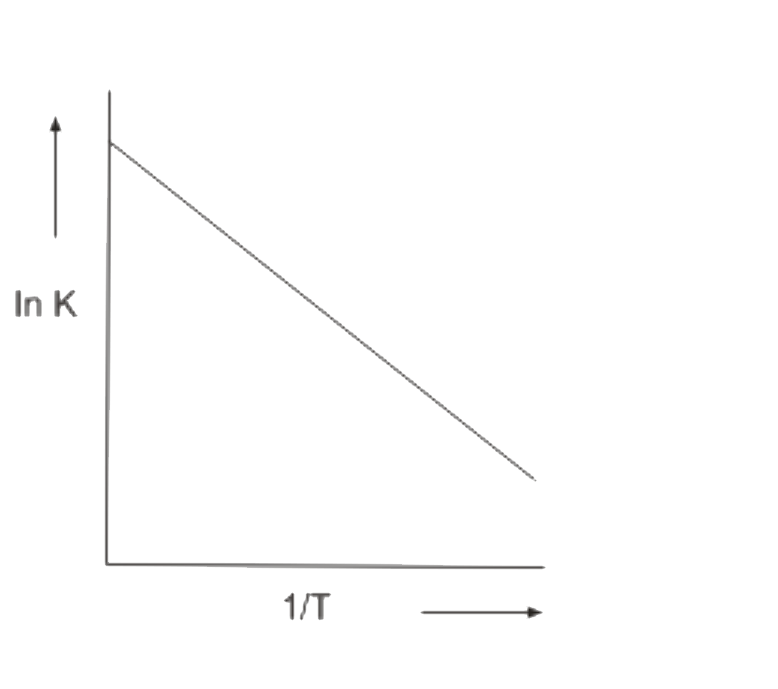
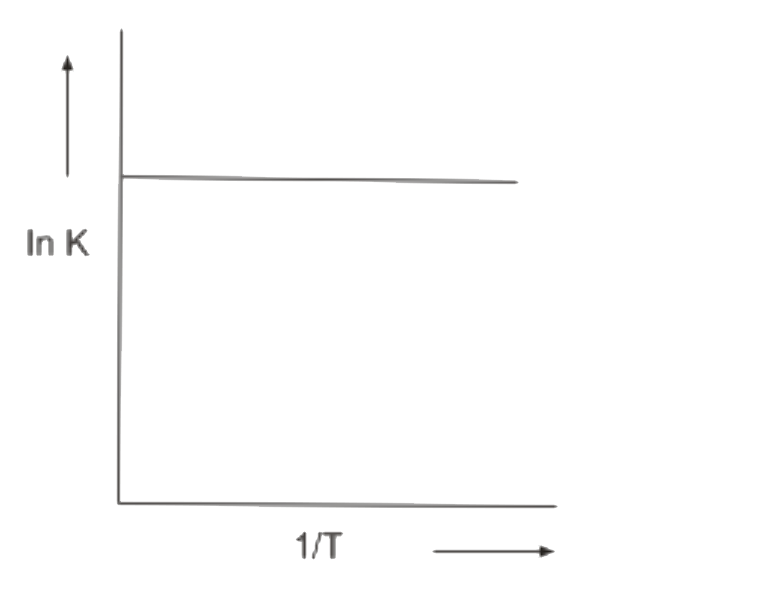
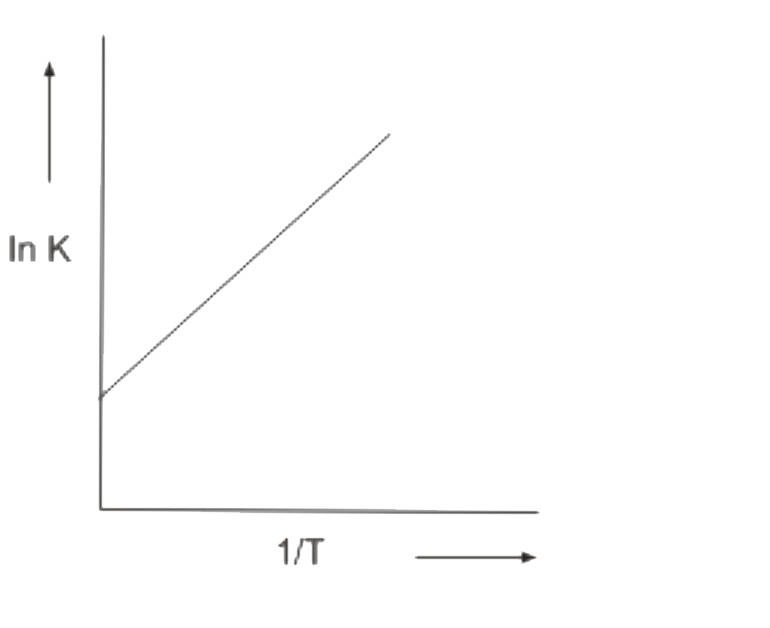
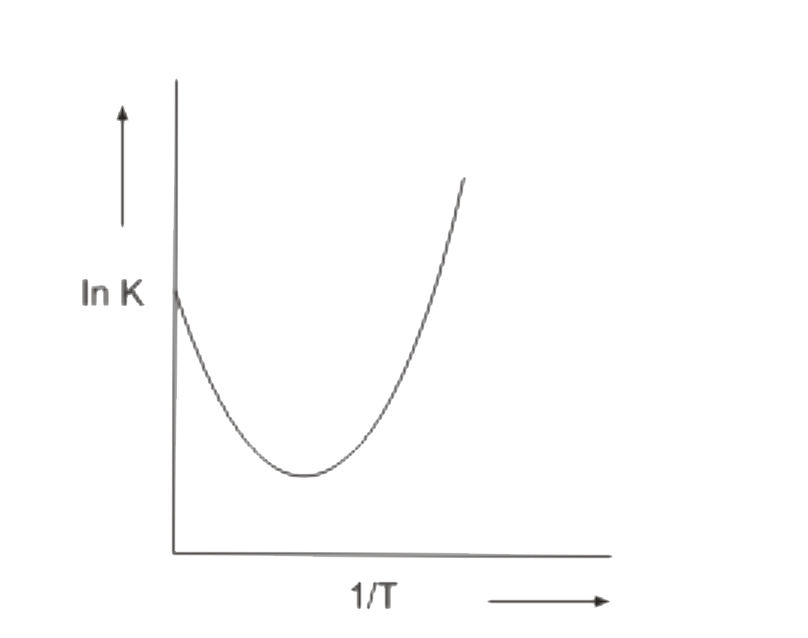
Which In K vs 1/T plot is correct for an equilibrium that shits toward reactants at higher temperatures?

A

B

C

D

Text Solution

Verified by Experts

The correct Answer is:

C
Promotional Banner

Similar Questions

Explore conceptually related problems

Which of the following plots is/are correct?

Which of the following plots is/are correct?

Van't Hoff's equation for a chemical reaction under equilibrium is given by standard reaction enthalpy at temperature T and K is the equilibrium constant . Predict how K will vary with temperature for an exothermic

Which of the plots of ln K vs (1/T) is/are correct?

Effect of temperature on the equilibrium process analysed by using the thermodynamics From the thermodynamics reaction DeltaG^(@)=-2.30RTlogk DeltaG^(@): Standing free energy change DeltaG^(@)=DeltaH^(@)-TDeltaS^(@) …(ii) DeltaH^(@) : Standard heat of the reaction gt From eqns.(i) and(ii) -2RTlogk=DeltaH^(@)=TDeltaS^(@) DeltaS^(@) : standard entropy change implies" "logK=-(DeltaH^(@))/(2.3RT)+(DeltaS^(@))/(2.3R) Clearly, if a plot of k vs 1/T is made then it is a straight lone having slope =(-DeltaH^(@))/(2.3R) amd y intercept =(DeltaS^(@))/(2.3R) If at temperature T_(1) equilibrium constant be k_(1) and at temperature T_(2) equilibrium constant be k_(2) then : implies" "logK_(1)=-(DeltaH^(@))/(2.3RT_(1))+(DeltaS^(@))/(2.3R) ..(iv) implies" "logK_(2)=-(DeltaH^(@))/(2.3RT_(2))+(DeltaS^(@))/(2.3R) ...(v) Substracting e.q (iv) from (v), we get from the relation we can conclude that the of equilibrium constant increase in temperature for endothermic reaction eith but value of equilibrium constant decrease with the increase in temperature for exothermic reaction For exothermic reaction if DeltaS^(@)lt0 then the sketch of log k vs (1)/(T) may be

Which of the following is/are correct for the first order reaction ? (a is initial concentration of reactant, x is concentration of the reactant reacted and t is time)

Effect of temperature on the equilibrium process analysed by using the thermodynamics From the thermodynamics reaction DeltaG^(@)=-2.30RTlogk DeltaG^(@): Standing free energy change DeltaG^(@)=DeltaH^(@)-TDeltaS^(@) …(ii) DeltaH^(@) : Standard heat of the reaction gt From eqns.(i) and(ii) -2RTlogk=DeltaH^(@)=TDeltaS^(@) DeltaS^(@) : standard entropy change implies" "logK=-(DeltaH^(@))/(2.3RT)+(DeltaS^(@))/(2.3R) Clearly, if a plot of k vs 1/T is made then it is a straight lone having slope =(-DeltaH^(@))/(2.3R) amd y intercept =(DeltaS^(@))/(2.3R) If at temperature T_(1) equilibrium constant be k_(1) and at temperature T_(2) equilibrium constant be k_(2) then : implies" "logK_(1)=-(DeltaH^(@))/(2.3RT_(1))+(DeltaS^(@))/(2.3R) ..(iv) implies" "logK_(2)=-(DeltaH^(@))/(2.3RT_(2))+(DeltaS^(@))/(2.3R) ...(v) Substracting e.q (iv) from (v), we get from the relation we can conclude that the of equilibrium constant increase in temperature for endothermic reaction eith but value of equilibrium constant decrease with the increase in temperature for exothermic reaction If statndard heat of dissociation of PCl_(5) is 230 cal then slope of the graph of log vs (1)/(T) is :

Effect of temperature on the equilibrium process analysed by using the thermodynamics From the thermodynamics reaction DeltaG^(@)=-2.30RTlogk DeltaG^(@): Standing free energy change DeltaG^(@)=DeltaH^(@)-TDeltaS^(@) …(ii) DeltaH^(@) : Standard heat of the reaction gt From eqns.(i) and(ii) -2RTlogk=DeltaH^(@)=TDeltaS^(@) DeltaS^(@) : standard entropy change implies" "logK=-(DeltaH^(@))/(2.3RT)+(DeltaS^(@))/(2.3R) Clearly, if a plot of k vs 1/T is made then it is a straight lone having slope =(-DeltaH^(@))/(2.3R) amd y intercept =(DeltaS^(@))/(2.3R) If at temperature T_(1) equilibrium constant be k_(1) and at temperature T_(2) equilibrium constant be k_(2) then : implies" "logK_(1)=-(DeltaH^(@))/(2.3RT_(1))+(DeltaS^(@))/(2.3R) ..(iv) implies" "logK_(2)=-(DeltaH^(@))/(2.3RT_(2))+(DeltaS^(@))/(2.3R) ...(v) Substracting e.q (iv) from (v), we get from the relation we can conclude that the of equilibrium constant increase in temperature for endothermic reaction eith but value of equilibrium constant decrease with the increase in temperature for exothermic reaction If for a particular reversible reaction K_(C)=57 abd 355^(@)C and K_(C)=69 at 450^(@)C then

A very high value of K indicates that at equilibrium most of the reactants are converted into products.

For a given exothermic reaction , K_P and K_p' are the equilibrium constant at temperature T_1 and T_2 respectively .Assuming that heat of reaction is constant in temperature range between T_1 and T_2 , it is readly observed that
