Home
Class 12
CHEMISTRY
Which of the following carbocation can n...

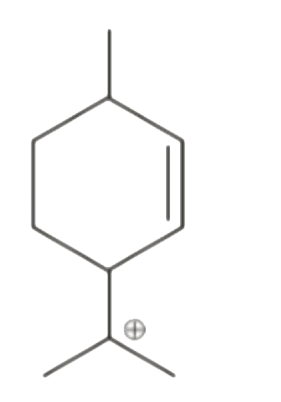
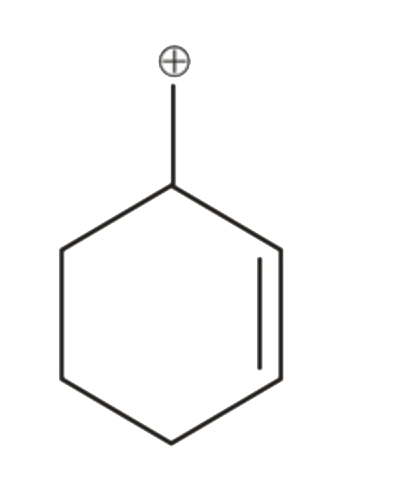
Which of the following carbocation can not undergo rearrangement ?

A

B

C

`CH_3-underset(CH_3)underset(|)overset(o+)(C )-CH-CH_3`

D

`C_6H_5-CH-overset(o+)(C )H_2`

Text Solution

AI Generated Solution

The correct Answer is:

To determine which carbocation cannot undergo rearrangement, we need to analyze the stability of the carbocations presented in the options. Carbocation rearrangement typically occurs to achieve a more stable carbocation, with tertiary carbocations being the most stable, followed by secondary and then primary. ### Step-by-Step Solution: 1. **Identify the Carbocations**: - We need to look at the structure of each carbocation provided in the options. 2. **Evaluate Stability**: - **Tertiary Carbocation**: A carbocation attached to three alkyl groups. It is highly stable due to hyperconjugation and inductive effects. - **Secondary Carbocation**: A carbocation attached to two alkyl groups. It is less stable than tertiary but more stable than primary. - **Primary Carbocation**: A carbocation attached to only one alkyl group. It is the least stable. 3. **Analyze Each Option**: - **Option A**: Tertiary carbocation. It is stable and can rearrange, but it may not need to since it is already stable. - **Option B**: Primary carbocation. This can rearrange to a more stable tertiary carbocation. - **Option C**: A tertiary carbocation (CH3)3C+. Since it is already in the most stable form, it cannot undergo rearrangement. - **Option D**: A primary carbocation that can rearrange to a more stable secondary carbocation. 4. **Conclusion**: - The carbocation that cannot undergo rearrangement is **Option C** because it is already a tertiary carbocation, which is the most stable form. ### Final Answer: **Option C** is the carbocation that cannot undergo rearrangement.
Promotional Banner

Similar Questions

Explore conceptually related problems

Which of the following carbocation is most stable

Which of the following alkenes does not undergo rearrangement on heating with a strong acid?

Which of the following alkenes does not undergo rearrangement on heating with a strong acid?

Which of the following carbocation is most stable?

Which of the following carbocations would not likely rearrange to more stable carbocation ?

Which of the following carbocations is most stable ?

Which of the following carbocations is most stable ?
