Home
Class 12
CHEMISTRY
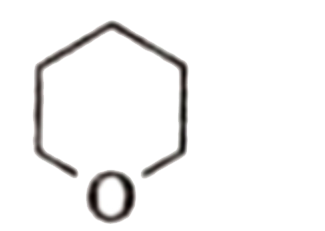
In the given reaction , overset(Br) ov...

In the given reaction ,
`overset(Br) overset(|)(CH_2)-(CH_2)_(3)-CH_2-OH underset("Toluene" 140^@C)overset(NaOH)(rarr)(X)`
X will be

A

`overset(OH)overset(|)(CH_2)-(CH_2)_(4)-CH_2OH`

B

`CH_2=CH-(CH_2)_(3)-CH_2OH`

C

`CH_3-overset(OH)overset(|)(CH)-(CH_3)_(3)-CH_2OH`

D

Text Solution

AI Generated Solution

The correct Answer is:

To solve the given reaction step by step, we will analyze the components involved and the expected reaction mechanism. ### Step 1: Identify the Reactants The reactant is a brominated alcohol, specifically 1-bromo-3-pentanol (Br-CH2-CH2-CH2-CH2-OH). The presence of NaOH indicates that we will have a base-catalyzed reaction. **Hint:** Look for the functional groups in the reactant to determine how they might interact with NaOH. ### Step 2: Determine the Reaction Mechanism Since we have a primary alkyl halide (1-bromo-3-pentanol) and a strong base (NaOH), we can initially consider the possibility of an SN2 reaction. However, the presence of the hydroxyl (-OH) group introduces an acidic hydrogen that can be abstracted by the base. **Hint:** Remember that primary halides often undergo SN2 reactions, but other factors can influence the outcome. ### Step 3: Deprotonation of the Alcohol The hydroxide ion (OH-) from NaOH will abstract the acidic hydrogen from the hydroxyl group (-OH) of the alcohol. This results in the formation of an alkoxide ion (O-) and the corresponding bromide ion (Br-). **Hint:** Identify the acidic hydrogen in the alcohol that can be removed by the base. ### Step 4: Formation of the Alkoxide Ion After deprotonation, we get the alkoxide ion (O-) attached to the carbon chain. The structure can be represented as CH2-CH2-CH2-CH2-O-. **Hint:** Visualize the structure of the alkoxide ion formed after deprotonation. ### Step 5: Nucleophilic Attack Now, the alkoxide ion (O-) acts as a nucleophile and attacks the carbon atom bonded to the bromine (Br). This leads to the displacement of the bromine atom, forming a cyclic ether (a five-membered ring) due to the rearrangement of the carbon chain. **Hint:** Consider how the nucleophile can attack the electrophilic carbon and what type of product this will yield. ### Step 6: Formation of the Product The product formed is a five-membered cyclic ether, specifically 1,3-dioxane, where the oxygen from the alkoxide forms part of the ring. The final structure will be a cyclic compound with five carbon atoms and one oxygen atom. **Hint:** Count the number of atoms in the ring and identify the final product. ### Conclusion The product X formed from the reaction is a five-membered cyclic ether, specifically 1,3-dioxane. **Final Answer:** X is 1,3-dioxane. ---
Promotional Banner

Similar Questions

Explore conceptually related problems

In the given reaction overset(Br)overset(|)(CH_2)-(CH_2)_(3)-CH_2OH underset("Toluene" 140^@C)overset(NaOH)(rarr)(X) 'X' will be

In the given reaction overset(Br)overset(|)(CH_2)-CH=CH_2overset(NaNH_2//Delta)rarr(X) X will be

In the given reaction CH_3-overset(Br)overset(|)(C )H-CH_2-COOH overset(NaOH)(rarr)(X) . 'X' will be

In the given reaction CH_3-CH_2-overset(Br)overset(|)(CH)-CH=CH_2overset("Alc.KOH//Delta)rarr(X) X will be

The major product formed in the reaction CH_(3)CH = CH - overset(O)overset(||)(C ) - CH_(3)underset(H_(2)O,CH_(3)OH)overset(NaBH_(4))rarr is

In the given reaction, CH_(3)-underset(CH_3)underset(|)(CH)-overset(O)overset(||)(C )-CH_2-CH_3 overset(CF_3CO_3H)(rarr)(X) as main product, 'X' will be

In the given reaction [C_6H_5-CH_2-CH_2-overset(o+)(N)(CH_3)_2-CH_2-CH_3]overset(Theta)(OH)overset(Delta)rarr (X) as major product will be

The reaction CH_(2)=CH-CH_(3)+HBr rarr CH_(3)-overset(Br)overset(|)(C )HCH_(3) is
