Home
Class 12
CHEMISTRY
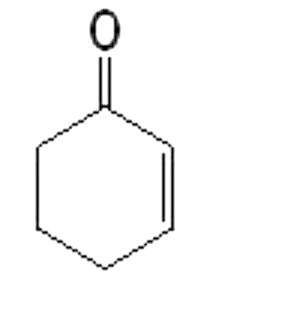
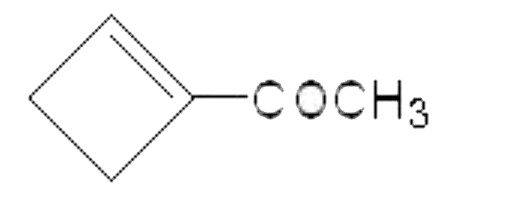
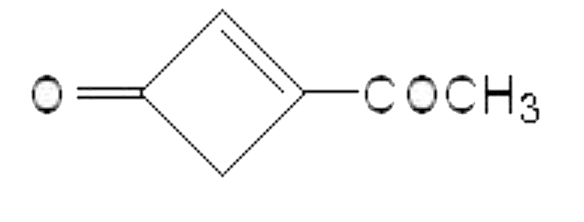
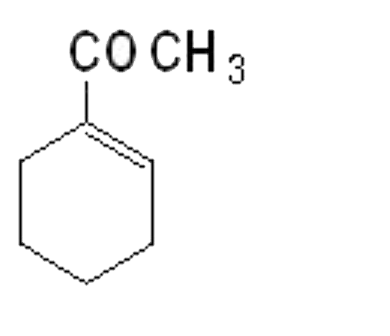
OHC(CH(2))(3)COCH(3)overset(OH^(-))under...

`OHC(CH_(2))_(3)COCH_(3)overset(OH^(-))underset(Delta)rarr`
The major product is ?

A

B

C

D

Text Solution

AI Generated Solution

The correct Answer is:

To solve the problem, we need to analyze the reaction of the compound OHC(CH₂)₃COCH₃ in the presence of a base (OH⁻) and heat. This reaction involves aldehyde condensation, where we have both an aldehyde group (CHO) and a ketone group (COCH₃). ### Step-by-Step Solution: 1. **Identify Functional Groups**: The compound has an aldehyde group (CHO) and a ketone group (COCH₃). The structure can be represented as: \[ \text{CHO - CH}_2 - \text{CH}_2 - \text{CH}_2 - \text{CO - CH}_3 \] 2. **Recognize Reaction Type**: The presence of a base (OH⁻) and heat indicates that we are dealing with an aldol condensation reaction. This reaction typically occurs between aldehydes or between an aldehyde and a ketone. 3. **Identify Alpha Hydrogens**: Both the aldehyde and the ketone have alpha hydrogens. The aldehyde has three alpha hydrogens (from the CH₂ groups), and the ketone has one alpha hydrogen (from the CH₃ group). 4. **Deprotonation**: The base (OH⁻) will deprotonate one of the alpha hydrogens to form an enolate ion. The enolate can form from either the aldehyde or the ketone. - If the enolate forms from the aldehyde, it will be: \[ \text{CH}_2 - \text{CH}_2 - \text{CH}_2 - \text{C}^- = \text{O} - \text{CH}_3 \] - If it forms from the ketone, it will be: \[ \text{C}^- - \text{O} - \text{CH}_3 \] 5. **Nucleophilic Attack**: The enolate ion will then attack the carbonyl carbon of the other carbonyl compound present in the reaction. - If the enolate was formed from the aldehyde, it will attack the ketone. - If the enolate was formed from the ketone, it will attack the aldehyde. 6. **Formation of the β-Hydroxy Carbonyl Compound**: After the nucleophilic attack, we will form a β-hydroxy carbonyl compound. This compound will have both the aldehyde and ketone functionalities. 7. **Dehydration**: Upon heating, the β-hydroxy carbonyl compound will undergo dehydration (loss of water) to form an α,β-unsaturated carbonyl compound. 8. **Final Product**: The final product will be a six-membered ring compound due to the formation of a stable cyclic structure during the reaction. The major product is an α,β-unsaturated carbonyl compound. ### Conclusion: The major product of the reaction is an α,β-unsaturated carbonyl compound, which corresponds to the structure of a cyclohexene derivative.
Promotional Banner

Similar Questions

Explore conceptually related problems

In the given reaction, OHC-(CH_(2))_(3)-overset(O)overset(||)C-CH_(3)overset(overset(Theta)(O)H//Delta)rarr (X)' the major product 'X' will be

CH_(3)-underset(CH_(3))underset(|)overset(CH_(3))overset(|)C-O-CH_(2)-CH_(3)underset(HI)overset("Cold and conc.")rarr ? The product is

Major product of given reaction is - O_2N-CH_2-undersetunderset(Cl)(|)CH-CH_3overset(overset(Theta)(O)H)underset(Delta)to Major product

The product of the reaction is CH_(3)-CH_(2)-overset(O)overset(||)(C)-OAgoverset(Br_(2))underset(Delta)(to) Major product

In the given reaction the products is : CH_(3)-CH_(2)-underset(O)underset(||)(C)-OCH_(3)+CH_(3)-underset(O)underset(||)(C)-OCH_(3) overset((1)CH_(3)O^(Theta)Na^(+))underset((2)CH_(3)OH)to oversert(H_(2)O)underset(Delta)to product

Benzene +Cl-CH_(2)CH_(2)CH_(3)overset(AlCl_(3))(rarr) P underset((ii)H_(2)O)overset((i)O_(2)//Delta)(rarr)Q+ Phenol The major products P and Q are :

+Cl-CH_(2)CH_(2)CH_(3)overset(AlCl_(3))(rarr) P underset((ii)H_(2)O)overset((i)O_(2)//Delta)(rarr)Q+ Phenol The major products P and Q are :
