Home
Class 12
CHEMISTRY
Which of the compounds shown below will ...

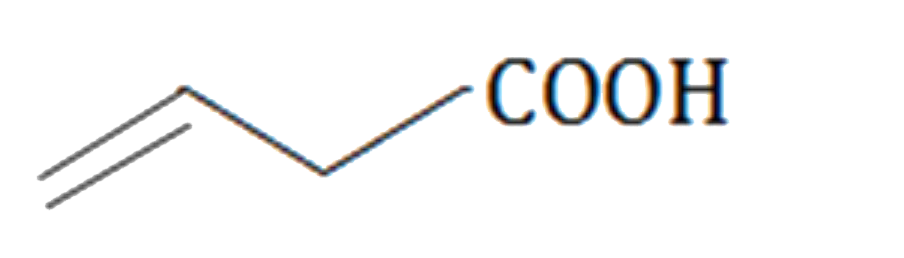
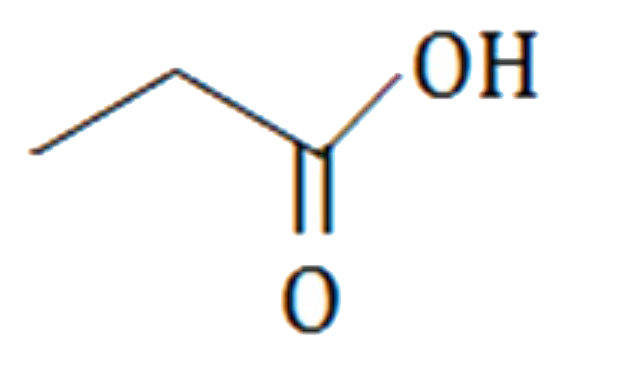
Which of the compounds shown below will react with diethyl malonate in the presence of methoxide ion to give a compound, which on treatment with aqueous acid and gentle heating will decarboxylate to form butanoic acid?

A

B

`CH_3CH_3Br`

C

D

`CH_3CH_2CH_2Br`

Text Solution

AI Generated Solution

The correct Answer is:

To solve the problem, we need to determine which compound will react with diethyl malonate in the presence of methoxide ion to ultimately yield butanoic acid after decarboxylation. Here’s a step-by-step breakdown of the solution: ### Step 1: Understand the Reaction Diethyl malonate (C2H5OOC-CH(COOC2H5)COO) reacts with a strong base, in this case, methoxide ion (OCH3-). The methoxide ion will deprotonate one of the acidic protons in diethyl malonate, generating a carbanion. **Hint:** Identify the structure of diethyl malonate and the role of methoxide ion. ### Step 2: Formation of the Carbanion The methoxide ion abstracts a proton from diethyl malonate, resulting in a carbanion at the alpha position (the carbon adjacent to the carbonyl group). **Hint:** Remember that the carbanion formed is a nucleophile that can attack electrophiles. ### Step 3: Identify the Electrophile The carbanion will attack a compound that has a good leaving group. In the options provided, we need to look for compounds with good leaving groups, such as bromine (Br). **Hint:** Evaluate the leaving groups in the given compounds to determine which ones are suitable for the reaction. ### Step 4: Reaction with the Electrophile Assuming we have a compound with a bromine leaving group (let's denote it as RBr), the carbanion will attack the carbon attached to bromine, leading to the formation of a new compound. **Hint:** Write out the reaction mechanism to visualize how the carbanion attacks the electrophile. ### Step 5: Hydrolysis After the nucleophilic substitution, the resulting compound will undergo hydrolysis (reaction with water) to form a carboxylic acid. **Hint:** Understand that hydrolysis converts the ester into a carboxylic acid. ### Step 6: Decarboxylation The product from hydrolysis will then undergo decarboxylation when treated with aqueous acid and gentle heating. This process involves the loss of carbon dioxide (CO2) from the carboxylic acid. **Hint:** Recall that decarboxylation typically occurs with compounds that have a carboxyl group adjacent to a carbonyl group. ### Step 7: Determine the Final Product The final product after decarboxylation should be butanoic acid (C3H7COOH). To achieve this, the structure of the compound formed after the nucleophilic attack must lead to the correct chain length. **Hint:** Check the structure of the intermediate compound to ensure that it can yield butanoic acid upon decarboxylation. ### Conclusion After analyzing the options, the compound that reacts with diethyl malonate and leads to butanoic acid after decarboxylation is the one containing a bromine leaving group, specifically CH3CH2Br (ethyl bromide). **Final Answer:** The correct option is **Option 2** (which corresponds to CH3CH2Br).
Promotional Banner

Similar Questions

Explore conceptually related problems

Which of the compounds shown below are isomers?

The compound which gives H_2O_2 on treatment with dilute acid is

Which of the aromatic compounds reacts fastest with methoxide ion?

Which of the following compounds are acidic?

The compound which on reaction with cold nitrous acid gives oily nitrosoamine is

Which of the following carbonyl compounds will give recemisation reaction in the presence of acid or base ?

Black insoluble compound which on reacting with nitric acid tums into blue solution.

Which one of the following -compounds does not react with nitrous acid ? .

Which of the following compounds may give reaction with acidic KMnO_(4) ?
