

Home
Class 11
CHEMISTRY
The reactivity of an element is very muc...

The reactivity of an element is very much related to its ionization enthalpy.
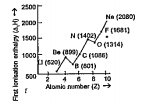
Observe the following graph in which the first ionization enthalpies `(DeltaH_1)` of elements of the second period are plotted against their atomic numbers (Z): Identify the anomalour values and justify.

Promotional Banner

Similar Questions

Explore conceptually related problems

The reactivity of an element is very much related to its inoization enthalpy. Observe the following graph in wich the first ionozation enthalpies (delta_1H) of elements of the sercond period are ploptted agiains their atomic number (Z):

The reactivity of an element is very much related to its ionization enthalpy. In general, ionization enthalpy increases from left to right across a period. Give the reason.

Ionization enthalpy values of lanthanoids are quite comparable to which of the following alkaline earth elements?

Assertion: Of all the elements, helium has the highest value of first ionization enthalpy. Reason: Helium has the most positive electron gain enthalpy of all the elements.

Ionization enthalpy and atomic radius are closely related properties. Analyse the following graph: What conculation can you derive from the graph regarding the first ionization enthalpies of alkali metals and noble gases ? Justyfy.

a) Which of the following has higher first ionization enthalpy, N or O? Justify. b) Which one is bigger, F or F^- ? Why?

Among the elements of the third period, identify the element. a) With highest first ionization enthalpy. b) That is the most reactive metal. c) With the largest atomic radius.

A graph of atomic radius versus atomic number is given below. Using the above graph, how will you accoun for the variation of ionization enthalpy in a period?

a) Which is the element among alkali metals having lowest ionization enthalpy? b) What is meant by valence of an element? How it varies in the periodic table?