Text Solution
Verified by Experts
The correct Answer is:
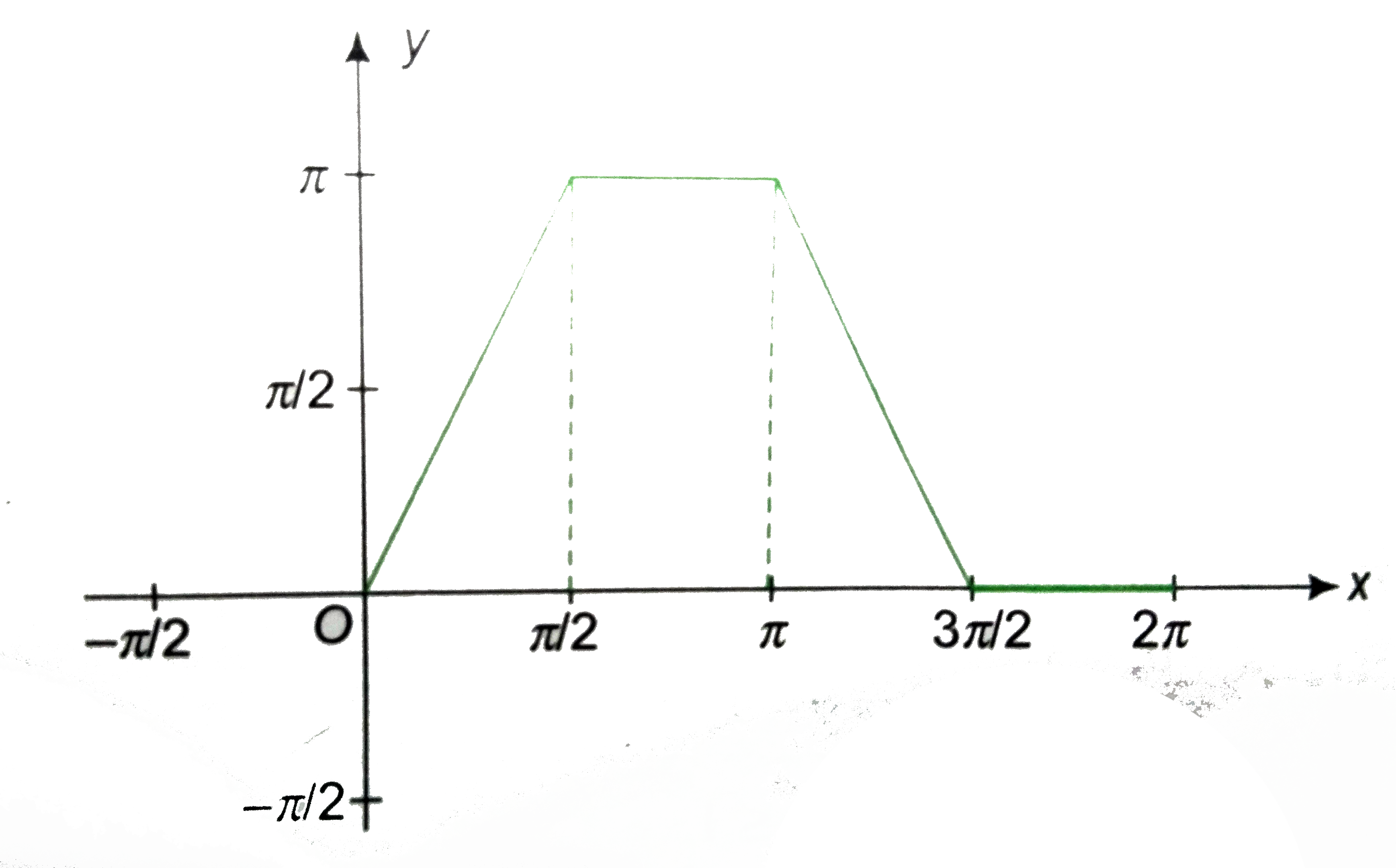



Topper's Solved these Questions
Similar Questions
Explore conceptually related problems
CENGAGE-INVERSE TRIGONOMETRIC FUNCTIONS-All Questions
- find the maximum value of f(x) = (sin^(-1) (sin x))^(2) - sin^(-1) (si...
Text Solution
|
- solve sin^(-1) (sin 5) gt x^(2) - 4x
Text Solution
|
- Consider function f(x) = sin^(-1) (sin x) + cos^(-1) (cos x), x in [0,...
Text Solution
|
- Find the value of x for which function are identical. f(x)=tan^(-1)x+t...
Text Solution
|
- Express sin^(-1).(sqrtx)/(sqrt(x + a)) as a function of tan^(-1)
Text Solution
|
- If tan(cos^(-1) x) = sin (cot^(-1).(1)/(2)), then find the value of x
Text Solution
|
- Prove that: cos e c(tan^(-1)("cos"(cot^(-1)("sec"(sin^(-1)a)))))=sqrt(...
Text Solution
|
- Prove that sin (cot^(-1) (tan (cos^(-1) x))) = x, x gt 0
Text Solution
|
- tan^(- 1)((sqrt(1+a^2x^2)-1)/(a x)) where x!=0, is equal to
Text Solution
|
- Prove that sin [2 tan^(-1) {sqrt((1 -x)/(1 + x))}] = sqrt(1 - x^(2))
Text Solution
|
- Prove that tan^(-1).(1)/(sqrt(x^(2) -1)) = (pi)/(2) - sec^(-1) x, x gt...
Text Solution
|
- y = tan^(-1)((sqrt(1+x)-sqrt(1-x))/(sqrt(1+x)+sqrt(1-x))),find dy/dx.
Text Solution
|
- If x lt 0, the prove that cos^(-1) ((1 + x)/(sqrt(2(1 + x^(2))))) = (p...
Text Solution
|
- Find the value of tan^(-1) (-tan.(13pi)/(8)) + cot^(-1) (-cot((19pi)/(...
Text Solution
|
- If sin^(-1)x+sin^(-1)y=(2pi)/(3)",then"cos^(-1)x+cos^(-1)y is equal to
Text Solution
|
- Show that sin^-1 x+cos^-1 x=pi/2.
Text Solution
|
- If (tan^(-1) x)^2 + (cot^(-1) x)^2 = (5 pi^2) /8 find x.
Text Solution
|
- Solve tan^(-1) x gt cot^(-1) x
Text Solution
|
- If alpha is the only real root of the equation x^3 + bx^2 + cx + 1 = ...
Text Solution
|
- If alpha in (-(pi)/(2), 0), then find the value of tan^(-1) (cot alpha...
Text Solution
|