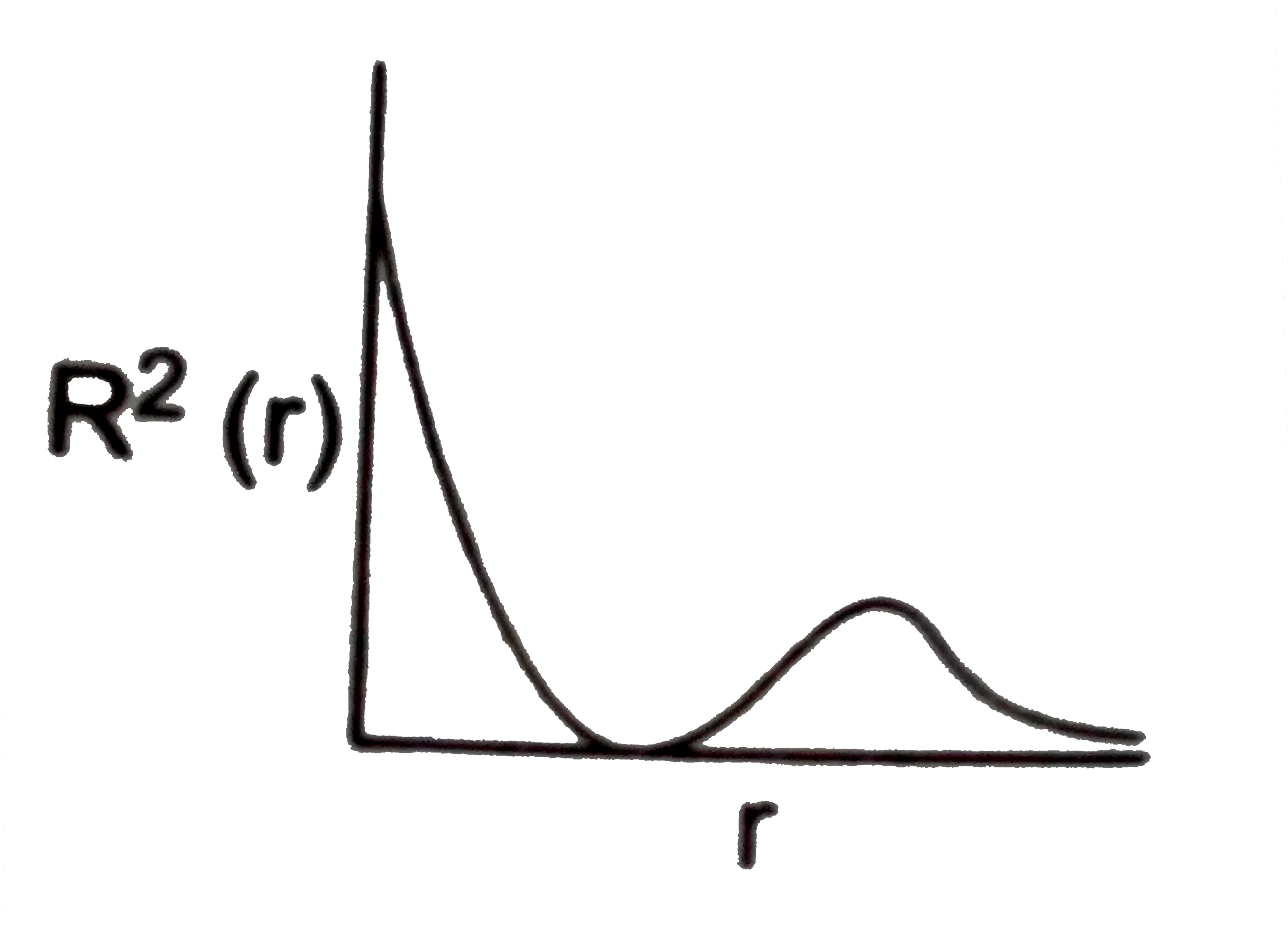
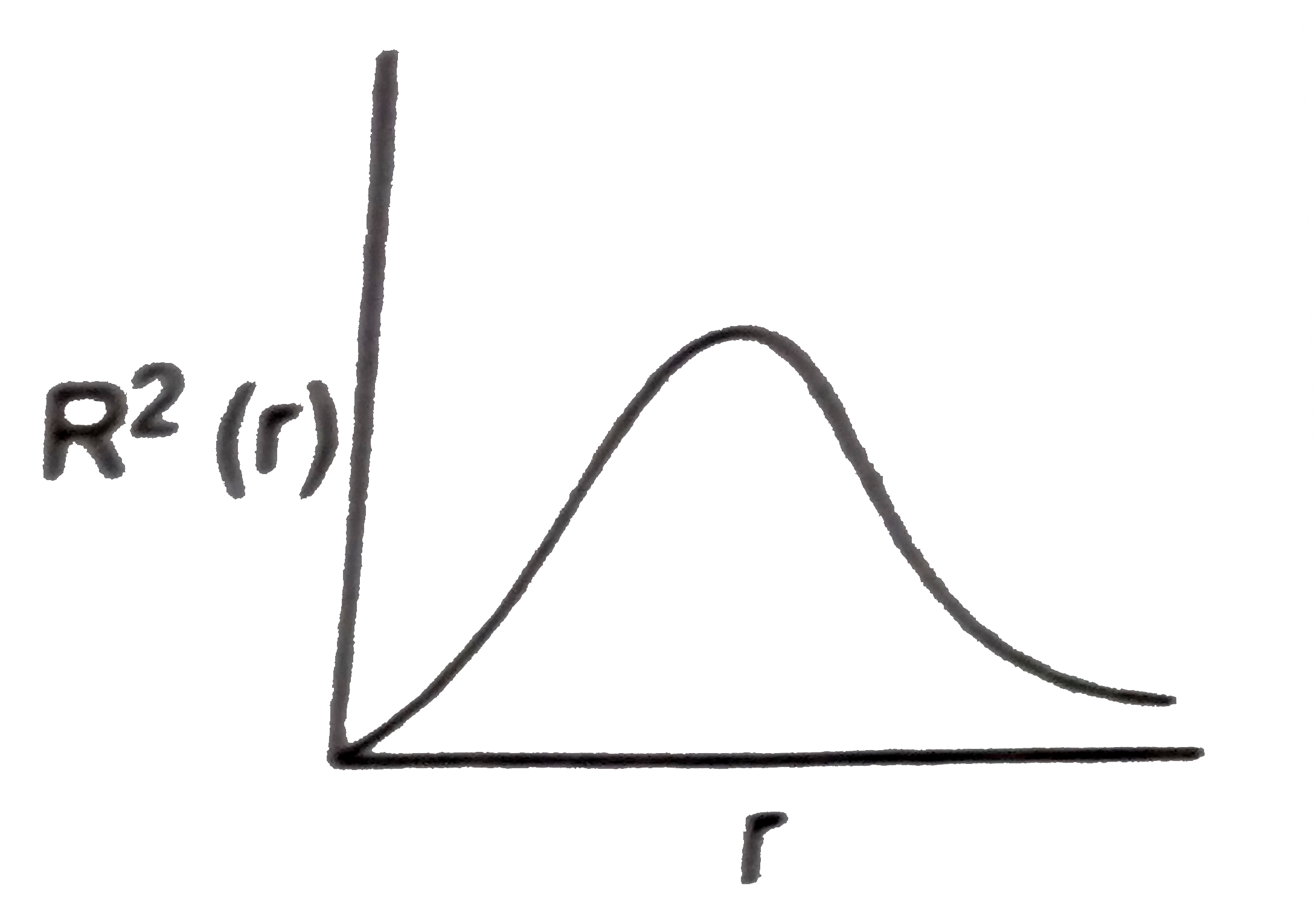
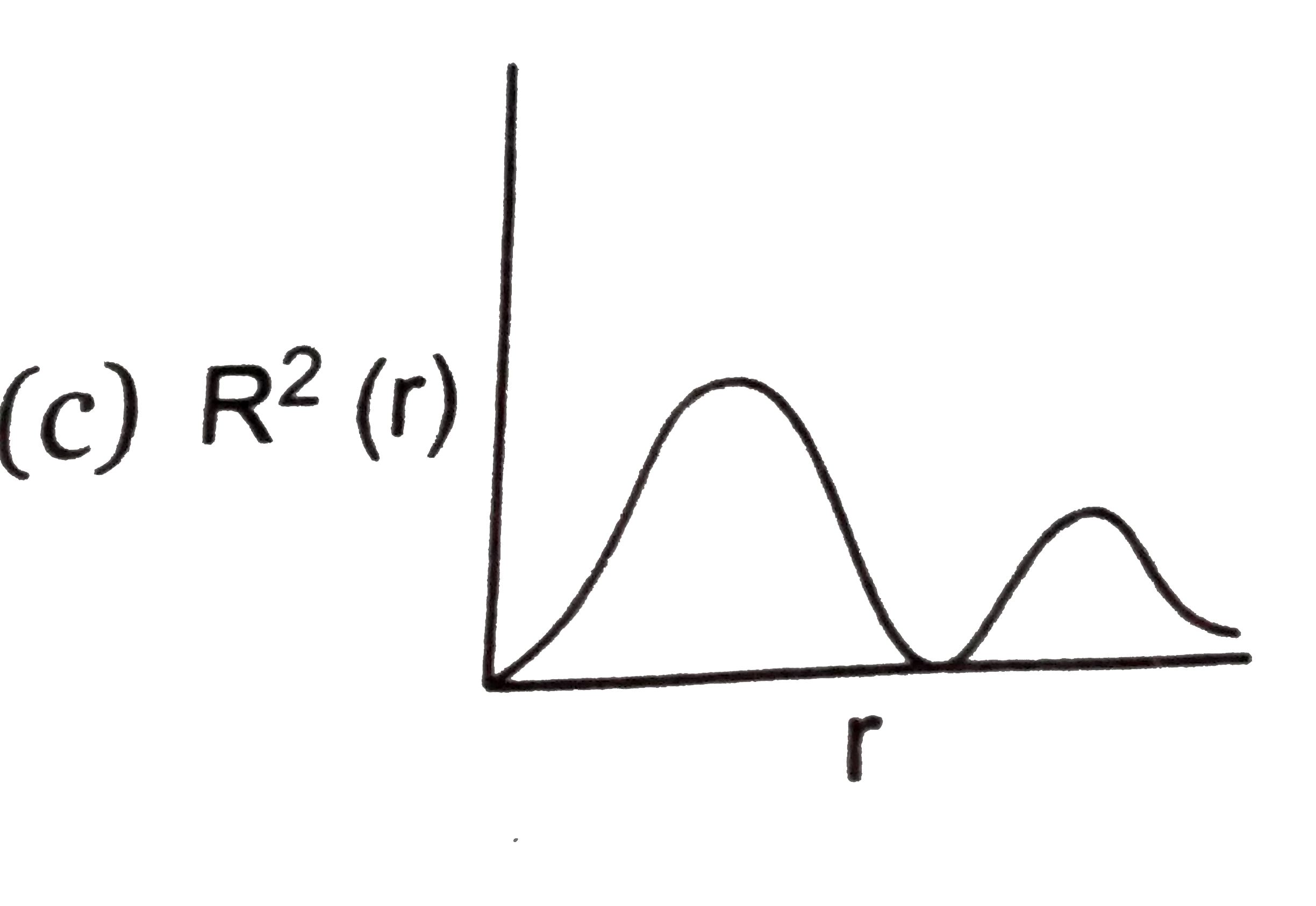
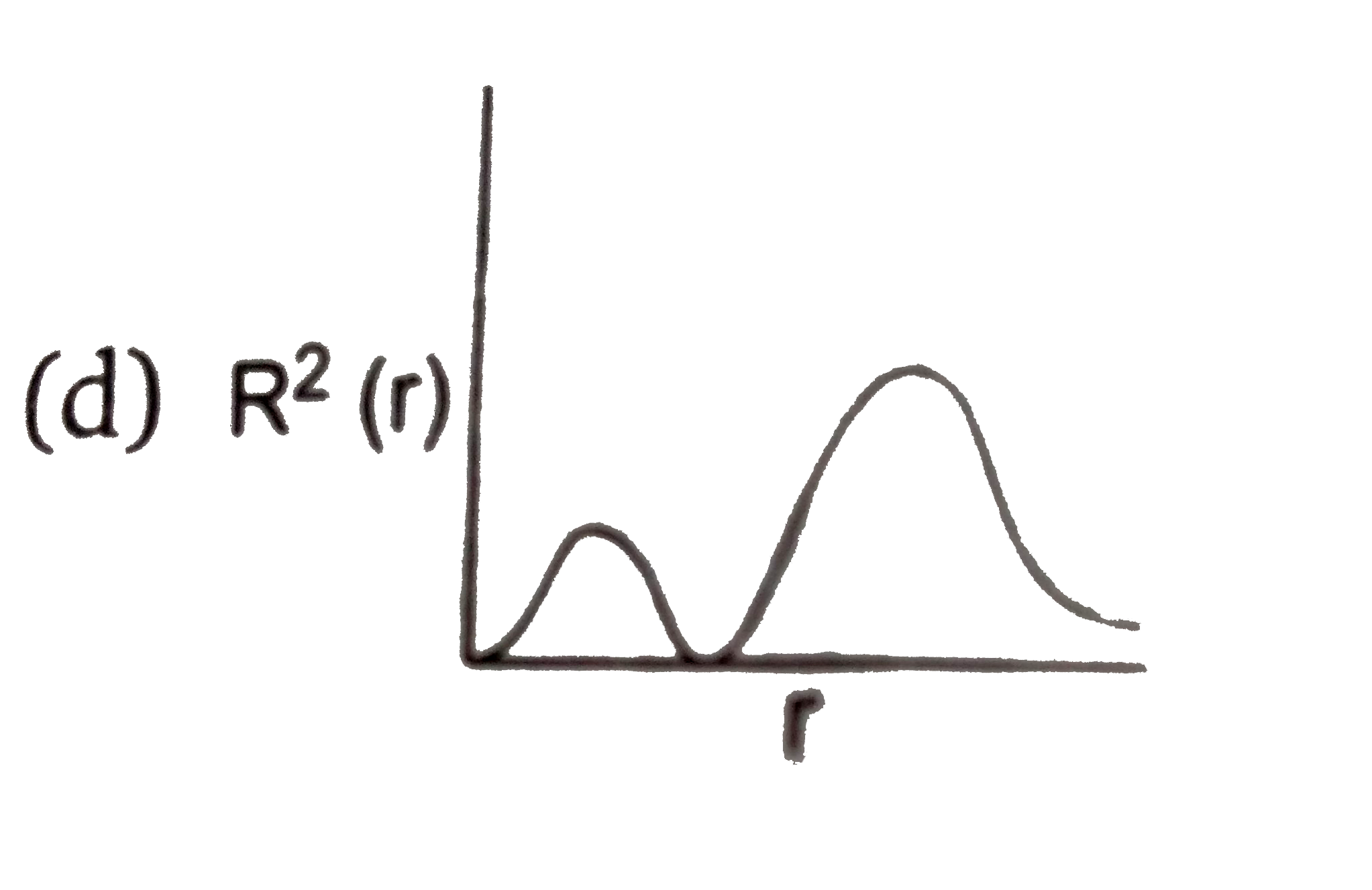
The variation of radial probability density `R^2` (r) as a function of distance r of the electron from the nucleus for 3p orbital:
A
B
C
D
Text Solution
Verified by Experts
Topper's Solved these Questions
ATOMIC STUCTURE
NARENDRA AWASTHI|Exercise Level- 1|1 Videos
ATOMIC STUCTURE
NARENDRA AWASTHI|Exercise level 2|1 Videos
CHEMICAL EQUILIBRIUM
NARENDRA AWASTHI|Exercise Level 2|1 Videos
Similar Questions
Explore conceptually related problems
Write down the electronic configuration of: C r 3 +
Plot a graph shoing variation of electric field as a function of r> R and r < R (being the distance from the centre of the shell)
Graphically, represent the variation of electric field due to a point charge Q with 1//r^2 where r is the distance of the obervation point from the charge.
The nuclear charge (Ze) is nonuniformly distributed within a nucleus of radius R. The charge density p(r) (change per unit volume) is dependent only on the radial distance r from the center of the nucleus as shown in figure, the electric field is only along the radial direction. The electric field at r = R
The nuclear charge (Ze) is nonuniformly distributed within a nucleus of radius R. The charge density p(r) (change per unit volume) is dependent only on the radial distance r from the center of the nucleus as shown in figure, the electric field is only along the radial direction.The electric field within the nucleus is generally observed to be linerarly dependent on r. This implies
The question given below consist of an assertion (A) and a reason ( R). Use the following key to choose the appropriate answer to these questions from the codes (a), (b), ( c) and (d) given below: (a) Both A and R are true and R is the correct explanation of A. (b) Both A and R are true but R is NOT the correct explanation of A. (c) A is true but R is false. (d) A is false and R is also false. Assertion: Nucleus of the atom does not contain electrons, yet it emits beta -particles in the form of electrons. Reason: In the nucleus, protons and neutrons exchange mesons frequently.
The question given below consist of an assertion (A) and a reason ( R). Use the following key to choose the appropriate answer to these questions from the codes (a), (b), ( c) and (d) given below: (a) Both A and R are true and R is the correct explanation of A. (b) Both A and R are true but R is NOT the correct explanation of A. (c) A is true but R is false. (d) A is false and R is also false. Assertion: The whole mass of the atom is concentrated in the nucleus. Reason: The mass of the nucleus can be either less or more than the sum of the masses of nucleus.
Draw a plot showin the variation of electric potential V with distance r due to a point charge q.
Show that the relation R in the set A of points in a plane given by R = {(P, Q) : distance of the point P from the origin is same as the distance of the point Q from the origin}, is an equivalence relation. Further, show that the set of all points related to a point P ne (0, 0) is the circle passing through P with origin as centre.