Home
Class 12
BIOLOGY
The following is the illustration of the...

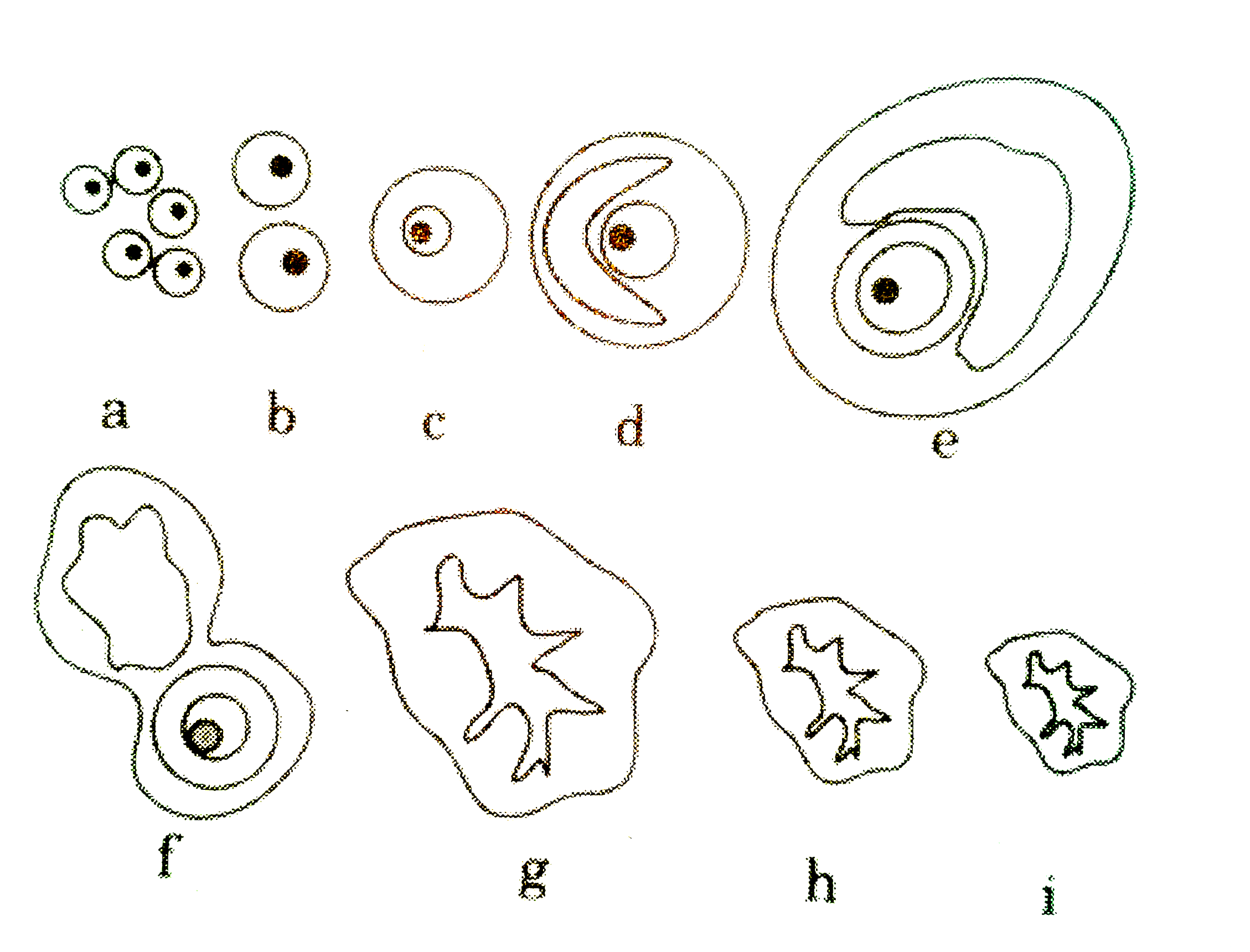
The following is the illustration of the sequence of ovarian events (a - 1) in a human female.
(a) Identify the figure that illustrates ovulation and mention the stage of oogenesis it represents.
(b) Name the pituitary hormone that has caused the above mentioned event.

Text Solution

Verified by Experts
(a)Figure 'f illustrates ovulation. It represents the ovulatory stage of oogenesis
(b) Luteinizing Hormone (LH) is the pituitary hormone released during ovulation
(c) In anticipation of receiving the fertilized egg. the endometrium of the uterus gets thickened and also the blood supply to the endometrium increases
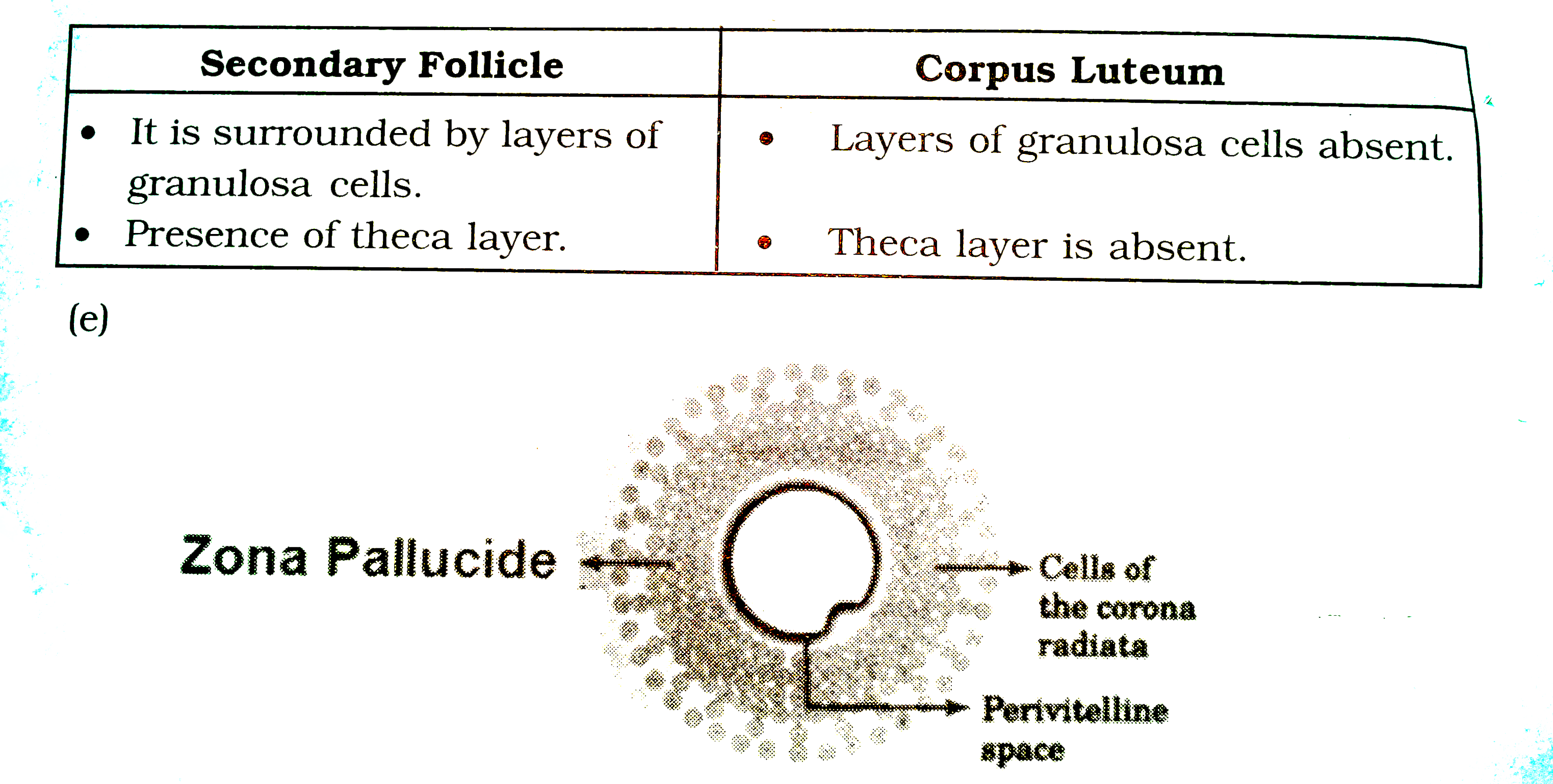
(d) In the figure (c) stage represents the secondary follicle and the th) stage represents the degenerating corpus luteum
Promotional Banner

Topper's Solved these Questions

  • REPRODUCTION

    TRUEMAN BIOLOGY|Exercise SECTION -C|22 Videos
  • Protista

    TRUEMAN BIOLOGY|Exercise ASSERTION AND REASON|6 Videos
  • Reproduction In Organisms

    TRUEMAN BIOLOGY|Exercise MULTIPLE CHOICE QUESTION|131 Videos

Similar Questions

Explore conceptually related problems

Study the figure given below and answer the questions that follow : (a)Name the stage of human embryo the figure represents. (b)Identify 'A' in the figure and mention its function . ( c )Mention the fate of the inner cell mass after implantation in the uterus . (d)Where are the stem cells located in this embryo ?

Smita's father has been advised by a doctor to reduce his sugar intake. a] Name the disease he is suffering from and name the hormone whose deficiency is the cause. b] Identify the gland that secretes it and mention the function of this hormone. c] Explain how the time and amount of secretion of this hormone is regulated in human system.

Study the figures below and answer the following : (a)Mention the specific geographical region where these organisms are found. (b)Name and explain the phenomenon that has resulted in the evolution of such diverse species in the region.

(a) Study the following chemical equation: CaSO_4. 2H_2O to^(373 K) CaSO_4. 1/2 H_2O+3/2 H_2O Name the reactant and the product and mention one use of the product. (b) The following salts are formed by the reaction of an acid with a base: (i) Sodium chloride (ii) Ammonium nitrate Identify the acid and the base and tabulate your answer in the format given below:

Read the graph given above and correlate the uterine events that take place according to the hormonal levels on (i) 6 - 15 days (ii) 16 - 25 days (iii) 26 - 28 days (if the ovum is not fertilised ) (b) Specify the sources of the hormones mentioned in the graph.

The events of the menstrual cycle are represented below. Answer the questions following the diagram. (i)State the levels of FSH , LH and Progesterone simply by mentioning high or low , around 13th and 14th day and 21st to 23 rd day . (ii)In which of the above mentioned phases does the egg travel to the fallopian tube ? (iii)Why is there no menstruation upon fertilization ?

Some important events in the human female reproductive cycle are given below. Arrange the events in a proper squence. A- Secretion of FSH, B - Growth of corpus luteum, C- Growth of the follicle and oogenesis, D- Ovulation E - Sudden increase in the levels of LH.

(a) In which part of the human female reproductive system do the following events take place ? I-Release of 1st polar body II-Release of 2nd polar body III-Fertilization IV-Implantation (b) From where do signals for parturition originate and what does maternal pituitary release for stimulating uterine contractions for child birth ?

TRUEMAN BIOLOGY-REPRODUCTION-SECTION-D
  1. Define Oogenesis. When and where in the body is oogenesis completed?

    Text Solution

    |

  2. Mention any two sexually transmitted diseases in human and its causiti...

    Text Solution

    |

  3. Give reasons why: (i) Most zygotes in angiosperms divide only afte...

    Text Solution

    |

  4. Describe in sequence the events that lead to the development of a 3-ce...

    Text Solution

    |

  5. (a ) Trace the development ofmegaspore mother cell up to the formation...

    Text Solution

    |

  6. (a ) Draw a labelled longisectional view of an albuminous 'seed'· (b...

    Text Solution

    |

  7. Describe the post-zygotic events leading to implantation and placenta ...

    Text Solution

    |

  8. Although sexual reproduction is a long drawn, energy-intensive complex...

    Text Solution

    |

  9. Embryo sacs of some apomictic species appear normal but contain diploi...

    Text Solution

    |

  10. Describe oestrous cycle. In which group of animals is it observed.

    Text Solution

    |

  11. Give examples for physical and surgical contraceptive methods.

    Text Solution

    |

  12. The following is the illustration of the sequence of ovarian events (a...

    Text Solution

    |

  13. Mention the function of Synergids and polar nuclei in embryo sac.

    Text Solution

    |

  14. Describe the structure of blastula.

    Text Solution

    |

  15. Mention the fate of all the components of the embryo sac after fertili...

    Text Solution

    |

  16. (a) Draw a diagrammatic sectional view of a mature anatropous ovule an...

    Text Solution

    |

  17. (a) Draw a diagrammatic sectional view of the female reproductive syst...

    Text Solution

    |

  18. Mention examples for: a. Insect pollinated flower. b. Wind pollina...

    Text Solution

    |

  19. Mention two types of gametogenesis.

    Text Solution

    |

  20. (a) Draw a diagram of a mature embryo sac of an angiosperm and label t...

    Text Solution

    |

