Home
Class 12
BIOLOGY
(i) What does this diagrammatic sketch d...

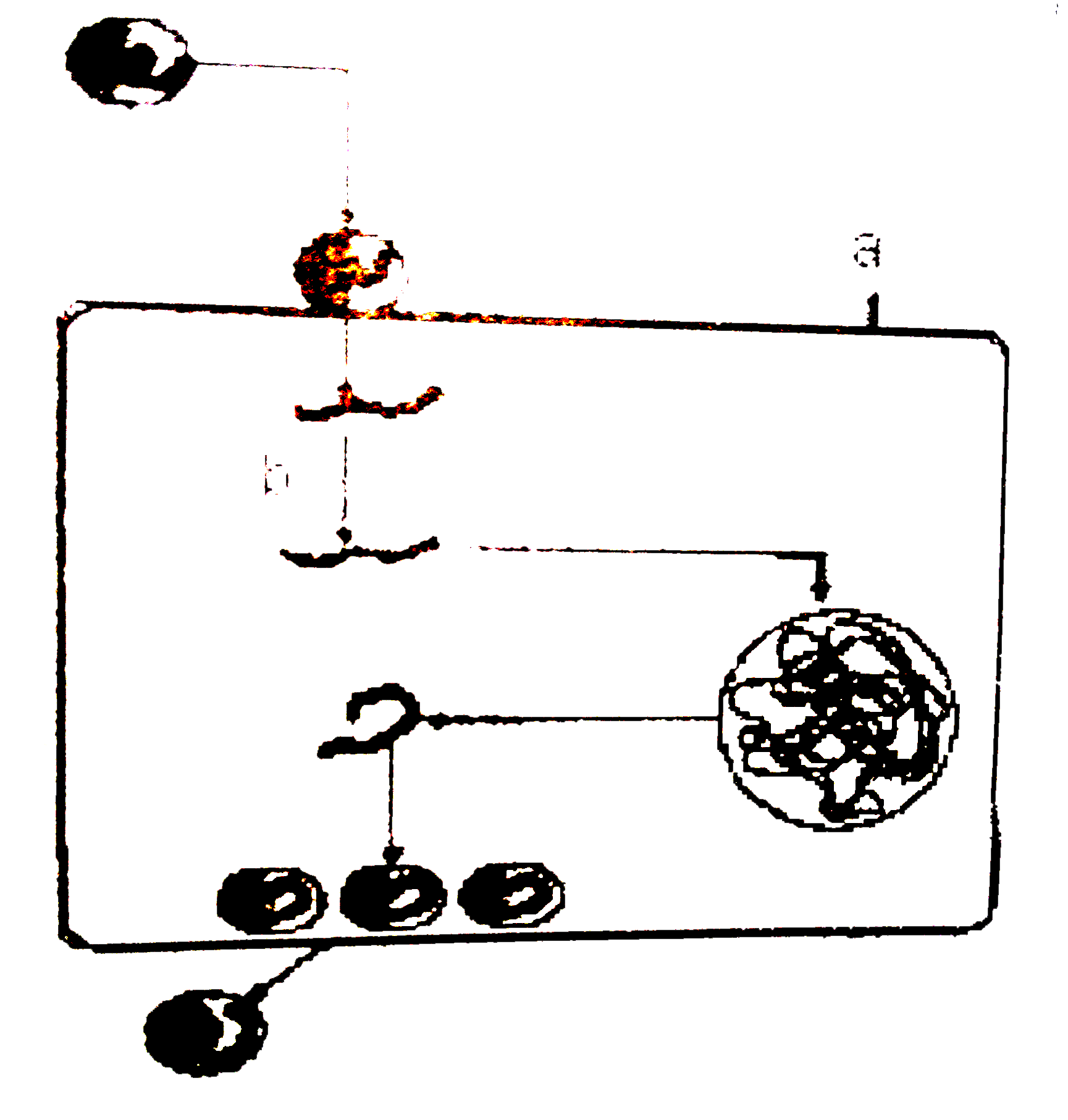
(i) What does this diagrammatic sketch depict?
(ii) Identify a' and 'b
(iii) Name the widely used diagnostic test when a person gets this disease.

Text Solution

Verified by Experts

(i)Replication of retrovirus
(ii) (a)- Plasma Membrane.
(b) - Formation of viral DNA by reverse transcriptase
(iii) ELISA (Enzyme linked immunosorbent assay test.
Promotional Banner

Topper's Solved these Questions

  • GENETICS AND EVOLUTION

    TRUEMAN BIOLOGY|Exercise SECTION-D|25 Videos
  • GENETICS AND EVOLUTION

    TRUEMAN BIOLOGY|Exercise SECTION-B|38 Videos
  • Genetics

    TRUEMAN BIOLOGY|Exercise ASSERTION AND REASON|122 Videos
  • HUMAN HEALTH AND DISEASE

    TRUEMAN BIOLOGY|Exercise MULTIPLE CHOICE QUESTIONS|211 Videos

Similar Questions

Explore conceptually related problems

a) Mention the pathogen and any two symptoms of typhoid. b) Name the diagnostic test used to confirm typhoid.

(a) What is AIDS? (b) Mention any four possible routes by which transmission of HIV occurs (c) Name any two immune cells that are susceptible to HIV attack (d) Name the widely used diagnostic test for AIDS.

Study the figure given below and answer the questions: (i) How does the repressor molecule get inactivated? (ii) When does the transcription of lac mRNA stop? (iii) Name the enzyme transcribed by the gene Z'.

An organic compound A is widely used as a preservative in pickles and has a molecular formula C_(2)H_(4)O_(2) . This compound reacts with ethanol to form a sweet smelling compound B. (i) Identify the compound A. (ii) Write the chemical equation for its reaction with ethanol. (iii) Name the products formed. (iv) Name the process involved in the reaction. (v) How can we get back the compou A from B.

A person shows strong unusual hypersensitive reactions when exposed to certain substances presents in the air.Identify the condition .Name the cells responsinle for such reaction .What precaution should be taken to avoid such reactions?

(a) List two reasons for the appearance of variations among the progeny formed by sexual (b) reproduction. (i) Name the part marked 'A' in the diagram. (ii) How does 'A' reaches part 'B'? (iii) State the importance of the part 'C'. (iv) What happens to the part marked ‘D’ after fertilization is over?

In the diagram of human male reproductive system given below : (i) Label the parts A and B. (ii) Name the hormone produced by organ 'X'. What is the role of this hormone in the human male? (iii) Mention the name of substances that are transported by tubes. (i) C and (ii)

TRUEMAN BIOLOGY-GENETICS AND EVOLUTION -SECTION-C
  1. (i) What does this diagrammatic sketch depict? (ii) Identify a' an...

    Text Solution

    |

  2. A 3' 5' B C 5' 3'D AB and CD represent two strands of a DNA mol...

    Text Solution

    |

  3. What is the function of reverse transcriptase enzyme?

    Text Solution

    |

  4. What are types of sex-linkage?

    Text Solution

    |

  5. Define haemophila. What type of sex linkage does it belongs to?

    Text Solution

    |

  6. What is 'semi- conservative' DNA replication ? Who discovered it and ...

    Text Solution

    |

  7. Expand: PCR ELISA

    Text Solution

    |

  8. Mention the reason for sickle cell anemia.

    Text Solution

    |

  9. Who discovered ABO blood group. When was it discovered?

    Text Solution

    |

  10. (a) What is this diagram representing? (b) Name the parts a, b and c...

    Text Solution

    |

  11. In human genome which one of the chromosomes has the most genes and wh...

    Text Solution

    |

  12. Study the pedigree chart given, showing the Inheritance pattern of blo...

    Text Solution

    |

  13. Differentiate between phenotype and genotype.

    Text Solution

    |

  14. (i) Why are grasshopper and Drosophila said to show male heterogamity ...

    Text Solution

    |

  15. Why is tRNA called an adaptor molecule?

    Text Solution

    |

  16. (i) List the chromosomal disorders a human may suffer from if karyotyp...

    Text Solution

    |

  17. How are dominance, codominance and incomplete dominance patterns of in...

    Text Solution

    |

  18. A pea plant with purple flowers was crossed with white flowers produci...

    Text Solution

    |

  19. (i) Name the enzyme that catalysis the transcription of hnRNA. (ii) Wh...

    Text Solution

    |

  20. Unambiguous, universal and degenerate are some of the terms used for t...

    Text Solution

    |
