Home
Class 12
CHEMISTRY
Which one is the most reactive towards e...

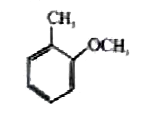
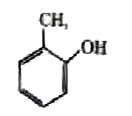
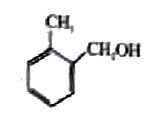
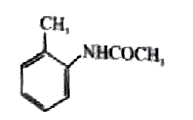
Which one is the most reactive towards electrophilic reagent?

A

B

C

D

Text Solution

AI Generated Solution

The correct Answer is:

To determine which compound is the most reactive towards electrophilic reagents, we need to analyze the effects of the substituents on the aromatic ring. Here’s a step-by-step solution: ### Step 1: Identify the Compounds We need to identify the compounds provided in the options. Let's assume the options are: 1. CH3 (methyl group) 2. OCH3 (methoxy group) 3. OH (hydroxyl group) 4. NHCOCH3 (acetamido group) ### Step 2: Understand the Effects of Substituents - **Electron-donating groups (EDGs)**: These groups increase the electron density of the aromatic ring, making it more reactive towards electrophiles. Examples include -OH and -OCH3, which exhibit a +M (mesomeric) effect. - **Electron-withdrawing groups (EWGs)**: These groups decrease the electron density of the aromatic ring, making it less reactive towards electrophiles. Examples include -CH3, which exhibits a -M (minus mesomeric) effect. ### Step 3: Analyze Each Substituent - **CH3 (methyl group)**: This group is weakly electron-donating through hyperconjugation but overall has a -M effect, which deactivates the ring. - **OCH3 (methoxy group)**: This group is strongly electron-donating through resonance (+M effect), which activates the ring and increases reactivity towards electrophiles. - **OH (hydroxyl group)**: This group also has a +M effect, making the ring more reactive. - **NHCOCH3 (acetamido group)**: This group has a -M effect, which deactivates the ring. ### Step 4: Compare Reactivity - The **OCH3** and **OH** groups both activate the aromatic ring significantly due to their +M effect. - The **CH3** and **NHCOCH3** groups deactivate the ring due to their -M effect. ### Step 5: Conclusion Between the activating groups (OCH3 and OH), the methoxy group (OCH3) is generally considered more reactive due to its stronger +M effect compared to the hydroxyl group. Therefore, the compound that is most reactive towards electrophilic reagents is: **Answer: OCH3 (methoxy group)** ---

To determine which compound is the most reactive towards electrophilic reagents, we need to analyze the effects of the substituents on the aromatic ring. Here’s a step-by-step solution: ### Step 1: Identify the Compounds We need to identify the compounds provided in the options. Let's assume the options are: 1. CH3 (methyl group) 2. OCH3 (methoxy group) 3. OH (hydroxyl group) 4. NHCOCH3 (acetamido group) ...
Promotional Banner

Topper's Solved these Questions

  • HYDROCARBONS

    PHYSICS WALLAH|Exercise NEET PAST 5 YEARS QUESTIONS|27 Videos
  • HALOALKANES AND HALOARENES

    PHYSICS WALLAH|Exercise NEET PAST 5 YEARS QUESTIONS |7 Videos
  • HYDROGEN

    PHYSICS WALLAH|Exercise LEVEL-2|58 Videos

Similar Questions

Explore conceptually related problems

Towards electrophilic reagents

Which one of the following is most reactive towards electrophilic reagent ?

Which one of the followingis the most reactive towards electrophilic attack?

PHYSICS WALLAH-HYDROCARBONS-LEVEL-1
  1. Which of the following reacts with KMnO(4) but does not react with tol...

    Text Solution

    |

  2. The dihedral angle between the hydrogen atoms of two methyl groups in ...

    Text Solution

    |

  3. Which one is the most reactive towards electrophilic reagent?

    Text Solution

    |

  4. The following reaction is known as: C(6)H(6)+CH(3)Cl overset(AlCl(3)...

    Text Solution

    |

  5. In the following reaction, the major product is :

    Text Solution

    |

  6. Complete the following reaction

    Text Solution

    |

  7. The final major product of the following reaction is : CH(3)-CH(2)-C...

    Text Solution

    |

  8. Which of the following species is an intermediate in the reaction show...

    Text Solution

    |

  9. Maleic acid reacts with Br(2)//C Cl(4) The production

    Text Solution

    |

  10. Sodium salt of the following acid which is needed for the preparation ...

    Text Solution

    |

  11. Which of the following is the most stable free radical?

    Text Solution

    |

  12. H(3)C-C-=CH overset(H(2)O,H(4)SO(4))underset(HgSO(4))to underset(A)("i...

    Text Solution

    |

  13. Which compound cannot be formed from Wurtz

    Text Solution

    |

  14. Which of the following is called marsh gas?

    Text Solution

    |

  15. Which one is the correct order of acidity ?

    Text Solution

    |

  16. The case of dehydrohalogenation for different halogensis in the order

    Text Solution

    |

  17. Which of the following is the predominant product in the reaction of H...

    Text Solution

    |

  18. The reaction represents : C(12)H(26) to C(6) H(12)+C(6)H(14)

    Text Solution

    |

  19. Ethylene can be separated from acetylene by passing the mixture throug...

    Text Solution

    |

  20. Ozonolysis products of 2-pentyne after decomposition of ozonide with w...

    Text Solution

    |
