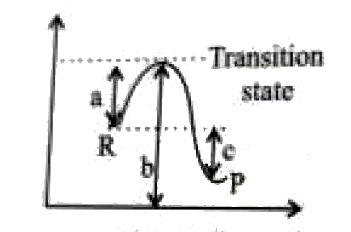
A
B
C
D
Text Solution
Verified by Experts
The correct Answer is:



Topper's Solved these Questions
Similar Questions
Explore conceptually related problems
PHYSICS WALLAH-MOLECULARITY -NEET Past 5 Years Questions
- The potential energy diagram for a reaction R to P is given below. ...
Text Solution
|
- An increse in the concentration of the reactants of a reaction leads t...
Text Solution
|
- The rate constant for a first order reaction is 4.606 xx 10^(-3) s^(-1...
Text Solution
|
- In collision theory of chemical reaction, Z(AB) represents
Text Solution
|
- The half-life for a zero order reaction having 0.02 M initial concentr...
Text Solution
|
- If the rate constant for a first order reaction is k, the time (t) req...
Text Solution
|
- For the chemical reaction N(2)(g)+3H(2)(g)hArr2NH(3)(g) The correc...
Text Solution
|
- when initial concentration of the reactant is doubled, the half-life p...
Text Solution
|
- The correct difference between first and second order reactions is tha...
Text Solution
|
- Mechanism of a hypothetical reaction X(2) + Y(2) rarr 2XY is given b...
Text Solution
|
- A first order reaction has a specific reaction rate of 10^(-2) s^(-1)....
Text Solution
|
- Consider the reaction of both reactants the rate of the reaction incre...
Text Solution
|
- For the reaction , XA + YB to ZC If (-d[A])/( dt) = (-d[B])/(dt) = (...
Text Solution
|
- The decomposition of phosphine [PH(3)] on tungsten at low pressure is ...
Text Solution
|
- The rate of a first-order reaction is 0.04 "mol L"^(-1) " s"^(-1) at 1...
Text Solution
|
- The addition of a catallystic during a chemical reaction alters which ...
Text Solution
|
- An increse in the concentration of the reactants of a reaction leads t...
Text Solution
|
- The rate constant for a first order reaction is 4.606 xx 10^(-3) s^(-1...
Text Solution
|
- In collision theory of chemical reaction, Z(AB) represents
Text Solution
|
- The half-life for a zero order reaction having 0.02 M initial concentr...
Text Solution
|
- If the rate constant for a first order reaction is k, the time (t) req...
Text Solution
|