A
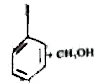
B
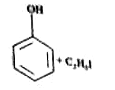
C
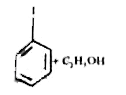
D
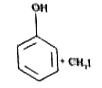
Text Solution
Verified by Experts
The correct Answer is:
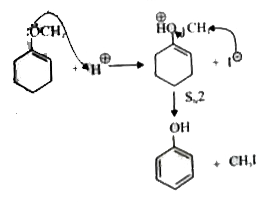



Topper's Solved these Questions
Similar Questions
Explore conceptually related problems
PHYSICS WALLAH-ALCOHOLS, PHENOLS AND ETHERS -NEET PAST 5 YEARS QUESTIONS
- In the reaction the electrophile involved is:
Text Solution
|
- The heating of phenyl-methyl ethers with HI produces .
Text Solution
|
- Which one is the most acidic compound?
Text Solution
|
- The oxidation of phenol with chromic acid gives
Text Solution
|
- Identify A and predict the type of reaction:
Text Solution
|
- The reaction: can be classified as?
Text Solution
|
- Reaction between acetone and methyl magnesium chloride followed by hyd...
Text Solution
|
- Anisole on cleavage with HI gives:
Text Solution
|
- Which of the following substituted phenols is the strongest acid?
Text Solution
|
- CH(3)CH(2)CH=CH(2)underset(H(2)O.H(2)O(2).OH^-)overset(B(2)H(6))rarrZ ...
Text Solution
|
- The compound that is most difficult to protonate is
Text Solution
|
- The structure of intermediate A in the following reaction, is
Text Solution
|
- Identify the major products P, Q and R in the following sequence of re...
Text Solution
|
- The compound A on treatment with Na gives B, and with PCl(5) gives C. ...
Text Solution
|
- In the reaction the electrophile involved is:
Text Solution
|
- The heating of phenyl-methyl ethers with HI produces .
Text Solution
|
- Which one is the most acidic compound?
Text Solution
|
- The oxidation of phenol with chromic acid gives
Text Solution
|
- Identify A and predict the type of reaction:
Text Solution
|
- The reaction: can be classified as?
Text Solution
|