Home
Class 9
MATHS
Thirty children were asked about the num...

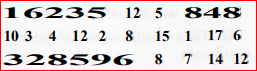
Thirty children were asked about the number of hours they watched TV programmes in the previous week. The results were found as follows :
: How many children watched television for 15 or more hours a week ?


Promotional Banner

Topper's Solved these Questions

Similar Questions

Explore conceptually related problems

Thirty children were asked about the number of hours they watched TV programmes in the previous week. The results were found as follows : : Make a frequency distribution table for this data, taking class width 5 and one of the class interval as 5— 10

In a primary school, the parents were asked about the number of hours they spent per day in helping their. Children to do home work. There were 90 parents who helped for (1)/(2) hour to 1(1)/(2) hours. The distribution of parents according to the time for which, they said they helped is given in the figure below : 20% helped for more than 1 ""1//2 hours per day, 30% helped for (1)/(2)" hour to "1 (1)/(2) hours, 50% did not help at all. Using this, answer the following: How many said that they helped for more than 1 (1)/(2) hours?

In a primary school, the parents were asked about the number of hours they spent per day in helping their. Children to do homw work. There were 90 parents who helped for (1)/(2) hour to 1(1)/(2) hours. The distribution of parents according to the time for which, they said they helped is given in the figure below : 20% helped for more than 1 ""1//2 hours per day, 30% helped for (1)/(2)" hour to "1 (1)/(2) hours, 50% did not help at all. Using this, answer the following: How many parents were surveyed?

In a primary school, the parents were asked about the number of hours they spent per day in helping their. Children to do homw work. There were 90 parents who helped for (1)/(2) hour to 1(1)/(2) hours. The distribution of parents according to the time for which, they said they helped is given in the figure below : 20% helped for more than 1 ""1//2 hours per day, 30% helped for (1)/(2)" hour to "1 (1)/(2) hours, 50% did not help at all. Using this, answer the following: How many said that they did not help?

For an experiment in Botany , two different plants , plant A and plant B were grown under similar laboratory conditions . Their heights were measured at the end of each weak for 3 weeks .The results are shown by the following graph : How much did Plant A grow during the 3rd week ?

MBD-STATISTICS-EXERCISE
  1. Thirty children were asked about the number of hours they watched TV p...

    Text Solution

    |

  2. The weights (in kg) of 30 students of a class are 49, 48, 46, 48, 48, ...

    Text Solution

    |

  3. The weights (in kg) of 30 students of a class are 49, 48, 46, 48, 48, ...

    Text Solution

    |

  4. The weights (in kg) of 30 students of a class are 49, 48, 46, 48, 48, ...

    Text Solution

    |

  5. The weights (in kg) of 30 students of a class are 49, 48, 46, 48, 48, ...

    Text Solution

    |

  6. Construct a grouped frequency table with class intervals 0-5, 5 -10 an...

    Text Solution

    |

  7. Construct a grouped frequency table with class intervals 0-5, 5 -10 an...

    Text Solution

    |

  8. Pulse rate (per miute) of 30 persons were recorded as 61,76,72,73,71,...

    Text Solution

    |

  9. Pulse rate (per miute) of 30 persons were recorded as 61,76,72,73,71,...

    Text Solution

    |

  10. Pulse rate (per miute) of 30 persons were recorded as 61,76,72,73,71,...

    Text Solution

    |

  11. Pulse rate (per miute) of 30 persons were recorded as 61,76,72,73,71,...

    Text Solution

    |

  12. A family with monthly income of Rs. 20,000 had planned the following e...

    Text Solution

    |

  13. Consider the following frequency distribution table representing the w...

    Text Solution

    |

  14. The following distribution gives the time taken by 25 students to solv...

    Text Solution

    |

  15. The following table presents the number of literate females in the age...

    Text Solution

    |

  16. For the following data, draw a frequency polygon .

    Text Solution

    |

  17. In a city, the following weekly observations were made in a study on c...

    Text Solution

    |

  18. The following table gives the distribution of IQ (intelligence Quotien...

    Text Solution

    |

  19. A teacher wanted to analyse the performance of two sections of student...

    Text Solution

    |

  20. The mean of 96, 98, x, 102, 104 is 100, find x.

    Text Solution

    |

  21. Find the mean of all possible factors of 20.

    Text Solution

    |