

Home
Class 11
PHYSICS
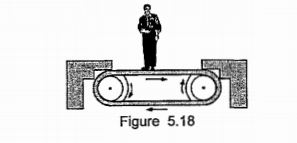
Figure 5.18 shows a man standing station...

Figure 5.18 shows a man standing stationary with respect to a horizontal conveyor belt that is accelerating with `1 m s^2`. What is the net force on the man? If the coefficient of static friction between the man’s shoes and the belt is 0.2, up to what acceleration of the belt can the man continue to be stationary relative to the belt? (Mass of the man = 65 kg.)

Promotional Banner

Similar Questions

Explore conceptually related problems

A 70 kg man stands in contact against the inner wail of a hollow cylindrical drum of radius 3 m rotating about its vertical axis with 200 rev/min. The coefficient of friction between the wall and his clothing is 0.15. What is the minimum rotational speed of the cylinder to enable the man to ' remain stuck to the wall (without falling) when the floor is suddenly removed?

An automobile vehicle has a mass of 1500 kg. What must be the force between the vehicle and road if the vehicle is to be stopped with a negative acceleration of 1.7 m s^-2 ?

A block of mass 15 kg is placed on a long trolley. The coefficient of static friction between the block and the trolley is 0.18. The trolley accelerates from rest with 0.5 m s-^2 for 20 s and then moves with uniform velocity. Discuss the motion of the block as viewed by (a) a stationary observer on the ground, (b) an observer moving with the trolley.

A man’stationed between two hills fires a gun. He hears the first echo after 1 s and the second after 2 s. What is the distance between the hills. The speed of sound in air is 330 m/s.

A constant force acting on a body of mass 3.0 kg changes its speed from 2.0 m s^-1 to 3.5 m s^-1 in 25 s. The direction of the motion of the body remains unchanged. What is the magnitude and direction of the force?

A man of mass 70 kg stands on a weighing scale in a lift which is moving (a) upwards with a uniform speed of 10 m s^1 (b) downwards with a uniform acceleration of 5 m s^2, upwards with a uniform acceleration of 5 m s-^1z. What would be the readings on the scale in each case? What would be the reading if the lift mechanism failed and it hurtled down freely under gravity?

A partical moves 0.5kg travels in a straight line with a velocity v=ax^(3/2) ,where a=5m^(-1/2)s^-1 .What is the work doen by the net force during the displacment from X=0 to X=2m?

Two persons manage to push a motorcar of mass 1200 kg at a uniform velocity along a level road, the same motorcar can be pushed by three persons to produce an acceleration of 0.2 m s^-2 . With what force does each person push the motorcar? (Assume that all persons push the motorcar with the same muscular effort.)

A monkey of mass 40 kg climbs on a rope (Fig. 5.20) which can stand a maximum tension of 600 N. In which of the following cases will the rope break: the monkey (a) climbs up with an acceleration of 6 m s^2 (b) climbs down with an acceleration of 4 m s^2 (c) climbs up with a uniform speed of 5 m s^1 (d) falls down the rope nearly freely under gravity? (Ignore the mass of the rope).

Give the magnitude and direction of the net force acting on a stone of mass 0.1 kg, (a) just after it is dropped from the window of a stationary train,(b) just after it is dropped from the window of a train running at a constant velocity of 36 km/h,just after it is dropped from the window of a train accelerating with 1 ms^2,just after it is dropped from the window of a train accelerating with 1M/S2