


Recommended Questions
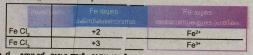
- Fe എങ്ങനെയാണ് Fe^(2+) ആയി മാറിയത്?
Text Solution
|
- Given E^(c-).(Fe^(2+)|Fe) and E^(c-).(Fe^(3+)|Fe^(2+)) are -0.44 and 0...
Text Solution
|
- Given that E(Fe^(2+)//Fe)^(.)=-0.44V,E(Fe^(3+)//Fe^(2+))^(@)=0.77V if...
Text Solution
|
- If E(Fe^(3+)//Fe)^(@) and E(Fe^(2+)//Fe)^(@) are -0.36 V and 0.439 V r...
Text Solution
|
- If E(Fe^(2+)//Fe)^(@)=-0.440 V and E(Fe^(3+)//Fe^(2+))^(@)=0.770 V , t...
Text Solution
|
- If E(fe^(2+)//Fe)^(@) is x(1),E(Fe^(3+)//Fe)^(@), is x(2) then what wi...
Text Solution
|
- If Fe is allowed to react with 1(M) HCl solution, will Fe be oxidised ...
Text Solution
|
- If E(Fe^(2+)|Fe)^0=-0.44V,E((Fe^3+)||Fe^(2+))^0=0.77. Calculate E(Fe^(...
Text Solution
|
- If E(Fe^(2+)//Fe)^(@)=-0.440 V and E(Fe^(3+)//Fe^(2+))^(@)=0.770 V, th...
Text Solution
|