
Home
Class 12
BIOLOGY
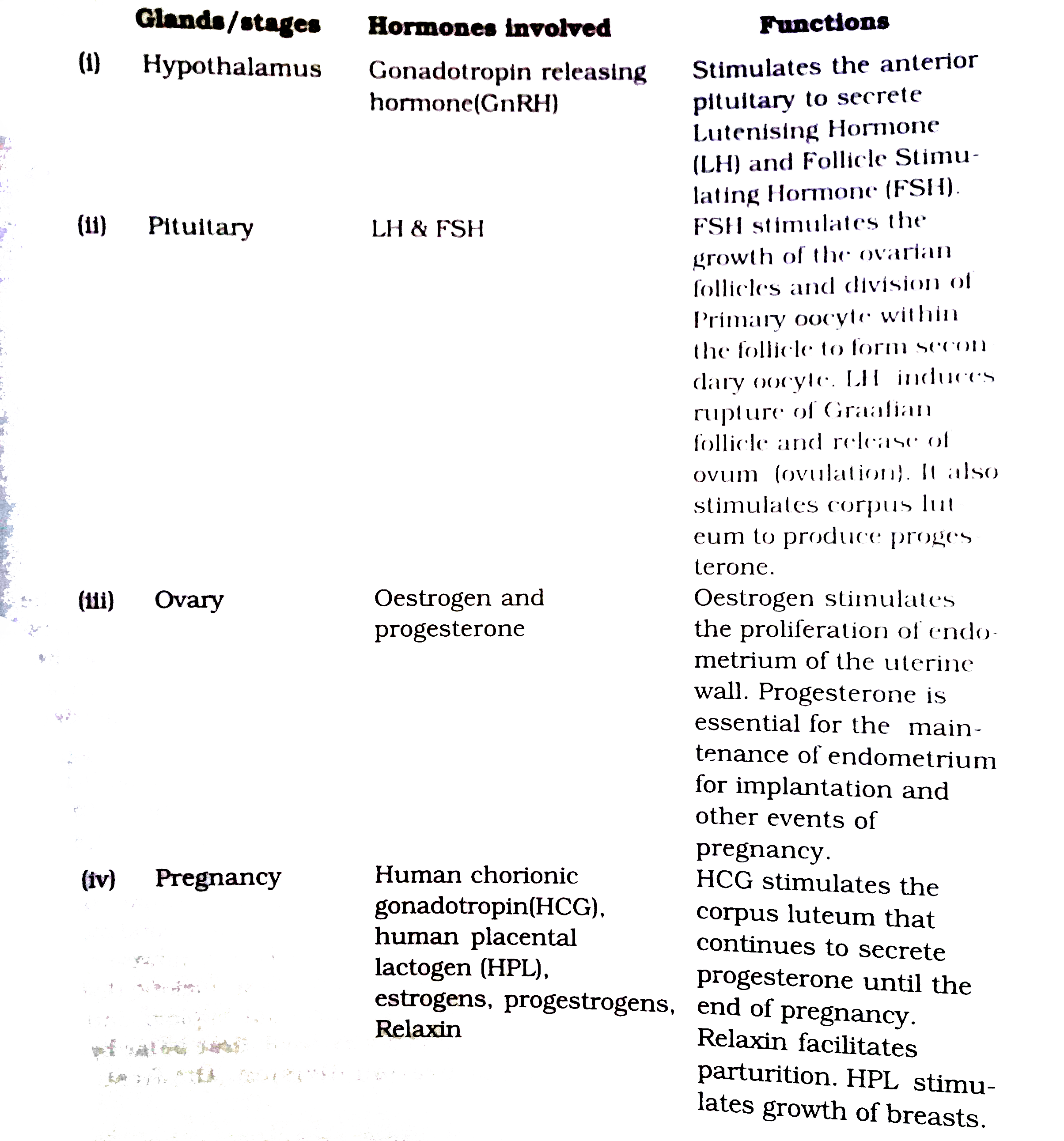
Study the flow chart given below . Name ...

Study the flow chart given below . Name the hormones involved at each stage and explain their functions .

Text Solution

Verified by Experts
Promotional Banner

Topper's Solved these Questions

  • REPRODUCTION

    TRUEMAN BIOLOGY|Exercise SECTION -C|22 Videos
  • Protista

    TRUEMAN BIOLOGY|Exercise ASSERTION AND REASON|6 Videos
  • Reproduction In Organisms

    TRUEMAN BIOLOGY|Exercise MULTIPLE CHOICE QUESTION|131 Videos

Similar Questions

Explore conceptually related problems

Study the pedigree chart given below what does it show?

Name the hormones involved in regulation of spermatogenesis.

name the hormones secreted from the ovary. State their functions in brief.

Name the hormones of posterior pituitary gland. State the functions of those hormones.

Study the figure given below and answer the questions that follow : (a)Name the stage of human embryo the figure represents. (b)Identify 'A' in the figure and mention its function . ( c )Mention the fate of the inner cell mass after implantation in the uterus . (d)Where are the stem cells located in this embryo ?

Study the pedigree given below and assign the type of inheritance of the trait.

Name one hormone secreted from testes & ovary each. Write two functions of each.

Define the function f: R to R by y=f(x)=x^(2), x in R . Complete the Table given below by using this defination. What is the domain and range of this function? Draw the graph of f.

study the four statements (A-D) given below and select the two correct ones out of them (A) Definition of biological soecies was given by Ernst mayr (B) photoperiod does not affect reproduction in plants © Binomial nomenclature system was given by Ernst Whittaker (D) In unicellular organisms, reproduction is synonymous with growth The two correct statments are

Name two gastronintestinal hormone. State their origin and function.

TRUEMAN BIOLOGY-REPRODUCTION-SECTION-D
  1. (a)Give a schematic representation of spermatogenesis in humans . (b...

    Text Solution

    |

  2. Explain with the help of a diagram the development of a mature embryo ...

    Text Solution

    |

  3. Study the flow chart given below . Name the hormones involved at each ...

    Text Solution

    |

  4. When and where in the body is oogenesis completed?

    Text Solution

    |

  5. (a) How is the placenta connected to the embryo? (b ) Placenta acts ...

    Text Solution

    |

  6. Give reasons why: (i) Most zygotes in angiosperms divide only afte...

    Text Solution

    |

  7. 2 difference between cross pollination and self pollination

    Text Solution

    |

  8. Draw a labelled diagram of the structure of mature dicot embryo.

    Text Solution

    |

  9. (a ) Draw a labelled longisectional view of an albuminous 'seed'·

    Text Solution

    |

  10. Describe the post-zygotic events leading to implantation and placenta ...

    Text Solution

    |

  11. Although sexual reproduction is a long drawn, energy-intensive complex...

    Text Solution

    |

  12. Embryo sacs of some apomitic species appear normal but contain diploid...

    Text Solution

    |

  13. Meiotic division during oogenesis is different from that in spermatoge...

    Text Solution

    |

  14. Enumerate and describe any five reasons for introducing sex education ...

    Text Solution

    |

  15. The following is the illustration of the sequence of ovarian events (a...

    Text Solution

    |

  16. Describe the stage in embryo development in a dicot plant.

    Text Solution

    |

  17. Where is morula formed in humans? Explain the process of its developme...

    Text Solution

    |

  18. Mention the fate of all the components of the embryo sac after fertili...

    Text Solution

    |

  19. (a) Draw a diagrammatic sectional view of a mature anatropous ovule an...

    Text Solution

    |

  20. (a) Draw a diagrammatic sectional view of the female reproductive syst...

    Text Solution

    |

