Home
Class 12
BIOLOGY
Choose the combination of condition in a...

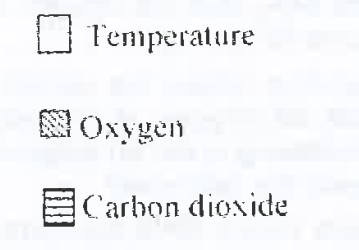
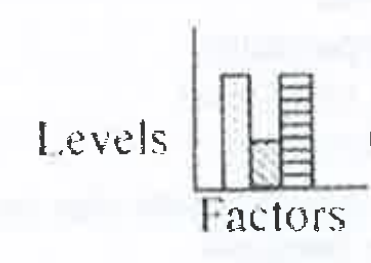
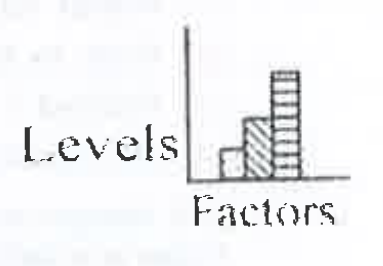
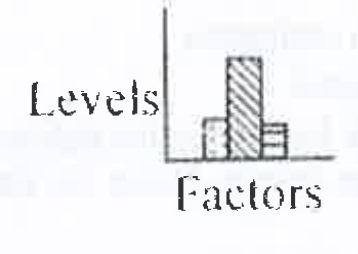
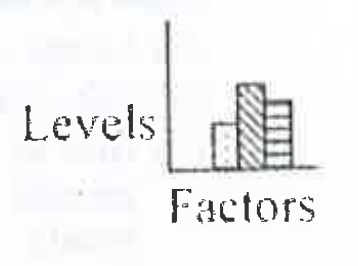
Choose the combination of condition in a tissue that would influence the most rapid dissociation of oxyhaemoglobin

A

B

C

D

Text Solution

Verified by Experts

The correct Answer is:

A
Promotional Banner

Topper's Solved these Questions

  • BODY FLUIDS AND CIRCULATION

    TRUEMAN BIOLOGY|Exercise Multiple Choice Questions|198 Videos
  • CELL CYCLE AND CELL DIVISION

    TRUEMAN BIOLOGY|Exercise MULTIPLE CHOICE QUESTIONS|158 Videos

Similar Questions

Explore conceptually related problems

Transpiration from the plants would be most rapid when

When waves from two coherent source of amplitudes a and b superimpose , the amplitude R of the resultant wave is given by R = sqrt(a^(2)+b^(2)+2ab cos phi). where phi is the constant phase angle between the two waves. The resultant intensity I is directly proportional to the square of the amplitude of the resultant wave i.e I prop R^(2) i.e, I prop (a^(2) +b^(2) +2ab cos phi ) For constructive interference , phi = 2n pi " ""and"" " I _("max") = (a+b)^(2) For destructive interference , phi = (2n-1) pi "and" I_("min") = (a-b)^(2) If I_(1) I_(2) are intensities from two slits of width w_(1) "and" w_(2) then I_(1)/I_(2)=w_(1)/w_(2)=a^(2)/b^(2) Light waves from two coherent sources of intensity ratio 81 : 1 produce interference. With the help of the passage choose the most appropriate alternative for each of the following questions If two slits in Young's experiment have width ratio 1:4 the ratio of maximum and minimum intensity in the interference pattern would be

Choose the right sequential phenomena among following during the delivery of O_(2) from blood to tissue P. Absorption of CO_(2) by the blood Q. Reaction of absorbed CO_(2) " with " H_(2)O to from H_(2)O_(3) within RBC and its conversion into H^(+) and HCO_(3)^(-) ions R. Reaction of absorbed CO_(2) " with " H_(2)O in plasma to form H_(2)CO_(3) and its conversion into H^(+) " and " HCO_(3)^(-) S. Combination of H^(+) with haem portion of HbO_(2) to release O_(2) T. Combination of HCO_(3)^(-) with heme portion HbO_(2) to form reduced haemoglobin and release of O_(2)

TRUEMAN BIOLOGY-BREATHING AND EXCHANGE OF GASES -MULTIPLE CHOICE QUESTIONS
  1. Which of the following would be expected to have the greatest effect o...

    Text Solution

    |

  2. Which of the following statement correctly describes the respiratory t...

    Text Solution

    |

  3. Choose the combination of condition in a tissue that would influence t...

    Text Solution

    |

  4. The accompanying graph depicts the % saturation of vertebrate haemoglo...

    Text Solution

    |

  5. Oxygen saturation curve of haemoglobin molecule is show in the graph ...

    Text Solution

    |

  6. A person suffers punctures in his chest cavity in an accident, without...

    Text Solution

    |

  7. Mark the true statement among the following with reference to normal b...

    Text Solution

    |

  8. A person breathes in some volume of air by forced inspiration after ha...

    Text Solution

    |

  9. Respiratory process is regulated by certain specialized centres in the...

    Text Solution

    |

  10. CO(2) dissocated from carbamino haemoglobin when

    Text Solution

    |

  11. From the following relationship between respiration volumes and capaci...

    Text Solution

    |

  12. When CO(2) concentration in blood increases breathing becomes

    Text Solution

    |

  13. Blood analysis of a patient reveals an unusually high quantity of carb...

    Text Solution

    |

  14. People living at sea level have around 5 million RBC per cubic millime...

    Text Solution

    |

  15. Which one of the following statement is in correct ?

    Text Solution

    |

  16. The majority of carbon dioxide produced by our body cells is transport...

    Text Solution

    |

  17. what is vital capacity of our lungs

    Text Solution

    |

  18. the haemoglobin of a human foetus

    Text Solution

    |

  19. Respiratiory centre of brain is sensive to

    Text Solution

    |

  20. Listed below are four respriatory capacities (i-iv) and four jumbled ...

    Text Solution

    |
