

Home
Class 11
PHYSICS
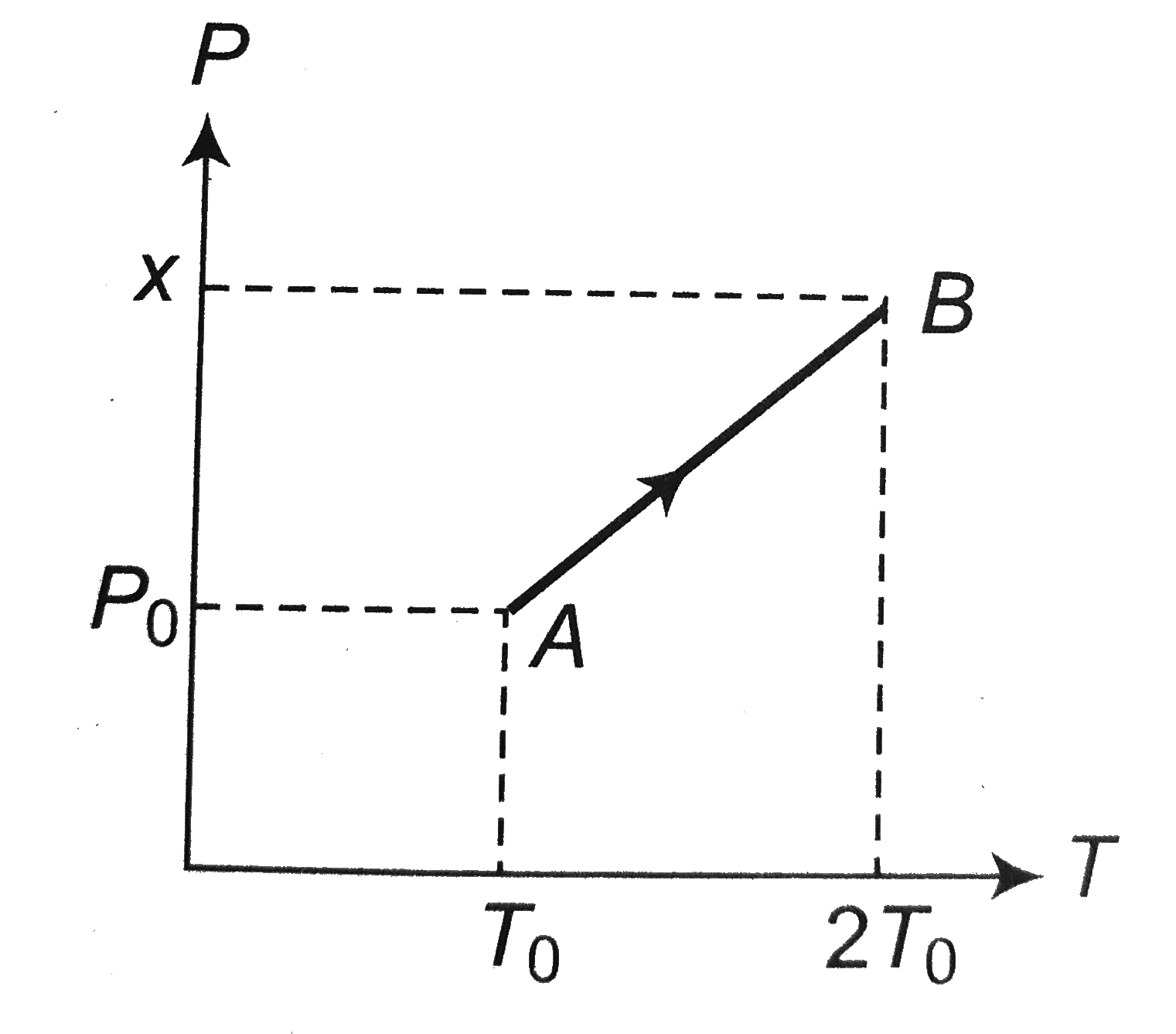
The densities at points A and B are rho(...

The densities at points A and B are `rho_(0)` and `(3 rho_(0))/(2)`. Find the value of x on P-axis.

Promotional Banner

Similar Questions

Explore conceptually related problems

In the given pressure - temperature (P-T) diagram, the density of an ideal gas at point A and B are rho_0 and 3rho_0/2 respectively, then the value of X is

A planet is made of two materials of density rho_(1) and rho_(2) as shown in figure. The acceleration due to gravity at surface of planet is same as a depth 'R' . The ratio of (rho_(1))/(rho_(2)) is x/3 . Find the value of x .

A planet is made of two materials of density rho_(1) and rho_(2) as shown in figure. The acceleration due to gravity at surface of planet is same as a depth 'R' . The ratio of (rho_(1))/(rho_(2)) is x/3 . Find the value of x .

The light cone is in equilibrium under the action of hydrostatic forces of two liquids of densities rho_(1) and rho_(2) . Find rho_(1)//rho_(2) . Find rho_(1) and rho_(2) .

The light cone is in equilibrium under the action of hydrostatic forces of two liquids of densities rho_(1) and rho_(2) . Find rho_(1)//rho_(2) . Find rho_(1) and rho_(2) .

The earth may be regarded as a spherically shaped uniform core of density rho_(1) and radius (R)/(2) surrounded by a uniform shell of thickness (R)/(2) and density rho_(2) . Find the ratio of (rho_(1))/(rho_(2)) if the value of acceleration due to gravity is the same at surface as at depth (R)/(2) from the surface.

The earth may be regarded as a spherically shaped uniform core of density rho_(1) and radius (R)/(2) surrounded by a uniform shell of thickness (R)/(2) and density rho_(2) . Find the ratio of (rho_(1))/(rho_(2)) if the value of acceleration due to gravity is the same at surface as at depth (R)/(2) from the surface.

The earth may be regarded as a spherically shaped uniform core of density rho_(1) and radius (R)/(2) surrounded by a uniform shell of thickness (R)/(2) and density rho_(2) . Find the ratio of (rho_(1))/(rho_(2)) if the value of acceleration due to gravity is the same at surface as at depth (R)/(2) from the surface.

A body of density rho floats with volume V_(1) of its total volume V immersed in a liquid of density rho_(1) and with the remainder of volume V_(2) immersed in another liquid of density rho_(2) where rho_(1)gtrho_(2) . Find the volume immersed in two liquids. ( V_(1) and V_(2) ).