

Home
Class 6
MATHS
What conclusion can be drawn from each p...

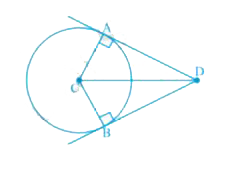
What conclusion can be drawn from each part of Fig. 2.14, if
DC is the bisector of `angleADB,CA bot DA` and `CB bot DB` ?

Promotional Banner

Topper's Solved these Questions

  • GEOMETRY

    NCERT EXEMPLAR|Exercise Exercise (State whether the statements given in questions are true (T) or false (F):)|10 Videos
  • FRACTIONS AND DECIMALS

    NCERT EXEMPLAR|Exercise ACTIVITY|1 Videos
  • INTEGERS

    NCERT EXEMPLAR|Exercise Exercise |42 Videos

Similar Questions

Explore conceptually related problems

What conclusion can be drawn from each part of Fig. 2.14, if DB is the bisector of angleADC ?

What conclusion can be drawn from each part of Fig. 2.14, if BD bisects angleABC ?

In each of the following questions two statements are given followed by two conclusions I and II. You have to consider the two statements to be true, even if they seem to be at variance from commonly known facts. You are to decide which of the given conclusions can definitely be drawn from the given statements. Indicate your answer. Statements : (I) Most No : 64 buses go to my office. (II) This is a No: 64 bus. Conclusions : (I) This bus goes to my office. (II) This bus does not go to my office.

Directions : In each of the following questions, one or two statements is given followed by four/two conclusions, I, II, III and IV. You have to consider the statements to be true, even if it seems to be at variance from commonly known facts. You are to decide which of the given conclusions can definitely be drawn from the given statements. Indicate your answer. Statements : Some boys are men. No man is black. Conslusions : I. Some boys are not black. II Some men are boys.

In triangle ABC, BE bot AC, CD bot AB and BE and CD intersect each other at O. The bisectors of angle OBC and angle OCB meet at P. If angle BPC = 148^@ , then what is the measure of angle A ? त्रिभुज ABC में, BE bot AC, CD bot AB तथा BE और CD एक दूसरे को O पर काटती हैं | angle OBC तथा angle OCB के समद्विभाजक P पर मिलते हैं | यदि angle BPC = 148^@ है, तो कोण A का मान क्या है?

In each of the following question statement is followed by two conclusions I and II. You have to consider the statement to be true, even if it seems to be at variance from commonly known facts. You are to decide which of the given conclusions can definitely be drawn from the given statement. Indicate your answer. Statement : Light comes from the Sun; feathers are light. Conclusions : I. Feather comes from the Sun. II. Sun is light.

Which of the following is not a direct conclusion that can be drawn from Mendel's Experiment ? a) Only one parental trait is expressed b) Two copies of each trait is inherited in sexually reproducing organism c) For recessive trait to be expressed, both copies should be identical d) Natural selection can alter frequency of an inherited trait.

In each of the following question statement is followed by two conclusions I and II. You have to consider the statement to be true, even if it seems to be at variance from commonly known facts. You are to decide which of the given conclusions can definitely be drawn from the given statement. Indicate your answer. Statement : Only the good die young. Conclusions : I. No good person lives to old age. II. Any one who lives to old age must be bad.

In each of the following questions, one or two statements is/are given followed by two conclusions I and II. You have to consider the statements to be true, even consider the statement to be tue, even if it seems to be at variance from commonly known facts. You are to decide which of the given conclusions can definitely be drawn from the given statement. Indicate your answer. Statements : Cactus plants are fleshy but need least water. Conclusions : I. All fleshy plants are cactus. II. Cactus plants need least water.

NCERT EXEMPLAR-GEOMETRY-Exercise
  1. What conclusion can be drawn from each part of Fig. 2.14, if DB is ...

    Text Solution

    |

  2. What conclusion can be drawn from each part of Fig. 2.14, if BD bise...

    Text Solution

    |

  3. What conclusion can be drawn from each part of Fig. 2.14, if DC is ...

    Text Solution

    |

  4. An angle is said to be trisected, if it is divided into three equal pa...

    Text Solution

    |

  5. How many points are marked in Fig 2.43 ?

    Text Solution

    |

  6. How many line segments are threr in Fig. 2.43 ?

    Text Solution

    |

  7. In Fig. 2.44, how many points are marked ? Name them.

    Text Solution

    |

  8. How many line segments are there in Fig. 2.44 ? Name them.

    Text Solution

    |

  9. In Fig 2.45 how many points are marked ? Name them.

    Text Solution

    |

  10. In Fig 2.45 how many line segments are there ? Name them.

    Text Solution

    |

  11. In Fig. 2.46, how many points are marked ? Name them.

    Text Solution

    |

  12. In Fig. 2.46 how many line segments are there ? Name them.

    Text Solution

    |

  13. In Fig. 2.47, O is the centre of the circle. Name all chords of t...

    Text Solution

    |

  14. In Fig. 2.47, O is the centre of the circle. Name all radii of th...

    Text Solution

    |

  15. In Fig. 2.47, O is the centre of the circle. Name a chord, which ...

    Text Solution

    |

  16. In Fig. 2.47, O is the centre of the circle. Shade sectors OAC an...

    Text Solution

    |

  17. In Fig. 2.47, O is the centre of the circle. Shade the smaller se...

    Text Solution

    |

  18. Can we have two acute angles whose sum is an acute angle ? Why or wh...

    Text Solution

    |

  19. Can we have two acute angles whose sum is a right angle ? Why or why...

    Text Solution

    |

  20. Can we have two acute angles whose sum is an obtuse angle ? Why or w...

    Text Solution

    |