Let `f(x)=x^(2)-(m-3)x+m`
Here `a=1, b=-(m-3),c=m`
and `D=b^(2)-4ac=(m-3)^(2)-4m`
`=m^(2)-10m+9=(m-1)(m-9)`
and `x`-x coordinate of vertex `=-b/(2a)=((m-3))/2`
(i) Both the roots are smaller than 2 `Dge0`
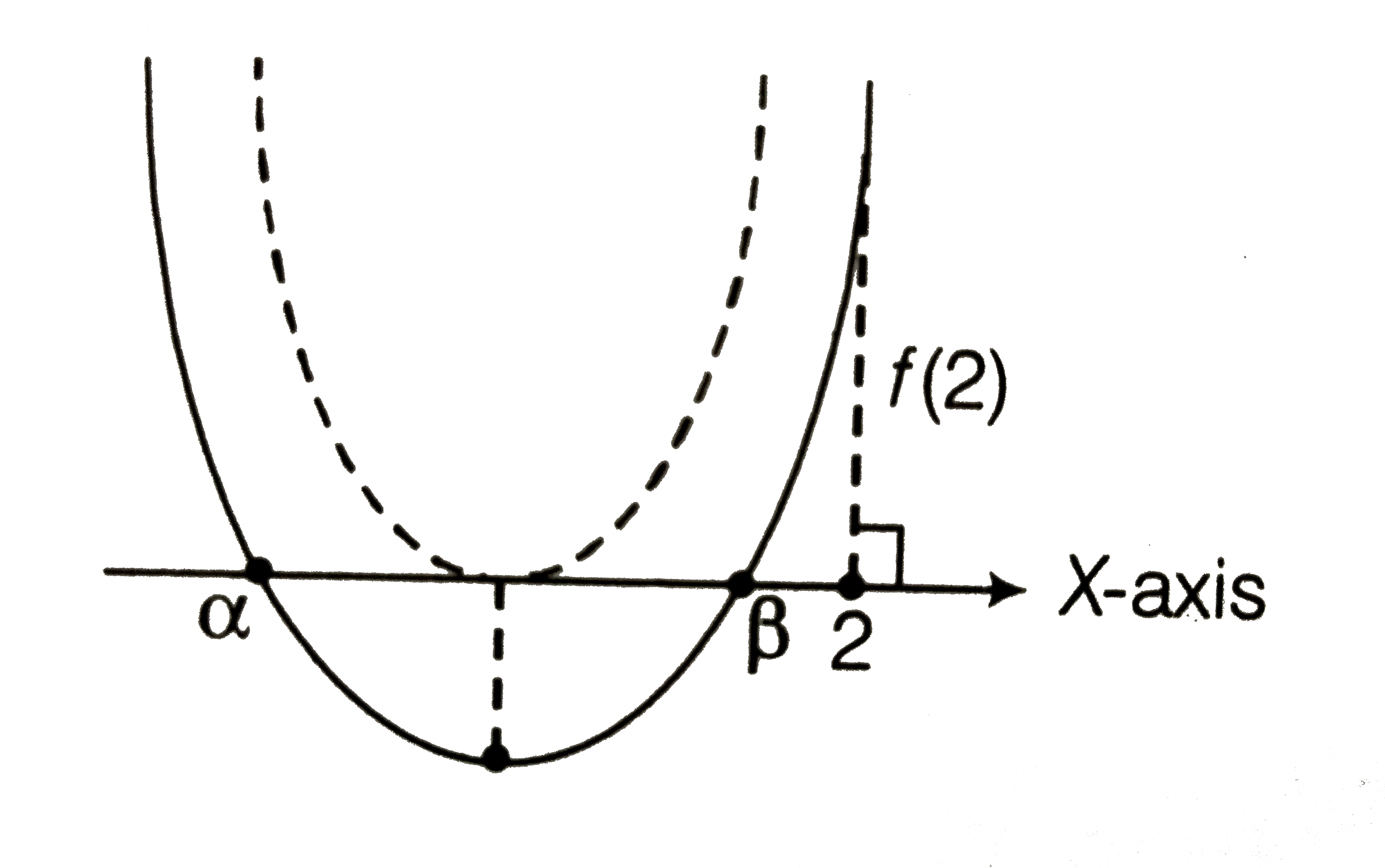
i.e. `(m-1)(m-9)ge0`
`:.m epsilon(-oo1[uu[9,oo)` ............i
`f(2)gt0`
i.e. `4-2(m-3)+mge0`
`impliesmlt10`
`:.m epsilon(-oo,10)`......ii and `x`- coordinate of vertex `lt2`
i.e. `((m-3))/2ltimpliesmlt7`
`:.m epsilon(-oo,7)` iii
On combining Eqs.i,ii, and iii we get
`m epsilon (-oo,1]`
(ii) Both the roots are greater than 2 `Dge0`
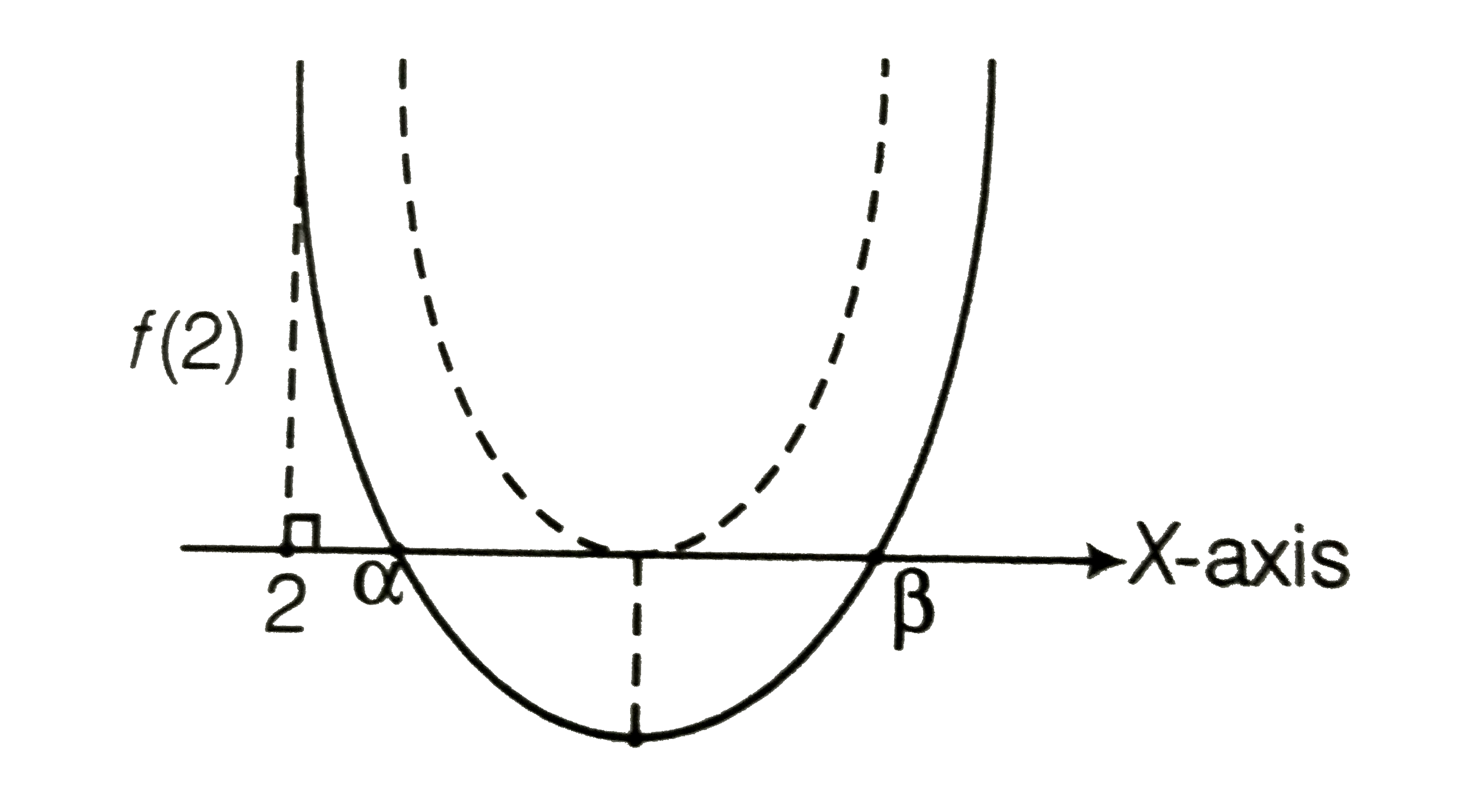
i.e. `(m-1)(m-9)ge0`
`:.m epsilon(-oo,1]epsilon[9,oo)`.........i
`f(2)gt0`
i.e. `4-2(m-3)+mgt0`
`impliesm lt 10`......ii
and x-coordinate of vertex `gt2`
i.e. `((m-3))/2gtimpliesmlt7`
`:. m epsilon(7,oo)` .....iii
On combining Eqs. i, ii and iii we get
`m epsilon[9,10)`
(iii) One root is smaller than 2 and the other root is greater than 2
`Dlt0`
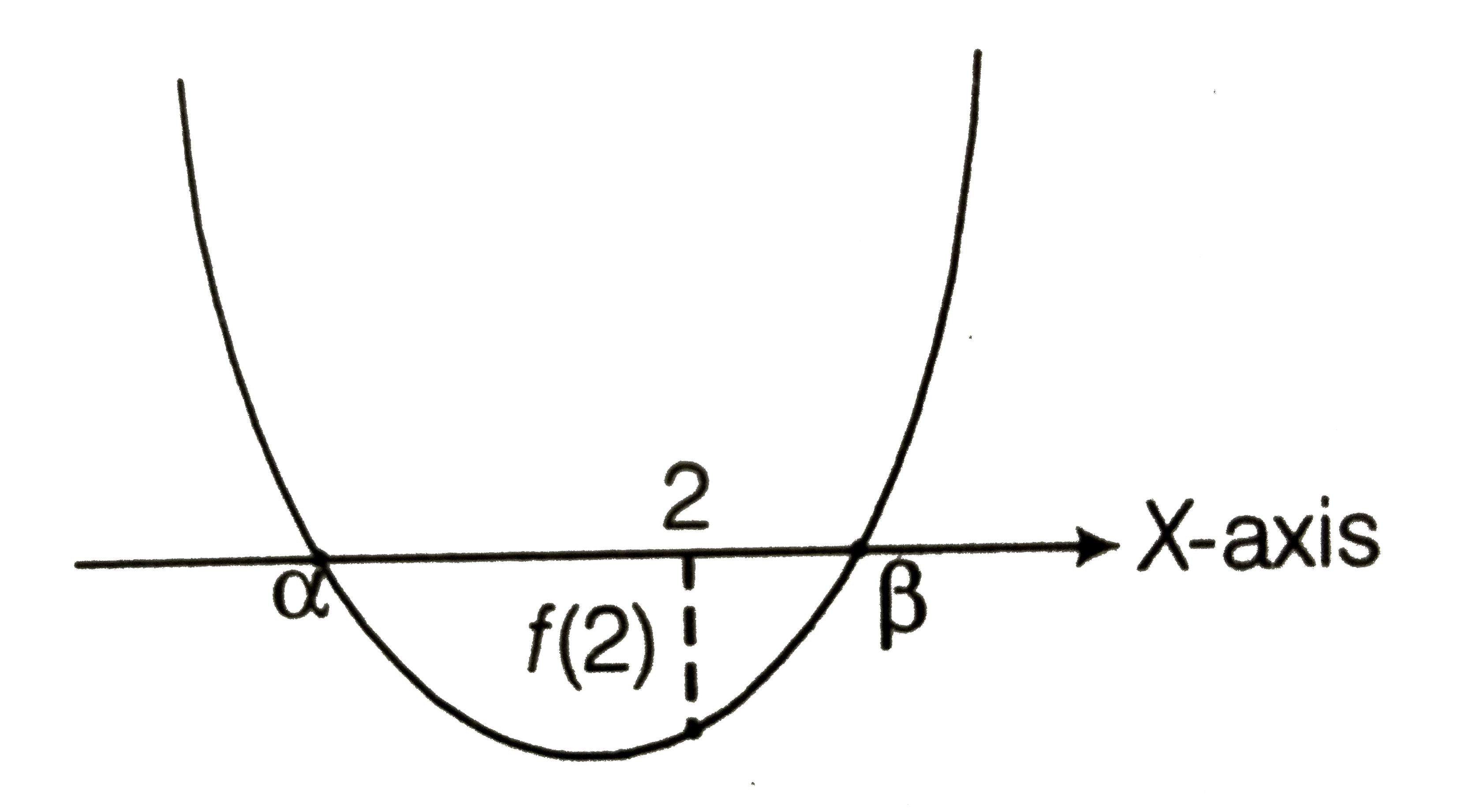
i.e. `(m-1)(m-9)gt0`
`:.m epsilon (-oo,1)uu(9,oo)`....i
`f(2)lt0`
i.e `4-2(m-3)+mlt0`
`:.mgt10`
`:.m epsilon (10,oo)`....ii
On combining Eqs i and ii we get
` m epsilon (10,oo)`
(iv) Exactly one root lies in the interval (1,2)
`Dgt0`
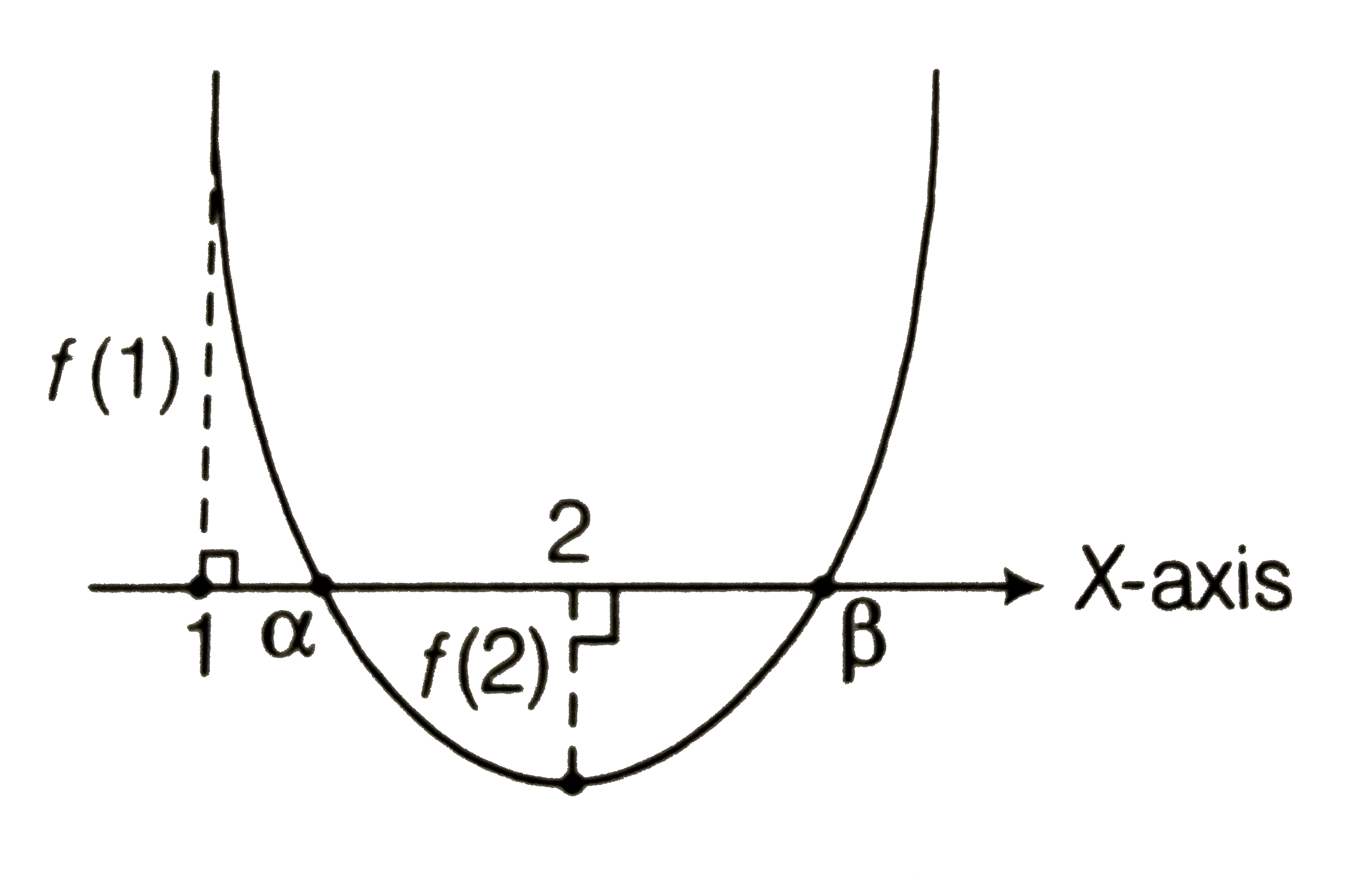
i.e., `(m-1)(m-9)gt0`
`:. m epsilon (-oo,1)uu(9,oo)`...i
`f(1)f(2)lt0`
`(1-(m-3)+m)(4-2(m-3)+m)lt0`
`implies4(-m+10)lt0`
`impliesm-10gt0impliesmgt10`
`:.m epsilon (10,oo)` ....ii
On combining Eqs (i) and (ii) we get
` m epsilon (10,oo)`
(v) Both the roots lie in the interval (1,2)
`Dge0`
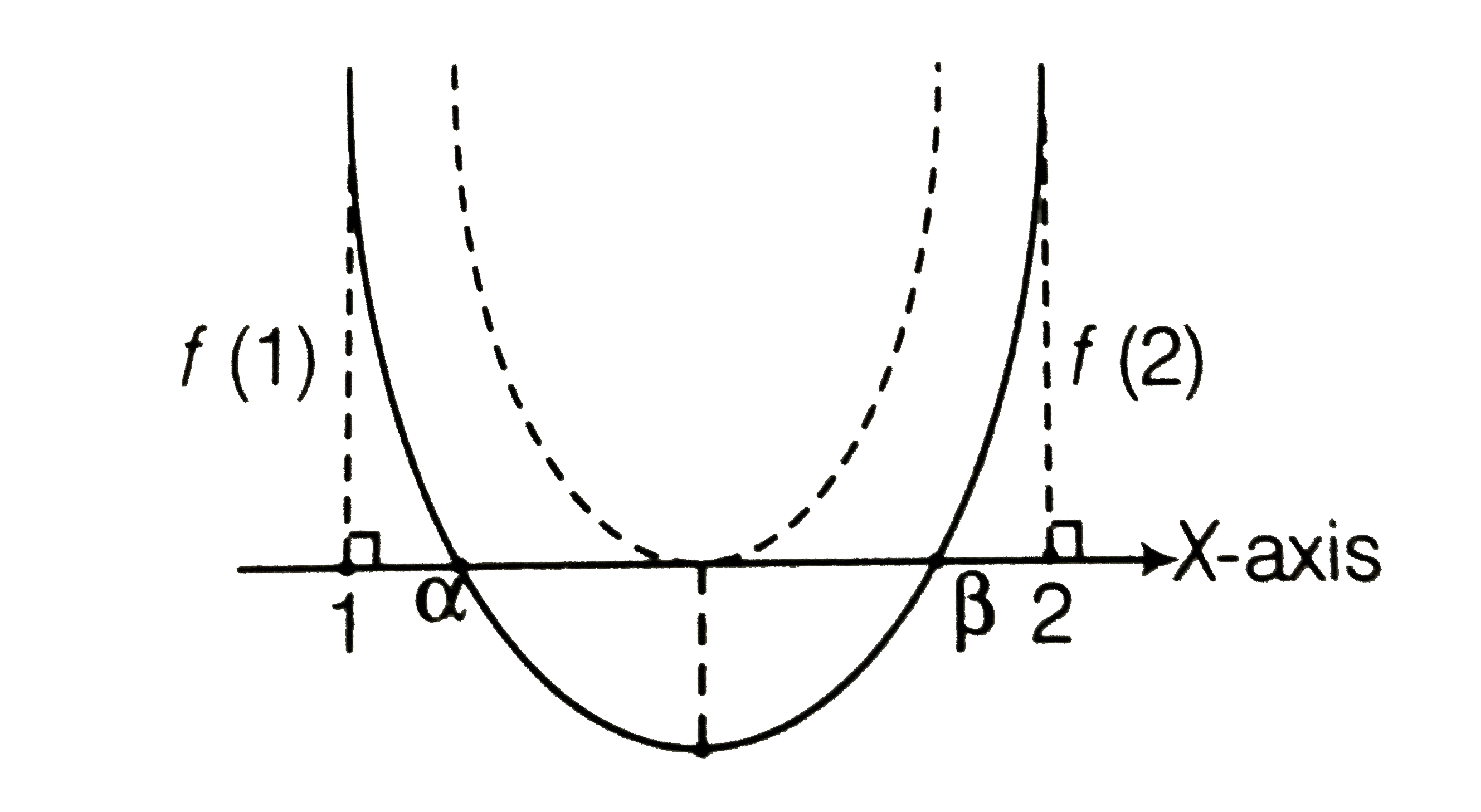
i.e. `(m-1)(m-9)ge0`
`:. m epsilon (-oo,1]uu[9,oo)`...i
`f(1)gt0`
i.e. `(1-(m-3)+m)gt0implies4gt0`
`:.mepsilonR`.ii
`f(2)gt0`
i.e. `4-2(m-3)+mgt0impliesmlt10`
`:.m epsilon (-oo,10)`..iii
`1ltx` coordinate of vertex `lt2`
i.e. `1lt((m-3))/2lt2`
`implies2ltm-3lt4` or `5ltmlt7`
`:.m epsilon (5,7)`.iv
On combining Eqs. i,ii,iii and iv we get
`m epsilon phi`
(vi) One root is greater than 2 and the other root is smaller than `1 Dgt0`
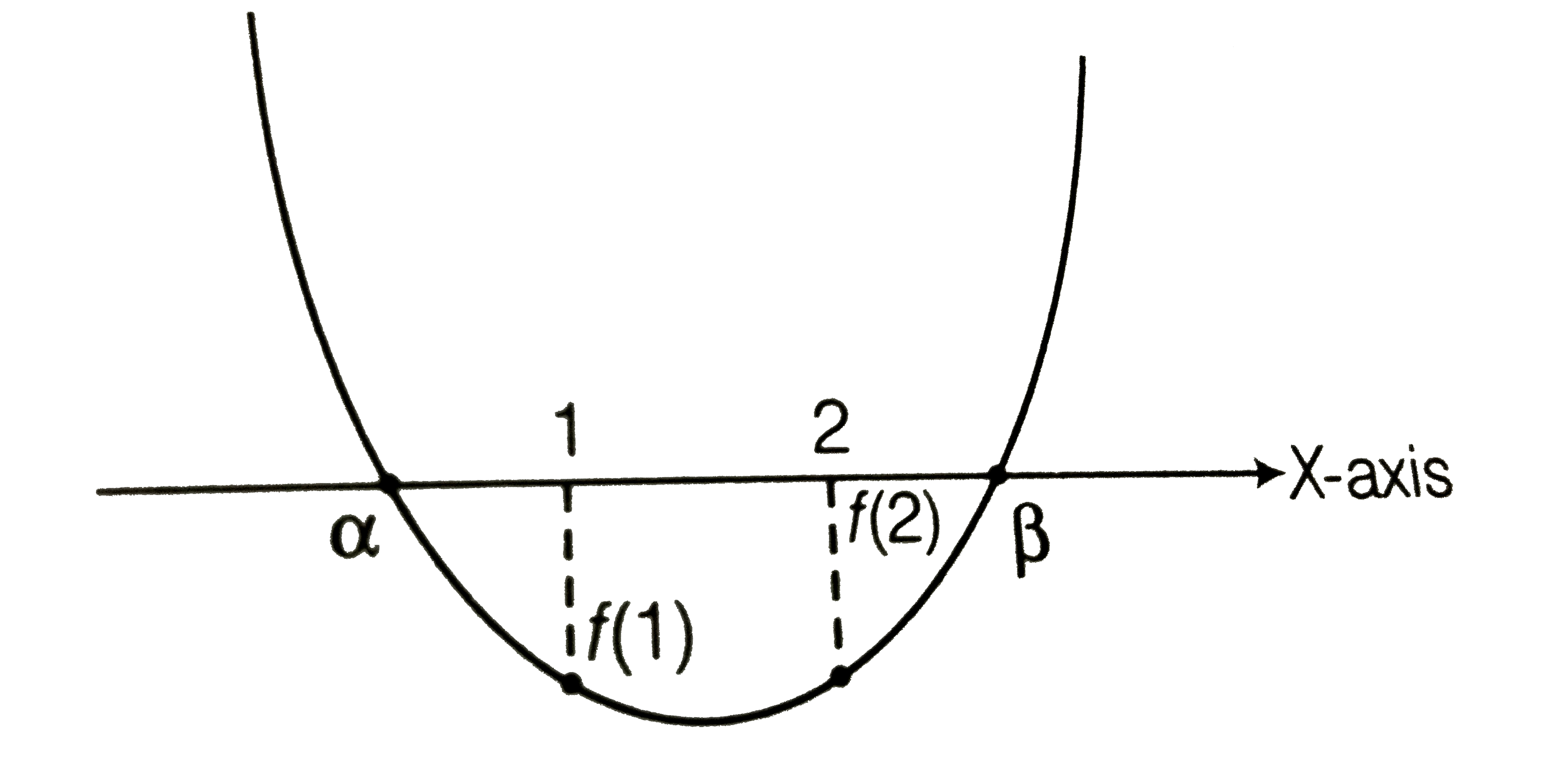
i.e. `(m-1)(m-9)gt0`
`:.m epsilon (-oo,1)uu(9,oo)`.i
`f(1)lt0`
i.e. `4lt0` which is not possible.
Thus , no such `m` exists.
(vii) At least one root lie in the interval (1,2)
Case I Exactly one root lies in (1,2)
`mepsilon(10,oo)` [from (iv) part]
Case II Both roots lie in the interval (1,2).
`m epsilon (10,oo)`
(viii) Atleast one root is greater than 2
Case I One root is smaller than 2 and the other root is greater than 2.
Then, `m epsilon(10,oo)` [from iii) part]
Case II Both the roots are greaters than 2 then `m epsilon [9,10)`.
Hence atleast one root is greater than 2.
`:.m epsilon (10,oo)uu[9,10)` or `m epsilon [9,10)uu(10,oo)`


