Home
Class 12
PHYSICS
An electromagnetic wave can be represent...

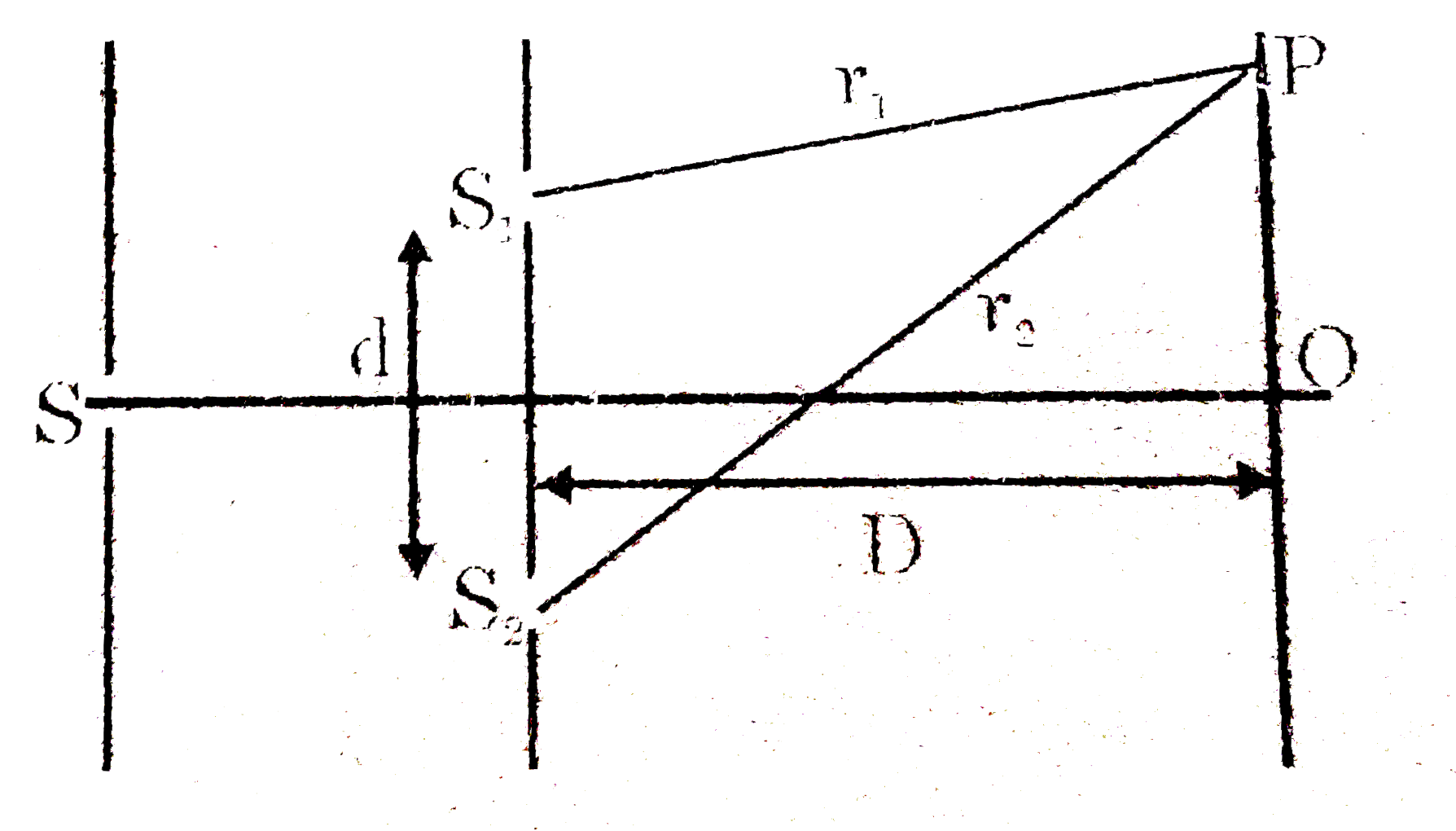
An electromagnetic wave can be represented by `E = A sin (kx- omega t + phi)`, where E is electric field associated with wave, According this equation, for any value of `x, E` remains sinusoidal for `-oolt t lt oo`. Obviously this corresponds to an idealised situation because radiation from ordinary sources consists of finite size wavetrains. In general, electric field remains sinusoidal only for times of order `tau_(c)`' which is called coherence time. In simpler language it means that for times of order `tau_(c)'` `a` wave will have a definite phase. The finite value of coherence time could be due to many factors, for example if radiating atom undergoes collision with another atom then wave train undergoes an abrupt phase change or due to the fact that an atom responsible for emitting radiation has a finite life time in the energy level from which it drops to lower energy level, while radiating. Concept of coherence time can be easily understood using young's double slit experiment. Let interference patten is observed around point `P` at time `t`, due to superposition of waves emanting from `S_(1)` and `S_(2)` at times `t =(r_(1))/(c)` and `(r_(2))/(c)` respectively, where `r_(1)` and `r_(2) ` are the distances`S_(1) P & S_(2)P`. Obviously if `(r_(2)-r_(1))/(c) lt lt tau_(e),{"where" " "c = 3xx10^(8)m//s}` then, wavetrain arriving at point `P` from `S_(1)` & `S_(2)` will have a definite phase relationship and an interference pattern of good contranst will be obtained.

If coherence time is of order `10^(-10)` second and screen is placed at a very large distance from slits in the given figure, then:-

A

For `d = 0.3 cm`, we will not get any fringers on screen (except central maxima)

B

For `d = 0.03 cm`, we will get fringes on a large part of screen

C

For `d = 3 cm` we will get fringes on entire screen.

D

We will get fringes on entire screen, irrespective of value of `d`.

Text Solution

Verified by Experts

The correct Answer is:

B

`d sin theta = (10^(-10))(3xx10^(8)) = 3xx10^(-2)m = 3cm`
`(A)` for `d = 0.3 cm`, we will get fringes on entire screen
`(B)` For `d = 0.03 cm`, we will get fringes on entire screen
`(C )` For `d = 3 cm, theta = 45^(@)`
Promotional Banner

Topper's Solved these Questions

  • TEST PAPERS

    ALLEN |Exercise part-2 physics|73 Videos
  • TEST PAPERS

    ALLEN |Exercise part-2 physic|48 Videos
  • TEST PAPERS

    ALLEN |Exercise PAPER 3|92 Videos
  • TEST PAPER 4

    ALLEN |Exercise PHYSICS|45 Videos
  • UNIT & DIMENSIONS, BASIC MATHS AND VECTOR

    ALLEN |Exercise Exercise (J-A)|7 Videos

Similar Questions

Explore conceptually related problems

Flux associated with any point in electric field is......

Electrostatic potential can be defined at any - point in the electric field because electric field is

In a wave motion y = sin (kx - omega t),y can represent :-

If electromagnetic wave is propagating in x - direction and electric and magnetic field are in y and z - direction respectively then write equation of Ey and Bz.

From which law and principle electric field by electric dipole can be obtained ?

A wave is represented by the equation y = a sin(kx + omega t) is superimposed with another wave to form a stationary wave such that the point x = 0 is a node. Then the equation of other wave is :-

If plane electromagnetic wave of momentum p and E are collied with the surface of any object then the value of p and E will be …..

An EM wave radiates outwards from a dipole antenna, with E_(0) as the amplitude of its electric field vector. The electric field E_(0) which transports significant energy from the source falls off as

Even though an electric field E exerts a force qE on a charged particle yet the electric field of an EM wave does not contribute to the radiation pressure (but transfers energy). Explain.
