Home
Class 12
PHYSICS
Same number of books are placed in four ...

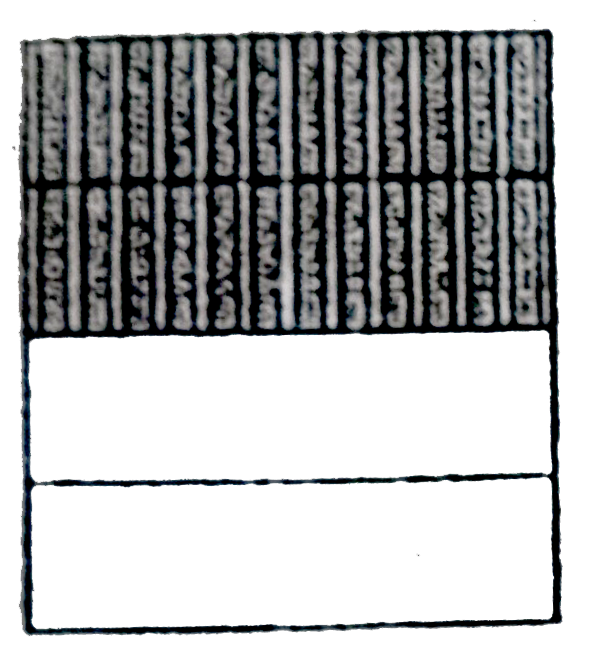
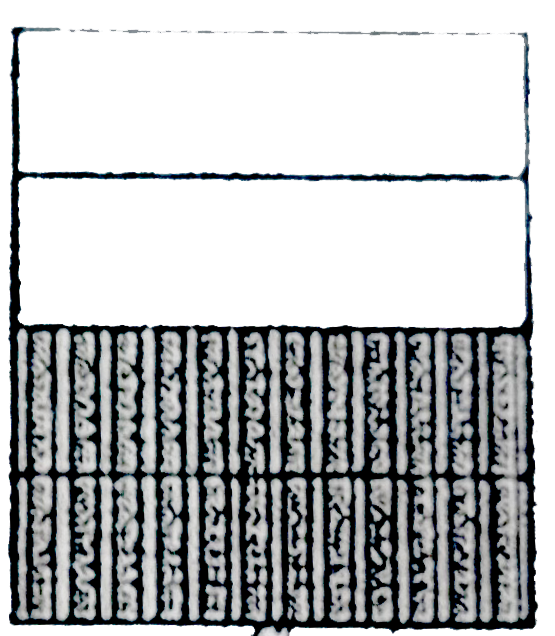
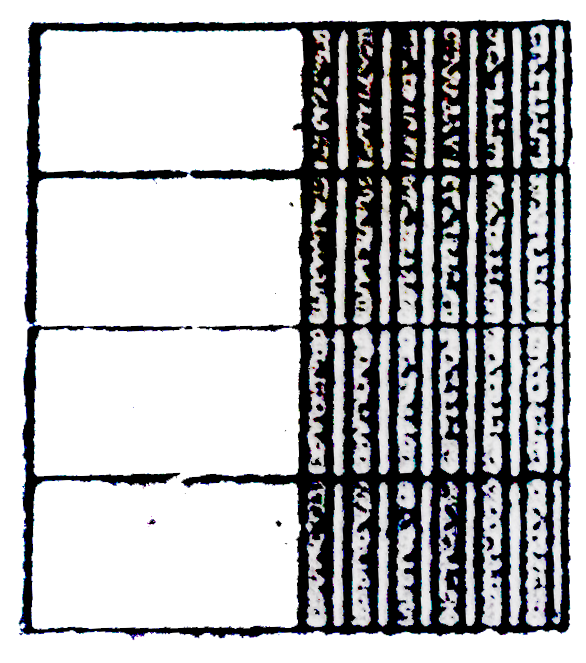
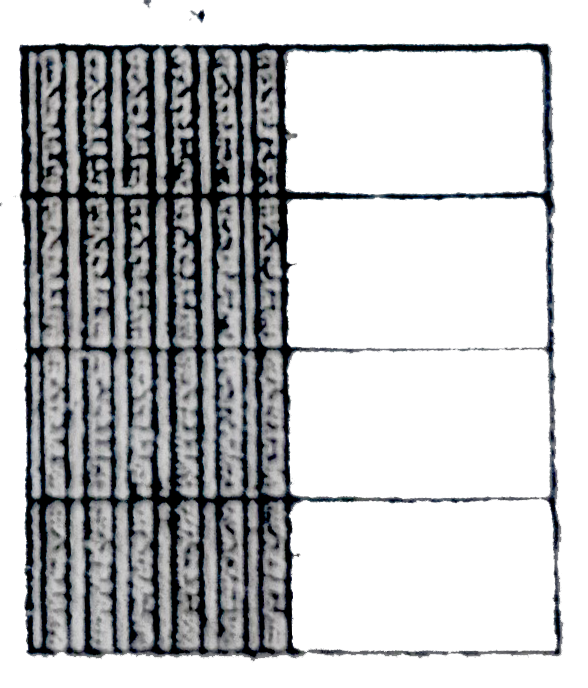
Same number of books are placed in four books cases as shown. Which look case is most likely to topple forward if pulled a little at the top towards right -

A

B

C

D

Text Solution

Verified by Experts

The correct Answer is:

A
Promotional Banner

Topper's Solved these Questions

Similar Questions

Explore conceptually related problems

Comprehension # 1 If net force on a system in a particular direction is zero (say in horizontal direction) we can apply: Sigmam_(R )x_(R )= Sigmam_(L)x_(L), Sigmam_(R )v_(R )= Sigmam_(L)v_(L) and Sigmam_(R )a_(R ) = Sigmam_(L)a_(L) Here R stands for the masses which are moving towards right and L for the masses towards left, x is displacement, v is veloctiy and a the acceleration (all with respect to ground). A small block of mass m = 1 kg is placed over a wedge of mass M = 4 kg as shown in figure. Mass m is released from rest. All surface are smooth. Origin O is as shown. At the same instant reaction on the wedge from the ground is ........N.

Huygen was the figure scientist who proposed the idea of wave theory of light he said that the light propagates in form of wavelengths. A wavefront is a imaginary surface of every point of which waves are in the same. phase. For example the wavefront for a point source of light is collection of concentric spheres which have centre at the origin w_(1) is a wavefront w_(2) is another wavefront. The radius of the wavefront at time 't' is 'ct' in thic case where 'c' is the speed of light the direction of propagation of light is perpendicular to the surface of the wavelength. the wavefronts are plane wavefronts in case of a parallel beam of light. Huygen also said that every point of the wavefront acts as the source of secondary wavelets. The tangent drawn to all secondary wavelets at a time is the new wavefront at that time. The wavelets are to be considered only in the forward direction (i.e., the direction of propagation of light) and not in the reverse direction if a wavefront w_(1) and draw spheres of radius 'cDeltat' they are called secondary wavelets. Draw a surface w_(2) which is tangential to all these secondary wavelets w_(2) is the wavefront at time t+Deltat Huygen proved the laws of reflection and laws of refraction using concept of wavefront. Q. Spherical wavefronts shown in figure, strike a plane mirror. reflected wavefront will be as shown in

Huygen was the figure scientist who proposed the idea of wave theory of light he said that the light propagates in form of wavelengths. A wavefront is a imaginary surface of every point of which waves are in the same. phase. For example the wavefront for a point source of light is collection of concentric spheres which have centre at the origin w_(1) is a wavefront w_(2) is another wavefront. The radius of the wavefront at time 't' is 'ct' in thic case where 'c' is the speed of light the direction of propagation of light is perpendicular to the surface of the wavelength. the wavefronts are plane wavefronts in case of a parallel beam of light. Huygen also said that every point of the wavefront acts as the source of secondary wavelets. The tangent drawn to all secondary wavelets at a time is the new wavefront at that time. The wavelets are to be considered only in the forward direction (i.e., the direction of propagation of light) and not in the reverse direction if a wavefront w_(1) and draw spheres of radius 'cDeltat' they are called secondary wavelets. Draw a surface w_(2) which is tangential to all these secondary wavelets w_(2) is the wavefront at time t+Deltat Huygen proved the laws of reflection and laws of refraction using concept of wavefront. Q. Wavefronts incident on an interface between the media are shown in the figure. the refracted wavefront will be as shown in

Huygen was the figure scientist who proposed the idea of wave theory of light he said that the light propagates in form of wavelengths. A wavefront is a imaginary surface of every point of which waves are in the same. phase. For example the wavefront for a point source of light is collection of concentric spheres which have centre at the origin w_(1) is a wavefront w_(2) is another wavefront. The radius of the wavefront at time 't' is 'ct' in thic case where 'c' is the speed of light the direction of propagation of light is perpendicular to the surface of the wavelength. the wavefronts are plane wavefronts in case of a parallel beam of light. Huygen also said that every point of the wavefront acts as the source of secondary wavelets. The tangent drawn to all secondary wavelets at a time is the new wavefront at that time. The wavelets are to be considered only in the forward direction (i.e., the direction of propagation of light) and not in the reverse direction if a wavefront w_(1) and draw spheres of radius 'cDeltat' they are called secondary wavelets. Draw a surface w_(2) which is tangential to all these secondary wavelets w_(2) is the wavefront at time t+Deltat Huygen proved the laws of reflection and laws of refraction using concept of wavefront. Q. Plane are incident on a spherical mirror as shown in the figure. the reflected wavefronts will be

Huygen was the figure scientist who proposed the idea of wave theory of light he said that the light propagates in form of wavelengths. A wavefront is a imaginary surface of every point of which waves are in the same. phase. For example the wavefront for a point source of light is collection of concentric spheres which have centre at the origin w_(1) is a wavefront w_(2) is another wavefront. The radius of the wavefront at time 't' is 'ct' in thic case where 'c' is the speed of light the direction of propagation of light is perpendicular to the surface of the wavelength. the wavefronts are plane wavefronts in case of a parallel beam of light. Huygen also said that every point of the wavefront acts as the source of secondary wavelets. The tangent drawn to all secondary wavelets at a time is the new wavefront at that time. The wavelets are to be considered only in the forward direction (i.e., the direction of propagation of light) and not in the reverse direction if a wavefront w_(1) and draw spheres of radius 'cDeltat' they are called secondary wavelets. Draw a surface w_(2) which is tangential to all these secondary wavelets w_(2) is the wavefront at time t+Deltat Huygen proved the laws of reflection and laws of refraction using concept of wavefront. Q. Certain plane wavefronts are shown in figure the refractive index of medius is

Huygen was the figure scientist who proposed the idea of wave theory of light he said that the light propagates in form of wavelengths. A wavefront is a imaginary surface of every point of which waves are in the same. phase. For example the wavefront for a point source of light is collection of concentric spheres which have centre at the origin w_(1) is a wavefront w_(2) is another wavefront. The radius of the wavefront at time 't' is 'ct' in thic case where 'c' is the speed of light the direction of propagation of light is perpendicular to the surface of the wavelength. the wavefronts are plane wavefronts in case of a parallel beam of light. Huygen also said that every point of the wavefront acts as the source of secondary wavelets. The tangent drawn to all secondary wavelets at a time is the new wavefront at that time. The wavelets are to be considered only in the forward direction (i.e., the direction of propagation of light) and not in the reverse direction if a wavefront w_(1) and draw spheres of radius 'cDeltat' they are called secondary wavelets. Draw a surface w_(2) which is tangential to all these secondary wavelets w_(2) is the wavefront at time t+Deltat Huygen proved the laws of reflection and laws of refraction using concept of wavefront. Q. A point source of light is placed at origin, in air. the equation of wavefront of the wave at time t, emitted by source at t=0 is (take refractive index of air as 1)

Two hydrogen like atoms A and B having (N)/(Z) ratio equal to 1 have atomic number Z_(A) and Z_(B) A is moving, while B is stationary and both are in ground state. The minimum kinetic energy which A must have to have an inelastic collision with B such that both A and B getting excited is 221 e V . If situation is reversed and B is made to stike A which is stationary and both in ground state then minimum kinetic energy which B must have to make an inelastic coliision with both getting excited is 331.5 e V . Assume mase of proton = mass of neutron. In which of the following case energy of emitted photon will be same (Neglecting recoil of atom)

ALLEN -TEST PAPER-Exercise (Physics)
  1. A body of radius R and mass m is rolling smoothly with speed v on a ho...

    Text Solution

    |

  2. The figure shows a uniform rod lying along the x-axis. The locus of al...

    Text Solution

    |

  3. Same number of books are placed in four books cases as shown. Which lo...

    Text Solution

    |

  4. A hollow smooth uniform A of mass 'm' rolls without sliding on a smoot...

    Text Solution

    |

  5. In an experiment with a beam balance an unknown mass m is balanced by ...

    Text Solution

    |

  6. A fixed pulley of radius 20 cm and moment of inertia 0.32 kg.m^(2) abo...

    Text Solution

    |

  7. Figures 1 and 2 below show a meter stick, haif of which is wood and ha...

    Text Solution

    |

  8. A sphere of mass M and radius r slips on a rough horizontal plane. At ...

    Text Solution

    |

  9. A 1 Kg solid sphere rolls without slipping on a rough horizontal sufac...

    Text Solution

    |

  10. Moment of inertia of a rigid body is expressed in units of kg m^(2). T...

    Text Solution

    |

  11. A mass m(1) moves with a great velocity. It strikes another mass m(2) ...

    Text Solution

    |

  12. N similar slabs of cubical shape of edge b are lying on ground. Densit...

    Text Solution

    |

  13. A ball collides elastically with a massive wall moving towards it with...

    Text Solution

    |

  14. A block of mass m=1/3 kg is kept on a rough horizontal plane. Friction...

    Text Solution

    |

  15. Consider two observers moving with respect to each other at a speed v ...

    Text Solution

    |

  16. Consider following statement (A) Work done by pseudo force in non-in...

    Text Solution

    |

  17. Forces acting on a particle have magnitude of 14N, 7N and 7N act in th...

    Text Solution

    |

  18. The graph below shows how the force on a mass depends on the position ...

    Text Solution

    |

  19. The kinetic energy of a particle continuously icreses with time

    Text Solution

    |

  20. The only force acting on a block is along x-axis is given by P=-((4)/(...

    Text Solution

    |
