Home
Class 12
PHYSICS
A ball is thrown vertically upwards. Whi...

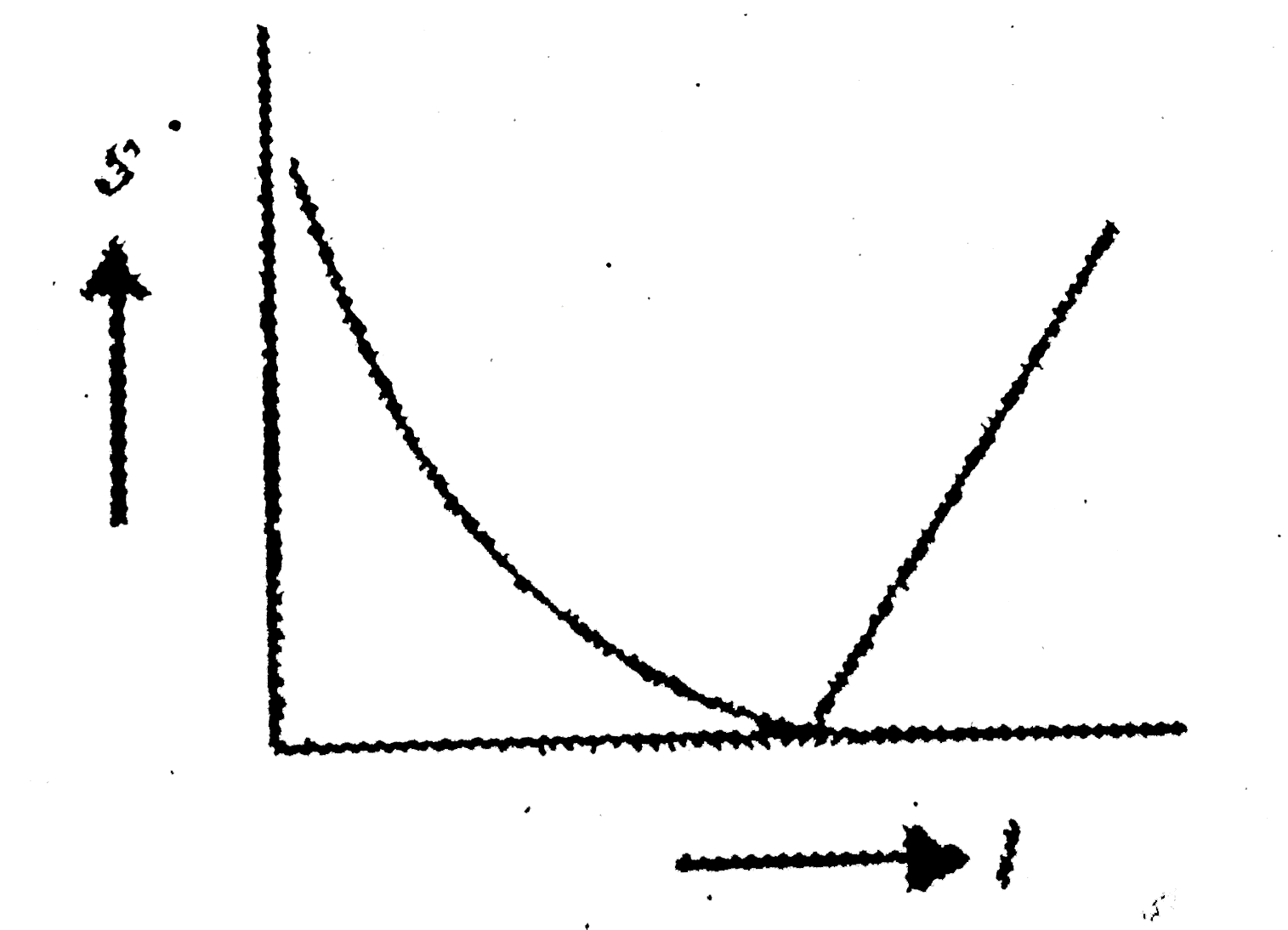
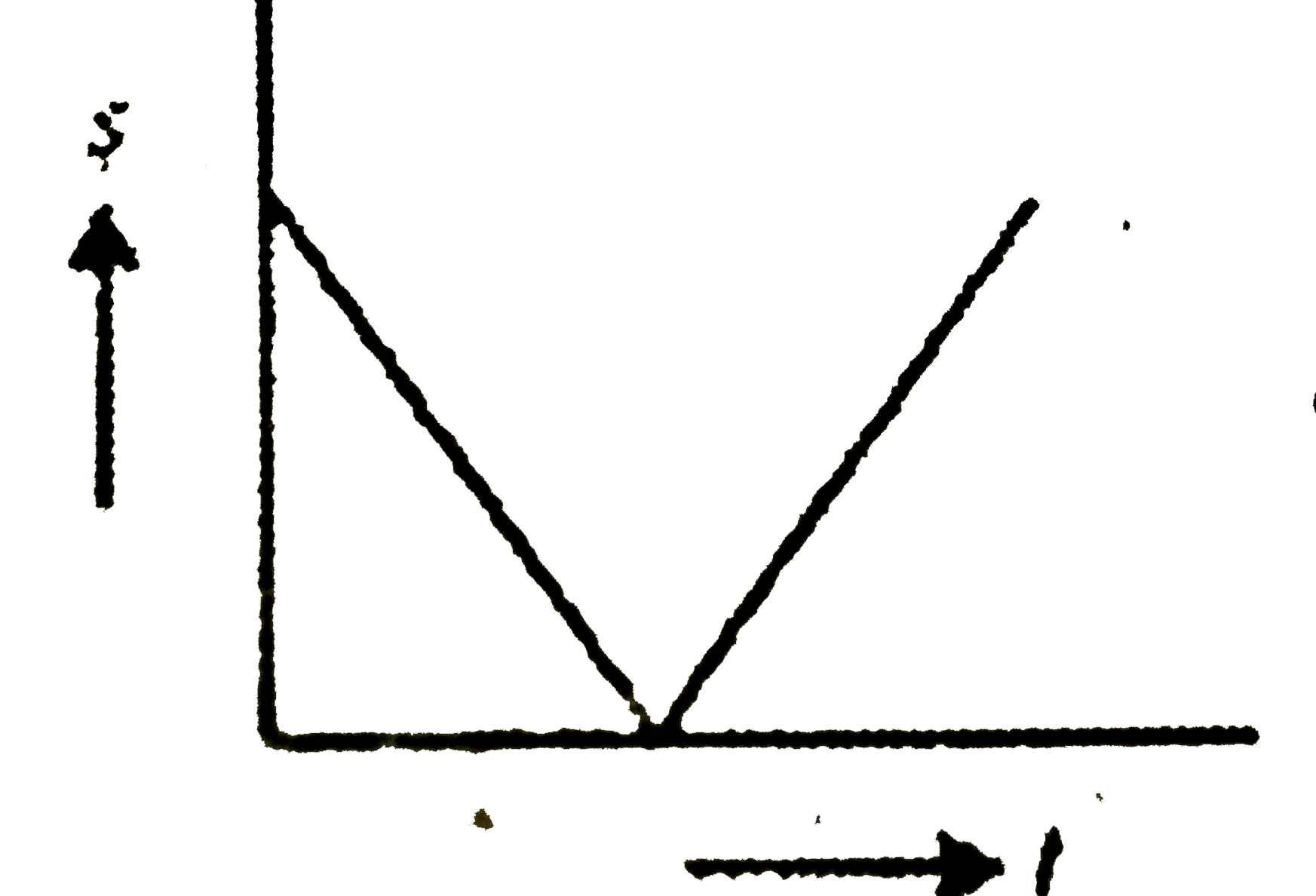
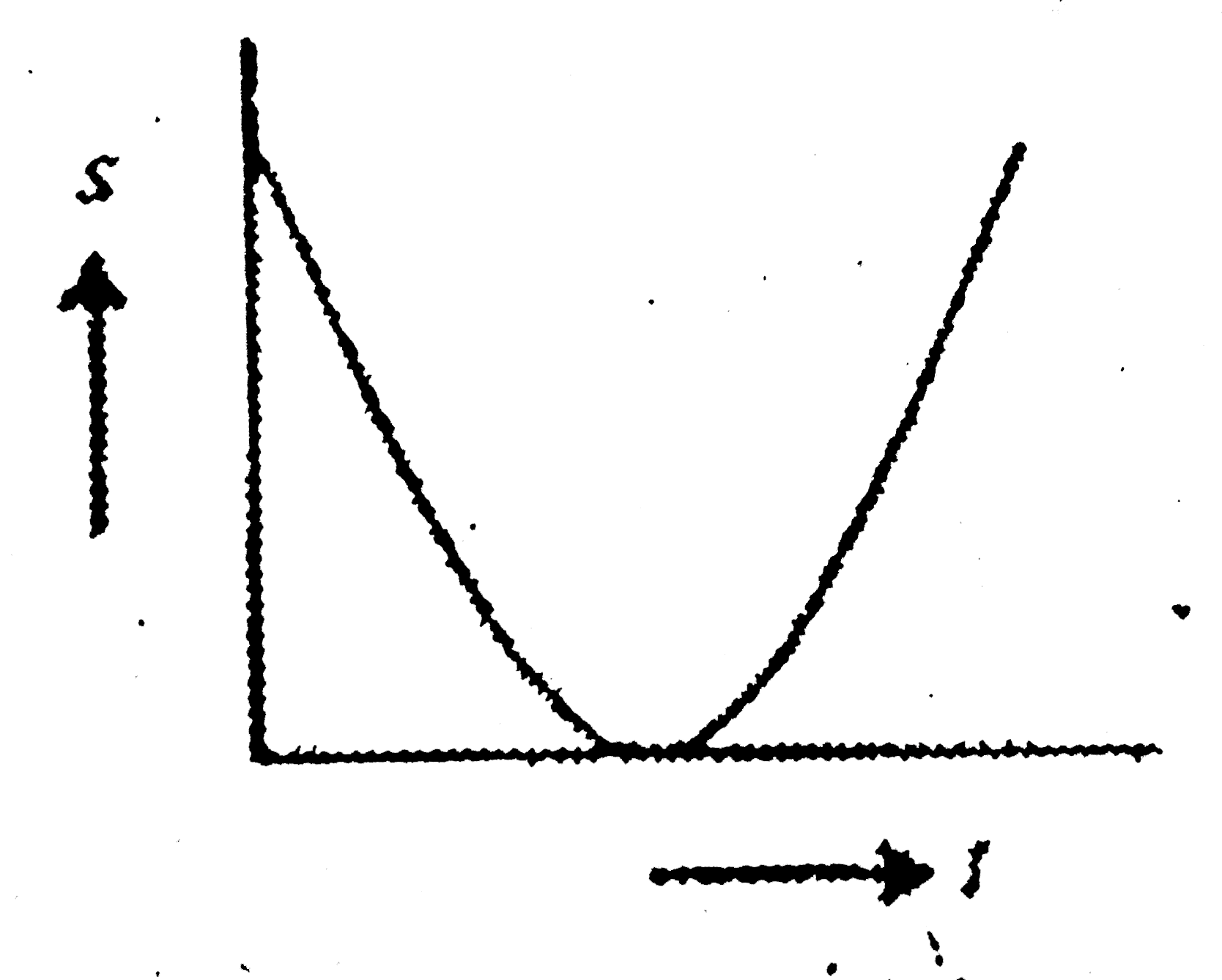
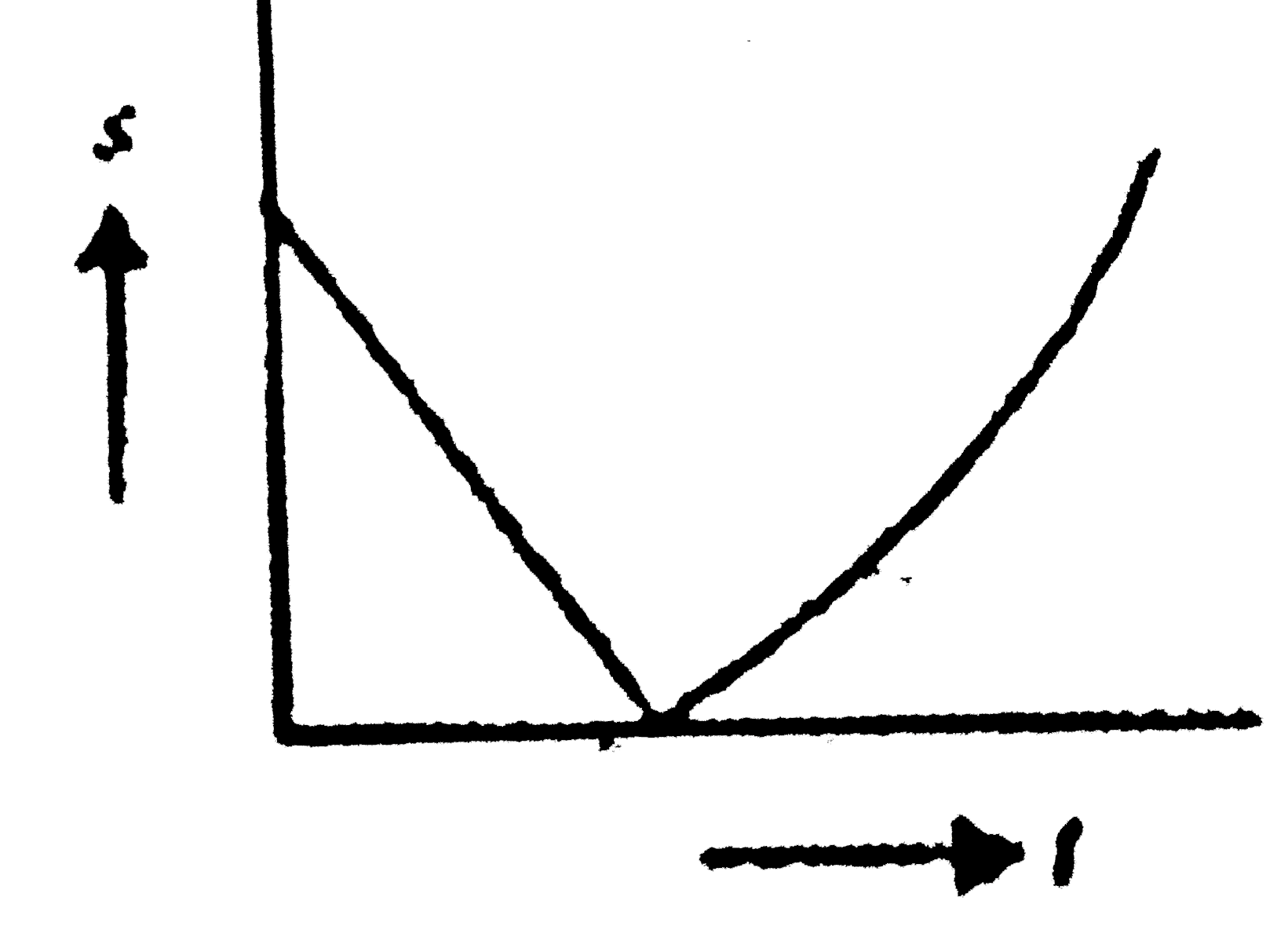
A ball is thrown vertically upwards. Which of the following plots represent the speed graph of the ball during its flight if the air resistence is not ignored?

A

B

C

D

Text Solution

AI Generated Solution

The correct Answer is:
To solve the problem, we need to analyze the motion of a ball thrown vertically upwards while considering air resistance. Here’s a step-by-step breakdown of the solution: ### Step 1: Understand the Motion of the Ball When a ball is thrown vertically upwards, it experiences two main forces: the initial upward force (due to the throw) and the downward gravitational force. Additionally, air resistance opposes the motion of the ball. ### Step 2: Analyze the Upward Motion During the upward motion: - The ball's speed decreases due to the gravitational pull and air resistance. - The equation of motion can be represented as: \[ V = U - gt \] where \( V \) is the final velocity, \( U \) is the initial velocity, \( g \) is the acceleration due to gravity, and \( t \) is time. ### Step 3: Analyze the Downward Motion When the ball reaches its highest point, it starts descending: - The speed increases, but air resistance will reduce the acceleration. - The equation for downward motion can be represented as: \[ V = U + gt \] However, since air resistance is present, the acceleration will be less than \( g \). ### Step 4: Consider the Effect of Air Resistance With air resistance: - The speed will not decrease to zero at the same rate during the upward motion. - The speed will not increase during the downward motion as quickly as it would without air resistance. - The speed-time graph will not be linear; instead, it will curve. ### Step 5: Sketch the Speed-Time Graph - The graph will start at \( U \) (initial speed) and curve downwards as the ball rises, indicating a decrease in speed due to gravity and air resistance. - At the peak, the speed will be zero. - As the ball falls, the speed will increase but at a decreasing rate due to air resistance, resulting in a curve that rises less steeply than it would without air resistance. ### Conclusion The speed-time graph will show a curve that decreases during the upward motion and increases during the downward motion, but the increase will be less steep than the decrease. ### Final Answer From the options provided, the correct plot representing the speed graph of the ball during its flight, considering air resistance, is the one that shows a curved line for both upward and downward motion. ---
To solve the problem, we need to analyze the motion of a ball thrown vertically upwards while considering air resistance. Here’s a step-by-step breakdown of the solution: ### Step 1: Understand the Motion of the Ball When a ball is thrown vertically upwards, it experiences two main forces: the initial upward force (due to the throw) and the downward gravitational force. Additionally, air resistance opposes the motion of the ball. ### Step 2: Analyze the Upward Motion During the upward motion: - The ball's speed decreases due to the gravitational pull and air resistance. ...
Promotional Banner

Similar Questions

Explore conceptually related problems

A ball is thrown vertically upward.Which of the following plots represents the speed-time graph of the ball during its flight if the air resostance is not ignored?

A ball is thrown vertically upwards. Which of the following plots represents the speed-time graph of the ball during its height if the air resistance is ignored ?

A ball is thrown vertically upwards. Which of the following graph/graphs represent velocity-time graph of the ball during its flight (air resistance is neglected)

A body is thrown vertically upwards. Which one of the following graphs correctly represent the velocity vs time?

A ball is thrown vertically upward. What is the magnitude of velocity at the highest point ?

A ball is thrown vertically upwards. It returns 6 s later. Calculate the greatest height reached by the ball

A ball is thrown vertically upwards, its motion is uniform throughout. True/False.

A ball thrown vertically upwards with an initial velocity of 1.4 m//s. The total displcement of the ball is

A ball thrown vertically upward with initial velocity u. Which of the following graphs represent the velocity of ball correctly as function of time? (Take upward direction as positive)

A ball is thrown vertically upwards from the ground. If T_1 and T_2 are the respective time taken in going up and coming down, and the air resistance is not ignored, then