Home
Class 12
CHEMISTRY
alpha-Toluic acid in reaction withBr(2)+...

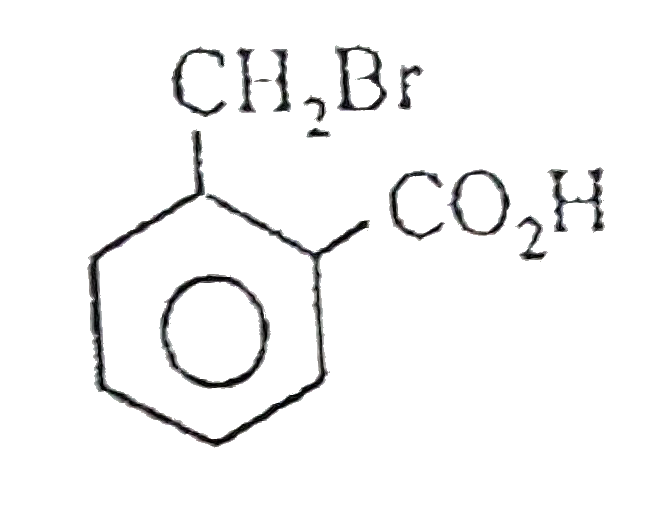
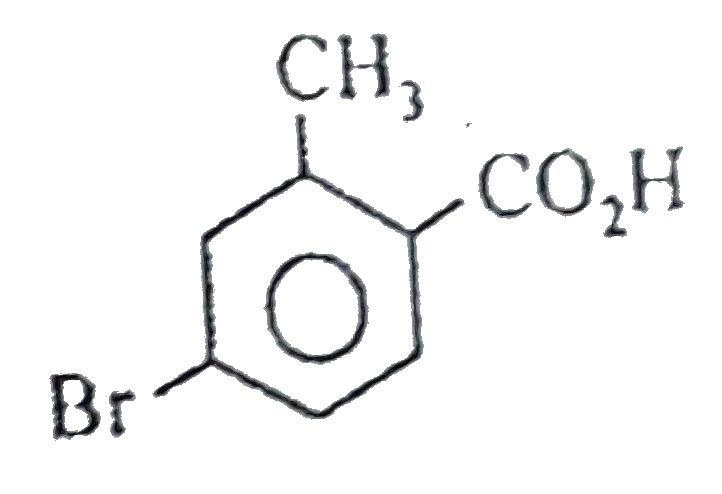
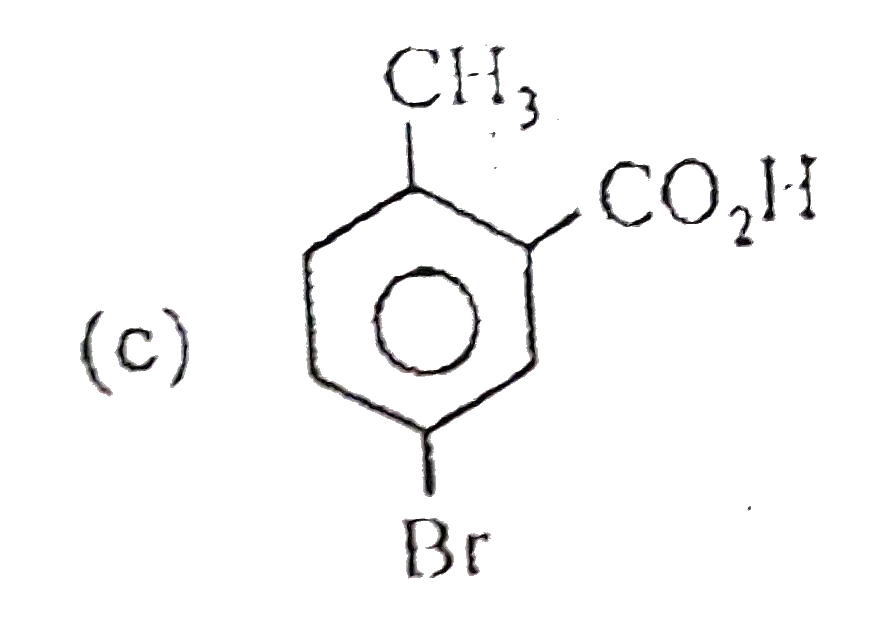
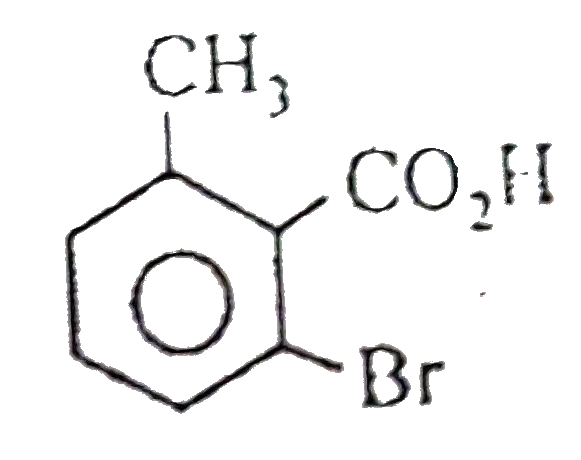
`alpha`-Toluic acid in reaction with`Br_(2)+Fe` gives

A

B

C

D

Text Solution

AI Generated Solution

The correct Answer is:

To solve the problem of what product is formed when α-Toluic acid reacts with Br₂ and Fe, we can follow these steps: ### Step 1: Identify the structure of α-Toluic acid α-Toluic acid is a benzene ring with a methyl group (–CH₃) and a carboxylic acid group (–COOH) attached to it. The methyl group is ortho- and para-directing, while the carboxylic acid group is meta-directing. ### Step 2: Understand the reaction conditions The reaction involves bromination using Br₂ in the presence of Fe. In this reaction, Br₂ will generate a bromonium ion (Br⁺), which acts as the electrophile. ### Step 3: Determine the directing effects of the substituents - The methyl group (–CH₃) is an electron-donating group and directs electrophilic substitution to the ortho and para positions. - The carboxylic acid group (–COOH) is an electron-withdrawing group and directs electrophilic substitution to the meta position. ### Step 4: Identify the possible positions for bromination Considering the directing effects: - The methyl group can direct bromination to the ortho and para positions. - The carboxylic acid group can direct bromination to the meta position. ### Step 5: Analyze the positions When considering both groups, the only position that satisfies both directing effects is the position that is meta to the carboxylic acid group and ortho to the methyl group. This is because the methyl group prefers ortho and para, but the presence of the carboxylic acid group limits the bromination to the meta position relative to itself. ### Step 6: Draw the product The product will have the bromine atom attached to the carbon that is meta to the carboxylic acid group and ortho to the methyl group. The structure can be represented as follows: - The benzene ring will have: - A methyl group (–CH₃) at one position. - A carboxylic acid group (–COOH) at another position. - A bromine atom (–Br) at the meta position relative to the carboxylic acid group. ### Step 7: Conclusion The final product of the reaction is 3-bromo-α-toluic acid, where the bromine is attached to the carbon that is meta to the carboxylic acid group.

To solve the problem of what product is formed when α-Toluic acid reacts with Br₂ and Fe, we can follow these steps: ### Step 1: Identify the structure of α-Toluic acid α-Toluic acid is a benzene ring with a methyl group (–CH₃) and a carboxylic acid group (–COOH) attached to it. The methyl group is ortho- and para-directing, while the carboxylic acid group is meta-directing. ### Step 2: Understand the reaction conditions The reaction involves bromination using Br₂ in the presence of Fe. In this reaction, Br₂ will generate a bromonium ion (Br⁺), which acts as the electrophile. ...
Promotional Banner

Similar Questions

Explore conceptually related problems

Glucose on reaction with Br_(2) water gives

Compound (A), C_(8)H_(6)NOBr , is optically active. Reduction of (A) gives (B) which reacts with nitrouos acid to form (C), dihydric alcohol. Benzene sulphonyl chloride reacts with (B) to give a product soluble in NaOH. Hydrolysis of (A) gives (D) which is an optically active acid. (A) does not give any precipitate with aqueous AgNO_(3) . Controlled oxidation of (A) gives monobromo benzoic acid. Compound (A) on reaction with Br_(2)//Fe gives only one compound. Identify (A), (B), (C), and (D).

An organic compound A’ with molecular formula C_(7)H_(7)NO reacts with Br_(2) /aqKOH to give compound B’, which upon reaction with NaNO_(2) & HCl" at "O^(@) C gives C’. Compound C’ on heating with CH_(3)CH_(2)OH gives a hydrocarbon D’. Compound B’ on further reaction with Br_(2) water gives white precipitate of compound E’. Identify the compound A, B, C, D&E, also justify your answer by giving relevant chemical equations.

Assertion: Bromobenzene upon reaction with Br_(2)//Fe gives 1,4-dibromobenzene as the major product Reason In bromobenzene the inductive effect of the bromo group is more dominant than the mesomeric effect in directing the incoming electrophile .

Benzamide on treatment with Br_2 and alkali gives

Assertion : trans -2- Butene on reaction with Br_(2) gives meso -2,3- dibromobutane. Reason : The reaction involves syn - addition of bromine.

Propene on reaction with Br_(2) "in" C Cl_(4) yields

Cane sugar on reaction with nitric acid gives

Toluene, when treated with Br_(2)Fe , gives o and p-bromotoluene, because the CH_(3) group-

Benzoic acid is treated with SOCl_2 and the product (X) formed is reacted with ammonia to give (Y). (Y) on reaction with Br_2 and KOH gives (Z). (Z) in the reaction is
