Home
Class 12
BIOLOGY
[A] : Suspended particulate matter (SPM)...

[A] : Suspended particulate matter (SPM) is an important pollutant released by diesel vehicles .
[R] : Catalytic converters greatly reduce pollution caused by automobiles .

A

If both Assertion & Reason are true and the reason is the correct explanation of the assertion, then mark a

B

lf both Assertion & Reason are true but the reason is no t the correct explanation of the assertion, then mark b

C

If Assertion is true statement but Reason is false, then mark c

D

If both Assertion and Reason are false statements, then mark d.

Text Solution

Verified by Experts

The correct Answer is:
B

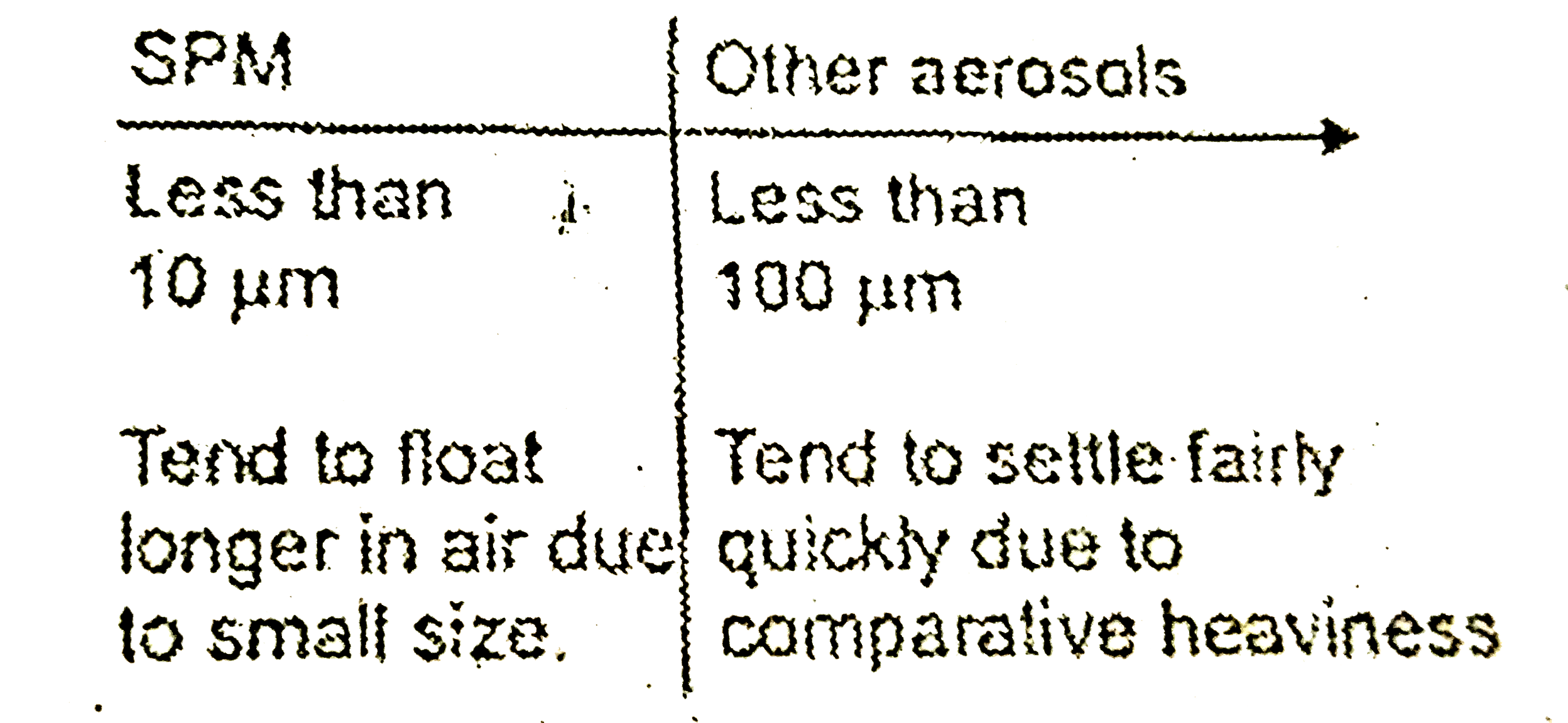
SPM (Suspended Particulate Matter) is defined as particles floating in the air with a diameter below 10 `mu m.` Studies have shown that high SPM concentrations in the air can have detrimental impact on respiratory organs. SPM is generated from natural sources (e.g., volcanoes or dust stoms) and human activities (vehicles, incinerators and industrial plants).

Catalytic converter is a device designed to reduce the amount of emissions from automobiles. The current (so-called three-way) systems use heated metal catalyst to reduce the emissions of carbon monoxide (CO), hydrocarbons, and nitric oxide (NO) all of which contribute to the formation of photochemical smog. In an automobile's exhaust system, a catalytic converter provides an environment for a chemical reaction where unburnt hydrocarbons completely combust. Hence the combustion process continues but outside the engine combustion chamber where no useful energy is extracted. Toxic car gases such as unburnt hydrocarbon (UHC) and carbon monoxide (CO) would not exst if the fuel to energy conversion in the engine were perfect.
Promotional Banner

Similar Questions

Explore conceptually related problems

Assertion: Suspended particulate matter(SPM) is an important pollutant released by diesel vehicles. Reason : Catalytic convertes greatly reduce pollution caused by automobiles.

How do automobiles filled with catalytic converters reduce air pollution ? Suggest the best fuel for such vehicles.

With its very large population of vehicular traffic, Delhi is one of the most polluted cities of the world. Which of the following steps were taken by the government to reduce vehicular pollution in Delhi ? (i) Switching over the entire fleet of public transport i.e., buses, autorickshaws, from diesel to CNG (ii) Phasing out of old vehicles (iii) Use of unleaded petrol in vehicles (iv) Use of low sulphur petrol and diesel in vehicles (v) Use of catalytic converters in vehicles (vi) Application of stringent pollution level norms for vehicles such as Euro-II norms, etc.

Use of lead- free petrol or diesel is recommended to reduce the pollutant emitted by automobiles. What role does lead play?

Read the following statements regarding particulate matter and select the incoorect ones. (i) Particulate matter (PM) consists of shoot, flyash, dust, spores, pollen grains, etc. (ii) Particulate matter is differentiated into settleable (larger than 10 mu m , remaining in air for less than one day) and suspended (less than 10 mu m remaining in air for more than one day to several weeks ) particulate matter. (iii) SPM (Suspended particulate matter ) consists of aerosol, dust and mist. (iv) Particulate matter causes respiratory diseases such as tuberculosis, allergy and many more diseases in animals and plants. (v) According to Central Pollution Control Board (CPCB), particulate size of 2.5 mu m or less in diameter are responsible for causing the greatest harm to human health.

Read the following statements carefully. (i) An electrostatic precipitator removes particulate matter by imposing negative charge on them. (ii) Catalytic converters convert unburnt hydrocarbons into CO_(2) and water. (iii) Peroxyacyl nitrates (PAN) is a secondary pollutant. (iv) DDT is a non-biodegradable pollutant. Which of the above statements are incorrect ?

Observe the diagram of the catalytic converter and answer the questions which follow: (a) Name any two metals used as catalyst in the catalytic converter. (b) Name the gases that are released after passing the exhaust hydrocarbons through the catalytic converter. (c) Name the other poisonous gas which is missing (?) in the exhaust pollutant of an automobile in the above diagram?

Consider the following statements with respect to pollution. A. To control air pollution problems, by the end of 2002 all the buses of Delhi were converted to run on unrelated petrol B. Electrostatic precipitator can remove over 99% particulated matter present in the exhaust from a thermal power plant. C. It is possible to estimate the amount of organic matterin sewage water by measuring BOD. Of the above statements:

How many of the following statements regarding thermal pollution are INCORRECT ? a. Heated wastewaters flowing out of electricity-generating units , e.g., thermal power plants , constituent an important category of pollutants. b. Thermal wastewater eliminates or reduces the number of orgenisms sensitive to high temperatures. c. It may enhance the growth of plants and fish in extremely cold areas but. Only after causing damage to the indigenous flora and fauna. d. Thermal wastewater increases the number of orgenisms sensitive to high temperatures.

Which of the following statements are correct ? (i) Catalytic converters convert unburnt hydrocarbons into CO_(2) and H_(2)O . (ii) The catalytic converter converts carbon monoxide and nitric oxide into CO_(2) and N_(2) . (iii) Automobiles are the major cause of atmospheric pollution in the world. (iv) Proper maintenance of automobiles along with the use of lead-free petrol or diesel cannot reduce the pollutants they emit. (v) In India, the Air (Prevention and Control of Pollution) Act came into force in 1981 amended in 1987 to include noise as air pollutants.

