Home
Class 12
PHYSICS
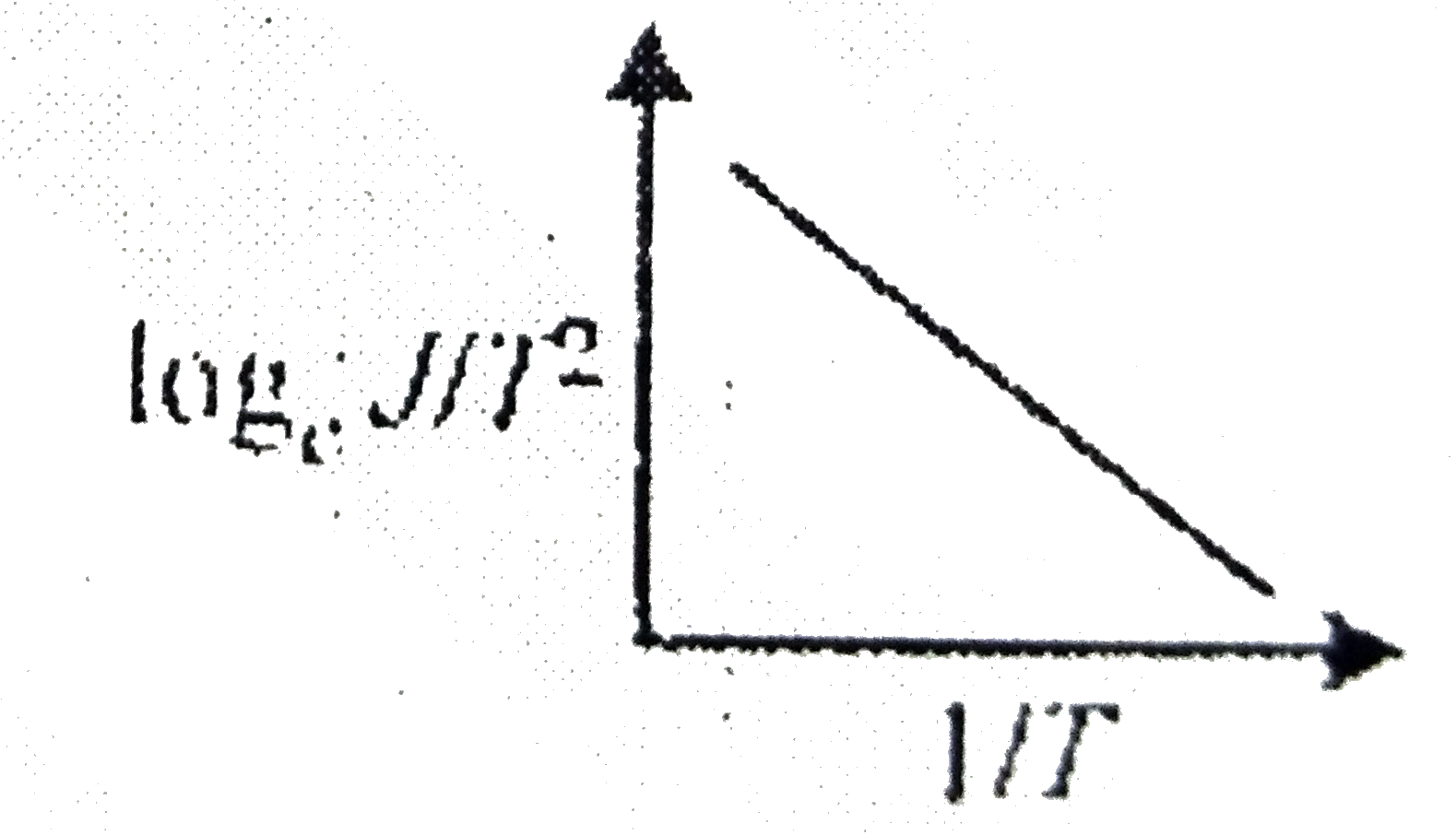
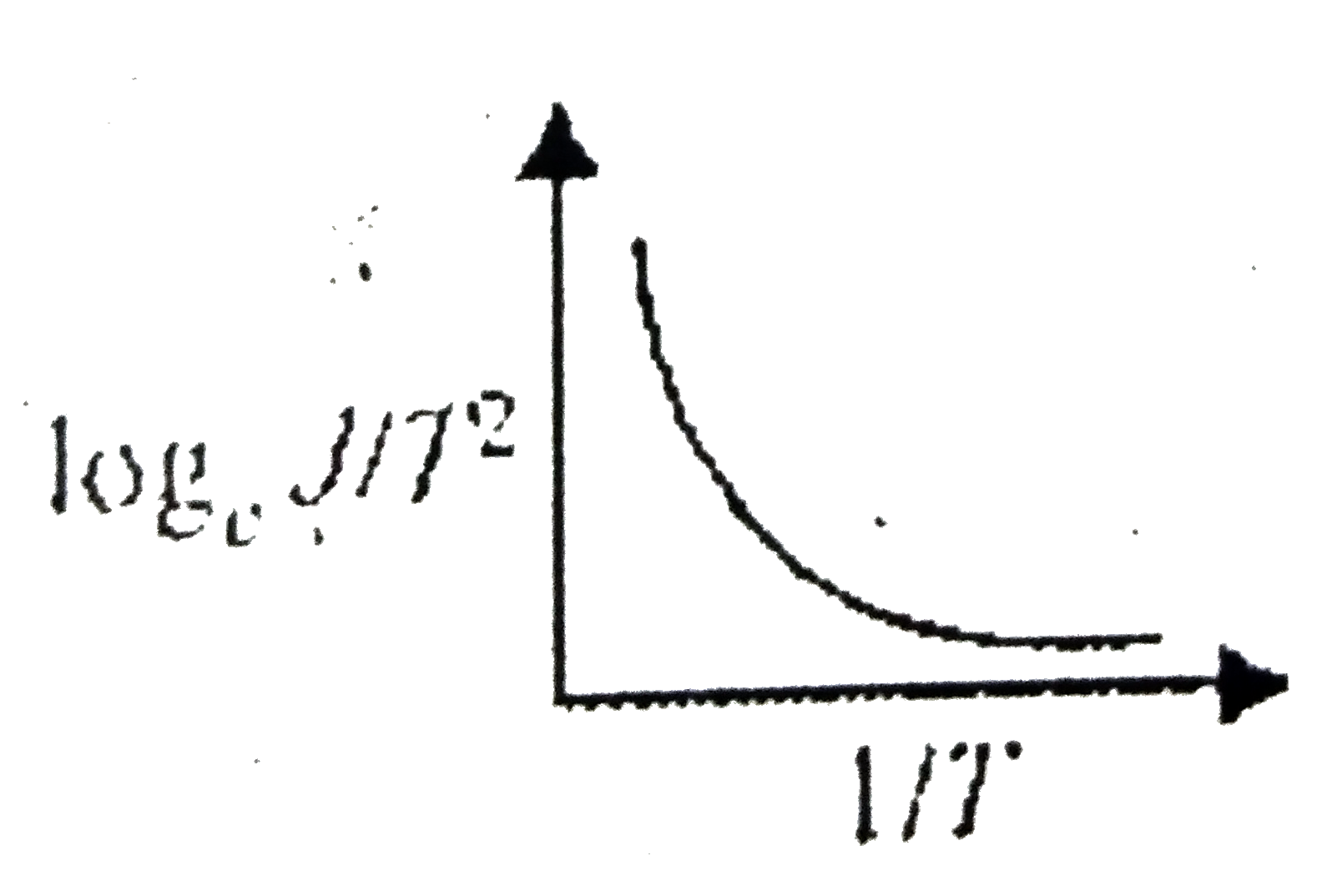
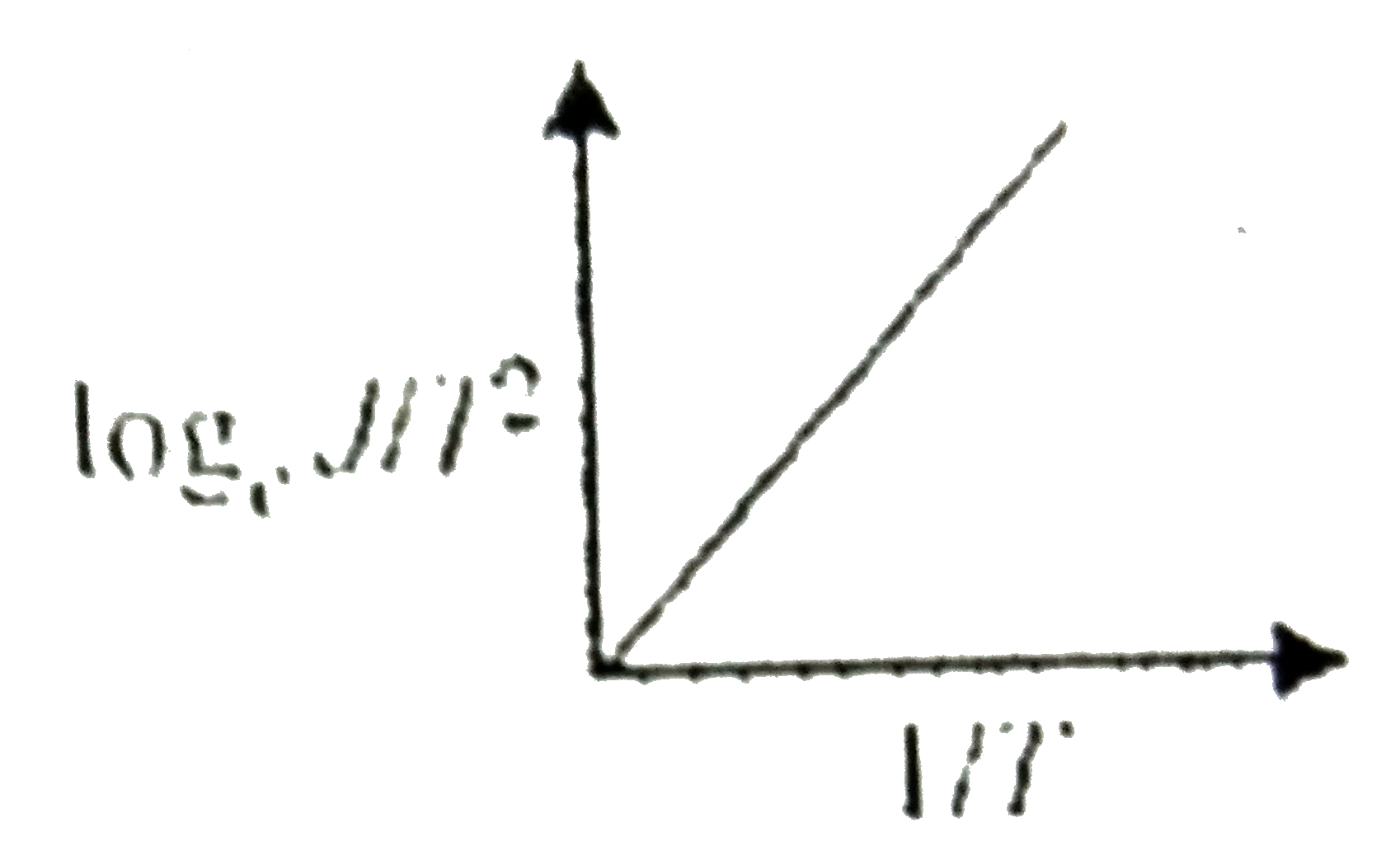
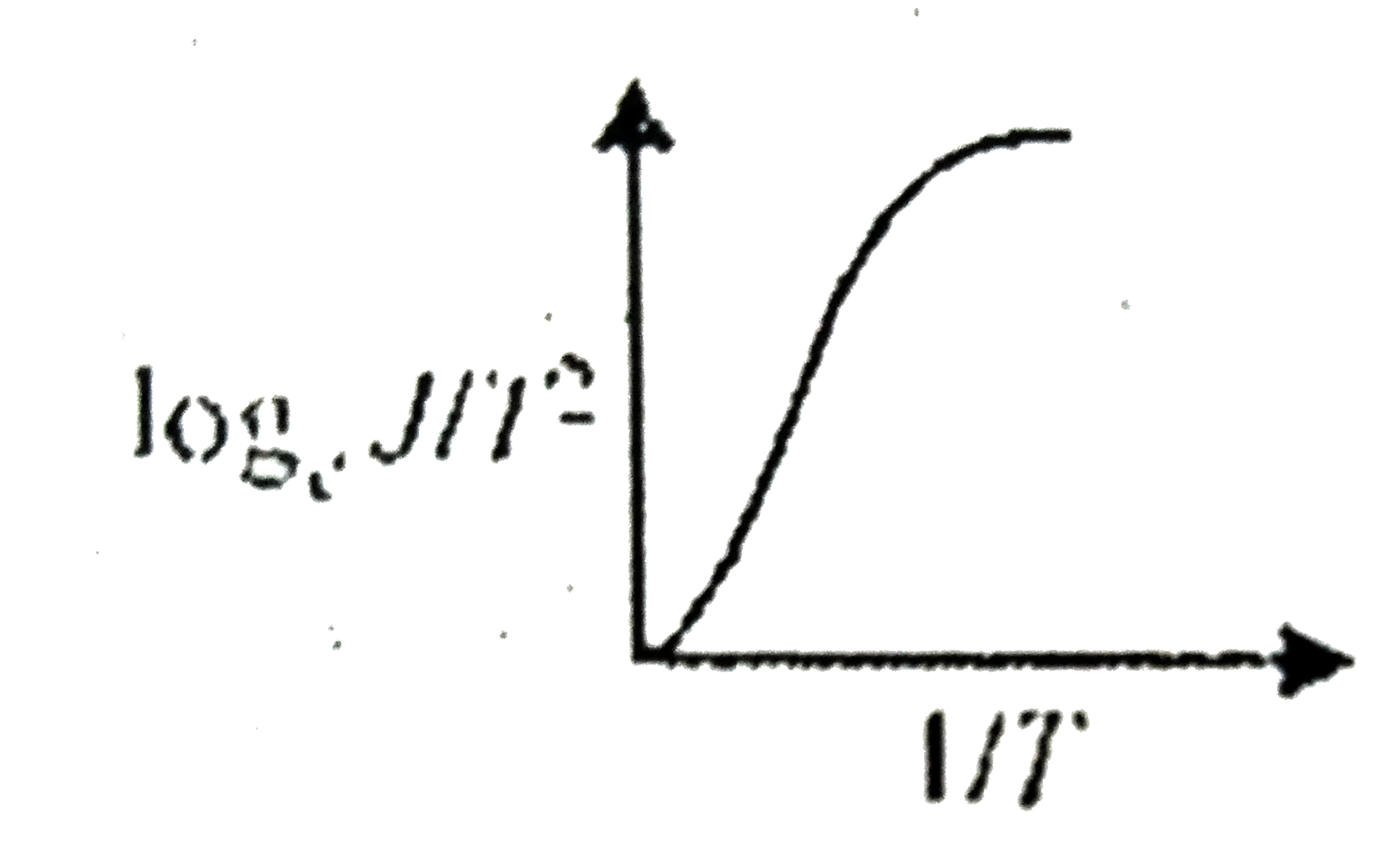
The current curve between loge""(j)/(T^2...

The current curve between `log_e""(j)/(T^2)" and "l/T`

A

B

C

D

Text Solution

AI Generated Solution

The correct Answer is:

To solve the question regarding the current curve between \( \log_e\left(\frac{j}{T^2}\right) \) and \( \frac{1}{T} \), we can follow these steps: ### Step-by-Step Solution: 1. **Understand the Relationship**: We start with the relationship given in the problem: \[ j = a T^2 e^{-\frac{b}{T}} \] where \( a \) and \( b \) are constants. 2. **Rearranging the Equation**: We can express \( \frac{j}{T^2} \): \[ \frac{j}{T^2} = a e^{-\frac{b}{T}} \] 3. **Taking the Natural Logarithm**: Now, we take the natural logarithm (base \( e \)) of both sides: \[ \log_e\left(\frac{j}{T^2}\right) = \log_e(a) + \log_e\left(e^{-\frac{b}{T}}\right) \] 4. **Simplifying the Logarithm**: Using the property of logarithms \( \log_e(e^x) = x \), we can simplify the right side: \[ \log_e\left(\frac{j}{T^2}\right) = \log_e(a) - \frac{b}{T} \] 5. **Rearranging the Equation**: We can rearrange this equation to express it in the form of a straight line: \[ \log_e\left(\frac{j}{T^2}\right) = -\frac{b}{T} + \log_e(a) \] 6. **Identifying the Variables**: In this equation, we can identify: - \( y = \log_e\left(\frac{j}{T^2}\right) \) - \( x = \frac{1}{T} \) - The slope \( m = -b \) - The y-intercept \( c = \log_e(a) \) 7. **Conclusion**: The relationship between \( \log_e\left(\frac{j}{T^2}\right) \) and \( \frac{1}{T} \) is linear, with a negative slope. Thus, the correct option that represents this relationship is: \[ \log_e\left(\frac{j}{T^2}\right) \text{ vs } \frac{1}{T} \]

To solve the question regarding the current curve between \( \log_e\left(\frac{j}{T^2}\right) \) and \( \frac{1}{T} \), we can follow these steps: ### Step-by-Step Solution: 1. **Understand the Relationship**: We start with the relationship given in the problem: \[ j = a T^2 e^{-\frac{b}{T}} ...
Promotional Banner

Similar Questions

Explore conceptually related problems

A liquid in a beaker has temperature theta(t) at time t and theta_0 is temperature of surroundings, then according to Newton's law of cooling the correct graph between log_e( theta-theta_0) and t is :

The graph between log t_(1//2) and log a at a given temperature is Rate of this reaction will …….with passage of time

The voltage V and current I v graphs for a conductor at two different temperatures T_(1) and T_(2) are shown in the figure. The relation between T_(1) and T_(2) is

The area enclosed between the curve y = log_e (x +e ) and the coordinate axes is

The area enclosed between the curves y=(log)_e(x+e),x=(log)_e(1/y), and the x-axis is (a) 2s qdotu n i t s (b) 1s qdotu n i t s (c) 4s qdotu n i t s (d) none of these

Find the area enclosed between the curves: y = log_e (x + e) , x = log_e (1/y) & the x-axis.

Consider the circuit shown below. When switch S_(1) is closed, let I be the current at time t, then applying Kirchhoff's law E-iR-L (di)/(dt) = 0 or int_(0)^(i) (di)/(E-iR) = 1/L int_(0)^(1) dt i=E/R (1-e^(-R/l *t)) L/R = time constant of circuit When current reaches its steady value (=i_(0) , open S_(1) and close S_(2) , the current does reach to zero finally but decays expnentially. The decay equation is given as i=i_(0)e^(-R/L *T) ). When a coil carrying a steady current is short circuited, the current decreases in it eta times in time t_(0) . The time constant of the circuit is

What type of graph do you expect between (i) L and T and (ii) L and T^2 ?

An L-R circuit has a cell of e.m.f. E , which is switched on at time t = 0. The current in the circuit after a long time will be

A curve is represented parametrically by the equations x = e^t cos t and y = e^t sin t where t is a parameter. Then The relation between the parameter 't' and the angle a between the tangent to the given curve andthe x-axis is given by, 't' equals
