Home
Class 12
PHYSICS
Which of the following graph depicts spr...

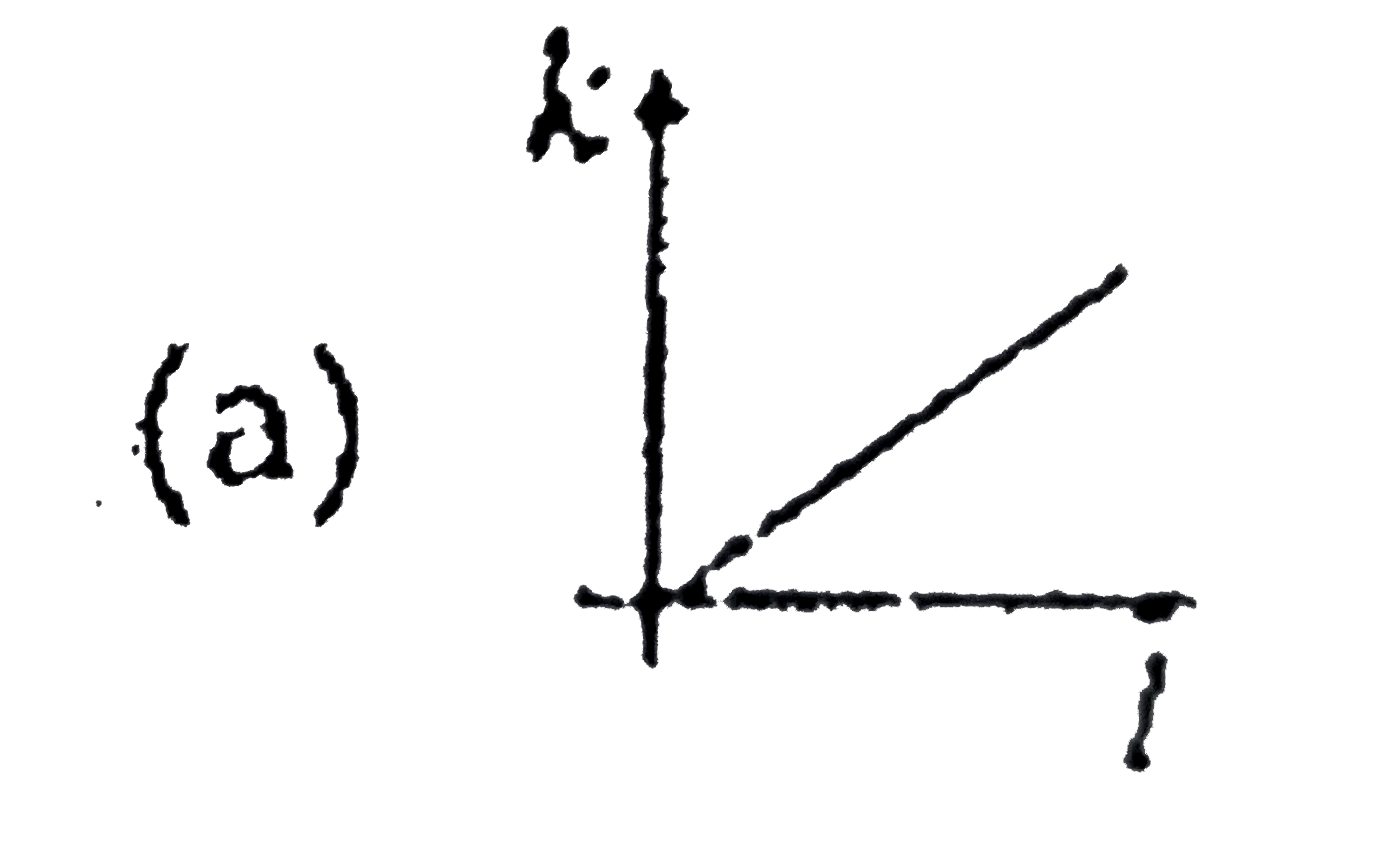
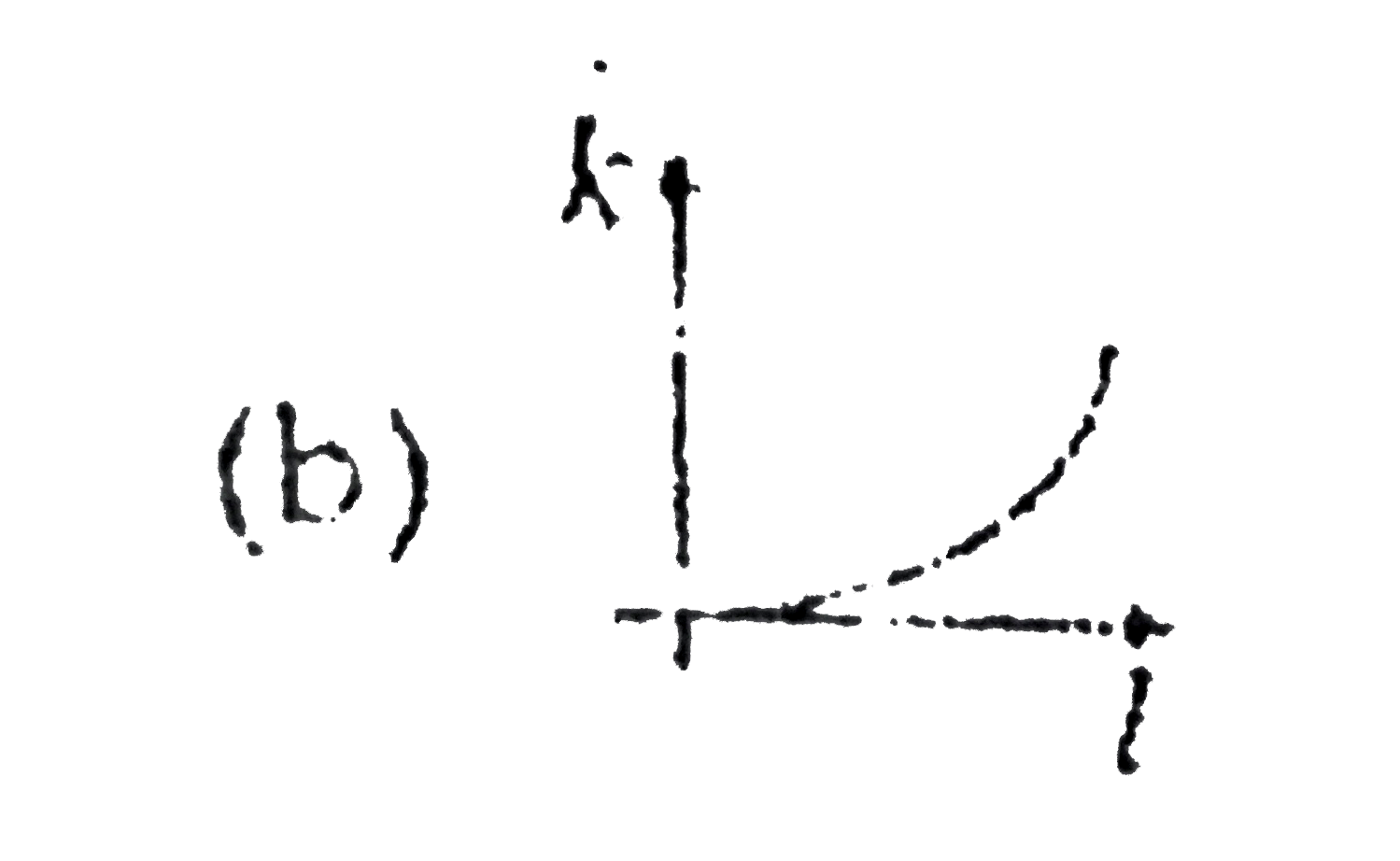
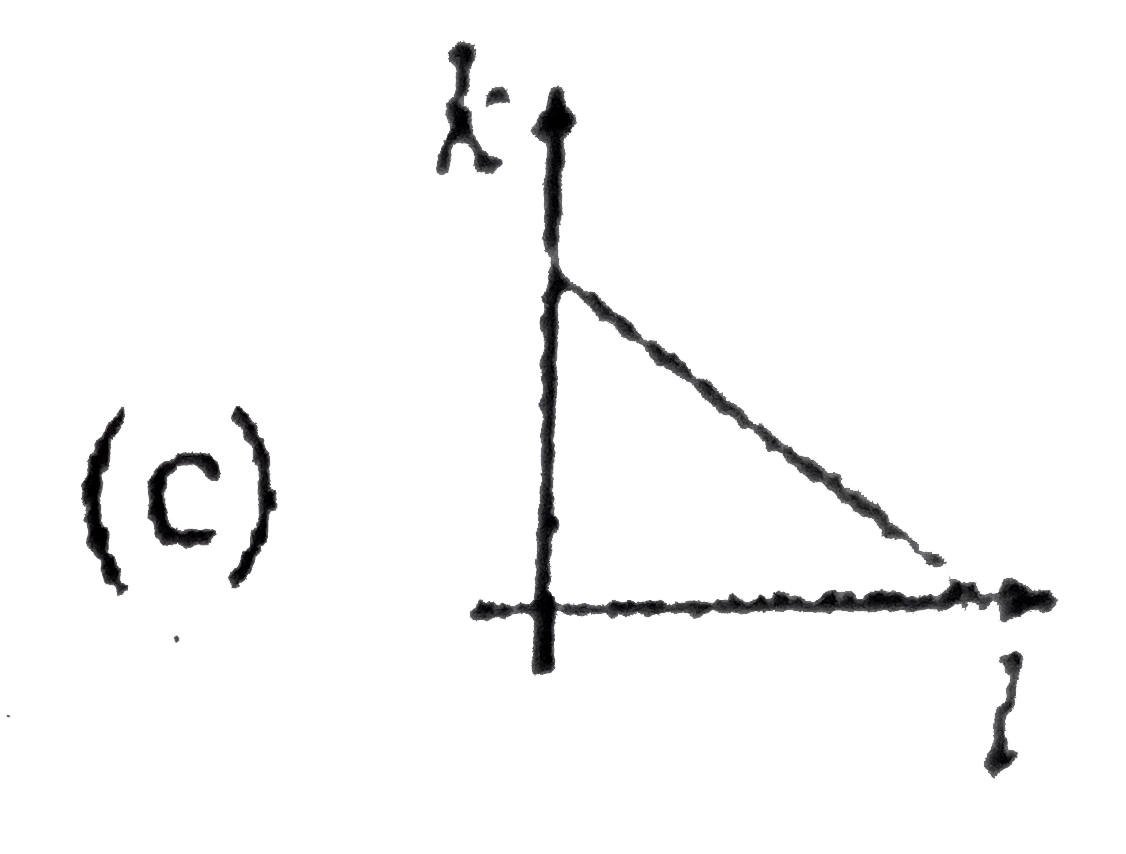
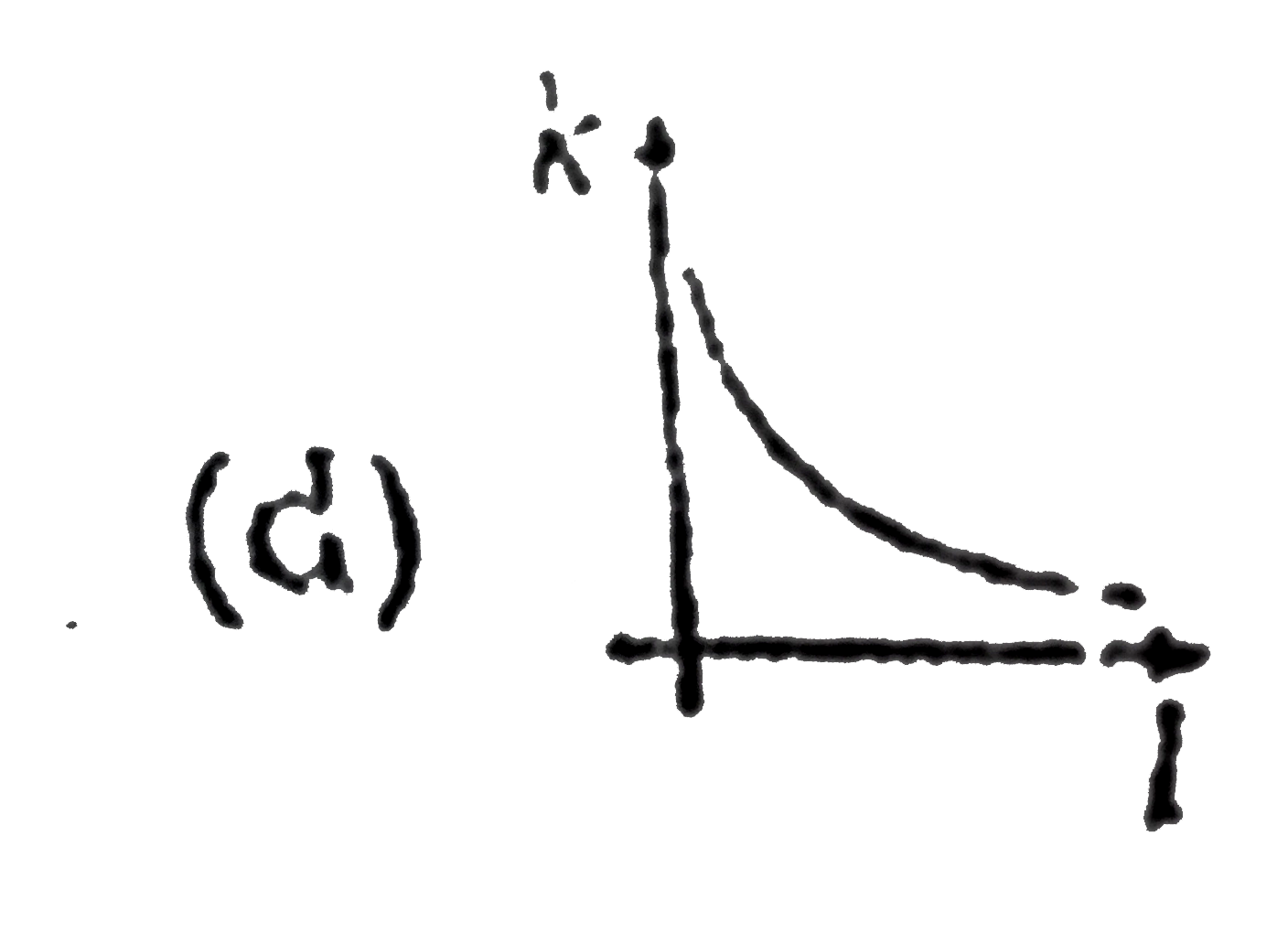
Which of the following graph depicts spring constant `k` versus length `l` of the spring correctly

A

B

C

D

Text Solution

AI Generated Solution

The correct Answer is:

To solve the problem of determining which graph correctly depicts the relationship between the spring constant \( k \) and the length \( l \) of the spring, we can follow these steps: ### Step-by-Step Solution: 1. **Understand the Spring Constant**: The spring constant \( k \) is defined by Hooke's Law, which states that the force \( F \) exerted by a spring is proportional to the displacement \( x \) from its equilibrium position: \[ F = -kx \] Here, \( k \) is the spring constant, and \( x \) is the extension or compression of the spring. 2. **Relationship Between Force and Spring Constant**: Rearranging Hooke's Law gives us: \[ k = \frac{F}{x} \] This indicates that the spring constant \( k \) is dependent on the force applied and the displacement of the spring. 3. **Consider the Effect of Length on Spring Constant**: When we consider a spring of length \( l \), if we increase the length of the spring while keeping the force \( F \) constant, the displacement \( x \) will increase. This implies that: \[ k = \frac{F}{x} \] As \( x \) increases (due to increased length), \( k \) decreases. 4. **Establish the Inverse Relationship**: From the above reasoning, we can conclude that: \[ k \propto \frac{1}{l} \] This means that as the length \( l \) of the spring increases, the spring constant \( k \) decreases. This is an inverse relationship. 5. **Graphical Representation**: The relationship \( k \propto \frac{1}{l} \) can be represented graphically as a hyperbola. In a graph of \( k \) versus \( l \): - As \( l \) increases, \( k \) decreases. - The graph will approach the axes but never touch them, which is characteristic of a hyperbolic curve. 6. **Identify the Correct Graph**: Given the options, we need to identify which graph represents this inverse relationship. The correct graph should be a hyperbola, which shows that as the length \( l \) increases, the spring constant \( k \) decreases. ### Conclusion: Based on the analysis, the correct option is **Option D**, which depicts the relationship between the spring constant \( k \) and the length \( l \) of the spring as a hyperbola.

To solve the problem of determining which graph correctly depicts the relationship between the spring constant \( k \) and the length \( l \) of the spring, we can follow these steps: ### Step-by-Step Solution: 1. **Understand the Spring Constant**: The spring constant \( k \) is defined by Hooke's Law, which states that the force \( F \) exerted by a spring is proportional to the displacement \( x \) from its equilibrium position: \[ F = -kx \] ...
Promotional Banner

Similar Questions

Explore conceptually related problems

The electrical analog of a spring constant k is

A fixed container is fitted with a piston which is attached to a spring of spring constant k . The other and of the spring is attached to a rigid wall. Initially the spring is in its natural length and the length of container between the piston and its side wall is L . Now an dideal diatomic gas is slowly filled in the container so that the piston moves quasistatically. It pushed the piston by x so that the spring now is compressed by x . The total rotaional kinetic energy of the gas molecules in terms of the displacement x of the piston is (there is vacuum outside the container)

The time period (T) of a spring mass system depends upon mass (m) & spring constant (k) & length of the spring (l)[k=("Force")/("length")] . Find the relation among T, m , l & k using dimensional method.

A constant voltage at different frequencies is applied across a capacitance. C as shown in the figure. Which of the following graphs correctly depicts the varitaion of current with frequency?

A spring of certain length and having spring constant k is cut into two pieces of length in a ratio 1:2 . The spring constants of the two pieces are in a ratio :

The block of mass m is released when the spring was in its natrual length. Spring constant is k. Find the maximum elongation of the spring.

Two equal masses are attached to the two ends of a spring of spring constant k. The masses are pulled out symmetrically to stretch the spring by a length x over its natural length. The work done by the spring one each mass is

A body of mass m is attached by an inelastic string to a suspended spring of spring constant k . Both the string and the spring have negligible mass and the string is inextensible and of length L . Initially, the mass m is at rest. The largest amplitude A_(max) , for which the string will remain taut throughout the motion is

The frequency of oscillations of a mass m connected horizontally by a spring of spring constant k is 4 HZ. When the spring is replaced by two identical spring as shown in figure. Then the effective frequency is

A mass m attached to spring of natural length l_0 and spring constant k. One end of string is attached to centre of disc in horizontal plane which is being rotated by constant angular speed omega . Find extension per unit length in spring (given k gtgt m omega^2 ) :
